• Skip to primary navigation
  • Skip to main content
  • Skip to primary sidebar
Old Glasgow Pubs

Old Glasgow Pubs

  • Home
  • About Us
  • Find A Pub
  • Find Address
  • Find A Publican
  • Further Reading
  • Shop
  • Contact Us
  • Members Area
  •  
  • Click Here to Search the Site
You are here: Home / Archives for J

J

J Haddock

January 25, 2017 by John Gorevan 1 Comment

161 Gallowgate, Glasgow.
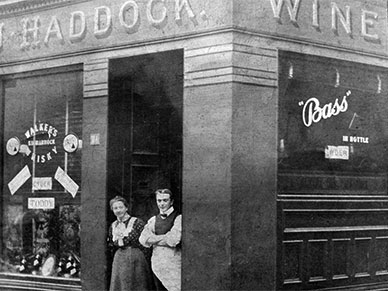
J Haddock's Bar 161 Gallowgate

J Haddock, Wine & Spirit Merchant, 161 Gallowgate. The couple at the doorway are possibly Martha and her husband Edward.

John Haddock was born around 1827 in Ireland.

He opened his first Glasgow pub in 1859 aged 32 at 1 Broad Street, Mile End off the Gallowgate near Camlachie.

In 1863 Mr Haddock moved to 170 Gallowgate near Glasgow Cross, this old pub later became Brechin’s Bar.

In 1869 he opened another public house at 44 Trongate formerly the Old Bookbinders Arms Tavern. He lived at 8 South St. Mungo Street, Calton.

In 1875 John Haddock was living at 95 Whitevale Street just off the Gallowgate at Camlachie. He continued to serve the locals here until 1880. At that time he disposed of the licence at 170 Gallowgate and opened a brand new public house at 161 Gallowgate on the opposite side of the street.

1881 John Haddock was living with his wife Jane and their family at 8 South St. Mungo Street, son William was 20 years of age, he was an apprentice Blacksmith, daughter Martha age 16 was an apprentice Dressmaker, son John T age 13 and grandson Forbes Thompson age 3.
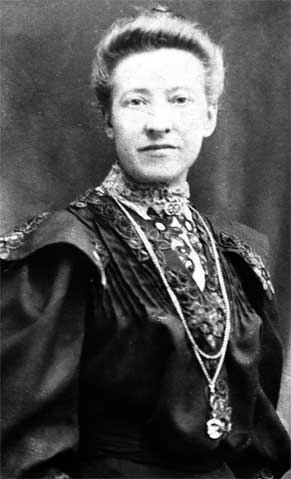
Martha Dobie

Mrs Martha Dobie. Licensee at 161 Gallowgate.

The new public house at 161 Gallowgate was situated at the corner of Little Dovehill, John owned the premises which saved him a fortune as he had no lease to worry about.

By 1887 John Haddock was living with his family at 450 Gallowgate, the following year his wife Jane was licensee, she was described as a Wine & Spirit Merchant after her husband, John probably had passed away by this time.

Jane continued as licensee until 1894 when her daughter Martha (Dobie) became licence holder.

In 1899 Martha was paying an annul rent of £39 for the premises which she was granted in 16th October 1894. Martha continued in the Licensed Trade until around 1910-11.

During the 1920s Mr T Goldwater was trading from the premises but not as a public house. The 1930s a Mr J Termelini occupied the shop, however this old shop became a well known fish and chip shop called Cha Papa which closed down in the 1990s and is now trading as a different fish and chip shop.
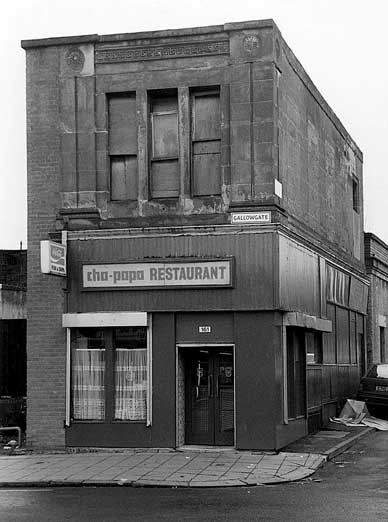
Cha Papa 161 Gallowgate

Cha Papa Fish and Chip shop. 1990. If you look close enough at the lane, you can make out the trap door which led to the cellar.

To read more on the pubs on the Gallowgate read up & Doon the Gallowgate by John Gorevan. A copy can be bought for a few pounds at the Hielan Jessie on the Gallowgate or contact me at [email protected]
Filed Under: Gallowgate, Gallowgateroad, J

James Gilliland

January 25, 2017 by John Gorevan 1 Comment

Gilliland’s Bar, 69 Castle Street, Townhead, Glasgow.

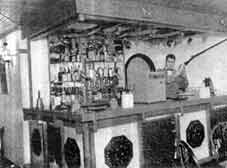
Interior view of James Gilliland's Bar

Interior view of James Gilliland’s Bar. 1888.

James Gilliland also owned a pub nearby at 4 Glebe Street, Townhead.

To read the full history of James Gilliland,  Click here.

Filed Under: Castle Street, CastleStreet, J

John M Gibson

January 25, 2017 by John Gorevan Leave a Comment

273-75 Buchanan Street, Glasgow.

John M Gibson

John M Gibson was situated at the corner of Buchanan Street and Renfrew Street. To Read more on the history of this popular bar, check out our book Click here.

Filed Under: Buchanan Street, BuchananStreet, J

Jackson’s Bar

January 25, 2017 by John Gorevan 1 Comment

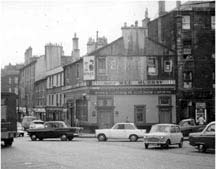
100 Crown Street, Gorbals, Glasgow.

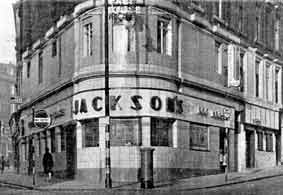
Jackson's Bar Crown Street

Jackson’s Bar, Crown Street, Gorbals. 1960s.

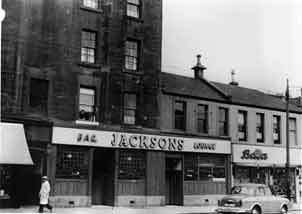
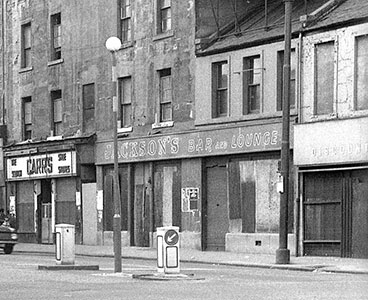
There has been a pub on this site since the 1870s. At that time is was a very small establishment and was later enlarged to take in the next door tenement building.

Thomas Kerr a well known and respected member of the Scottish Licensed Trade was landlord in 1875. He first started out in a public house at the corner of Trongate and King Street in the city centre of Glasgow. A few years serving the locals here meant he had enough money to buy a small pub outright, at 100 Crown Street, this proved to be a wise move as it was very hard to buy your own business then. Mr Kerr was very successful here and obtained another public house at 282 South Wellington Street this street later became known as Lawmoor Street. The old pub at 100 Crown Street was known as the Old Hundredth.

Jackson's Bar 100 Crown Street image 1960s.

Jackson’s Bar & Lounge, 100 Crown Street. 1960s.

Thomas Kerr was born in Tollcross in the east end of the city in 1833, he met his wife Janet in the city, afterwards taking up residence at 285 Cumberland Street, Gorbals to bring up a family of three daughters and two sons, Janet C, Isabella B, Agnes S, Thomas jun, and baby John S Kerr. The family moved house often from Cumberland Street to 203 Crown Street, before moving to better accommodation in the posh area of 33 Abbotsford Place.

In 1899 Thomas Kerr passed away at the age of 66, his daughter Janet was left as trustee of the businesses of which she carried on until her young brother John took over the South Wellington Street pub. Young John was then running the two public houses by 1912. The following year John sold the South Wellington Street business to William Thomson, however he continued to run the family business in Crown Street until after the First World War.

During the 1930 and the start of the Second World War Donald McNab took over the pub. He was a very successful businessman having a small empire of public houses at 41 Maryhill Road (the Highlanders Bar) McNab’s Bar at 614 Rutherglen Road and 100 Crown Street.

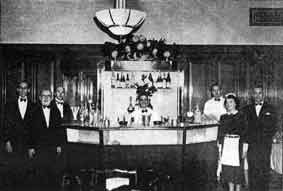
After the war John E Jackson took over the pub. Mr Jackson was one of the best known publicans of his time, having many friends in the licensed trade and in the golf clubs in and around central Scotland. In 1947 Mr Jackson was residing at 56 Croftfoot Road. He soon became a very large character in the licensed trade, he was secretary of the Gorbals Ward Committee before he was appointed Convener and representative in the Board of the Glasgow Association. John was one of the first publicans in the city to have a portable bar, he called it a mobile bar which he used when operating a special licence at functions.

John E Jackson's mobile bar

Jackson’s Mobile Bar with barmen, waiters and waitress, John E Jackson on the extreme right. 1951.

In the early 1950s John took over a public house at 91 Dundas Street which was run by James Denholm. Jackson renames the premises after a complete refurbishment the new name stood out from all the other pubs in the city and was well known as Jackson’s bar before it became known as Jackson’s Dog House.

Jackson's Dog House

Jackson’s Dog House, Dundas Street, Glasgow. 1961.

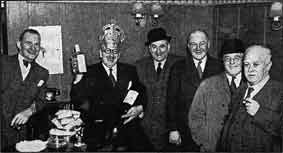
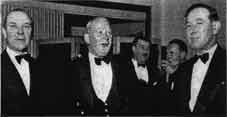
Many trade organisations held parties in Jackson’s Dog House, in 1954 popular trade personality Mr J H Wyllie, West of Scotland representative of Booth’s Distilleries, Ltd, was honoured here by numerous friends in a note worthy and unique manner. Many friend turned out for the occasion including Mr Jackson,. Mr George Grier, president of the Royalty Burns Club; John Raeside manager of Gordon Restaurant; Mr W Doherty manager of the Pavilion Theatre; Bob Hendry a former Queens Park Footballer.

John E Jackson with friends

Left to right John E Jackson, J H Wyllie, George Grier, B Hendry, A C Dickson and J B Akers. 1954.

As a token of esteem paid to him by his many friends. Mr Wyllie was presented with a special chair and having been seated up at the chair and raised to his place of elegance by Mr Hendry, he wa crowned “King High and Dry”. Mr Hendry himself was previously honoured with the presentation to him of a special seat in the bar labeled “Hendry’s Retreat.” To honour the occasion a large bottle of Chief Whisky (Rintoul’s) was presented by Mr Wyllie’s friends. It was duly opened and its contents shared with the customers at the bar.

Jackson's Dog House 1956

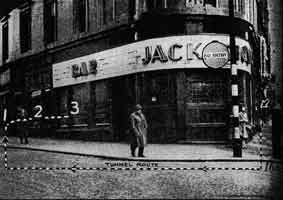
They Tunnelled 20 ft to enter Jackson’s Dog House.

In 1954 thieves tunnelled their way 20 feet up a brick wall and breaking into three Glasgow shops at the weekend, safe raiders reached their objective, a public house safe in Jackson’s Bar at the corner of Dundas Street and Dundas Place. The thieves had an hour’s work to get to the safe. When they did reach it they ripped the bottom off and escaped with about £30.

C.I.D men found that the thieves had started tunnelling from the basement of a nearby close. From there the raiders had tunnelled 20 feet, then knocked a hole in the wall of a music shop. Inside this shop, they crossed to a wall next to a florist’s and smashed their way in. They next knocked another hole in a wall leading to the public house. The raiders escaped by the same route.

John E Jackson and friends

This photograph was taken in December 1955. On the occasion of the opening of Charles Watson’s new bar. Mr Charles Watson’s Old Vic Bar at 669 Govan Road, had a new bar fitted, and there to wish Mr & Mrs Watson well with the new venture were some of the well known personalities in the trade, including, G C Millen, N Foulger, George Grier, I Sinclair, John E Jackson, C Cullen, J H Wyllie, W Johnston, R Lemon and J Millen. They drank a cordial toast to the Old Vic and Mr & Mrs Watson.

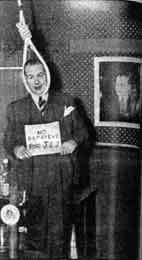
John E Jackson with a noose round his neck

John E Jackson with a noose around his neck. 1956.

This photograph was taken on the occasion of a portrait of Mr Jackson being hung in his Crown Street Bar, known as the Old Hundredth. Mr Jackson and Mr Grier were firm friends, and, with their wives, have on several occasions gone holidaying together. The portrait was handed to him by members of the Gorbals Ward Committee as Mr Jackson announced his retirement of the convenership of the Ward.

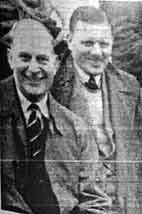
John E Jackson

John E Jackson with friend H W Carmichael. 1957.

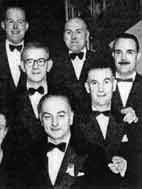
John E Jackson and friends

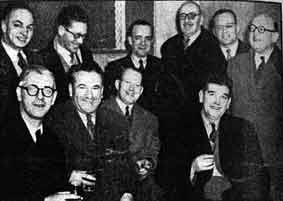
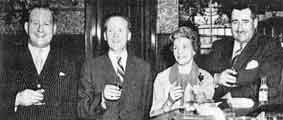
Top: John E Jackson and Mr S Guymer; middle: Mr C Watson, Mr D Garrow and Mr A Thomson, Oakbank Bar; front: Mr N Foulger, secretary of the Govan Ward. 1958.

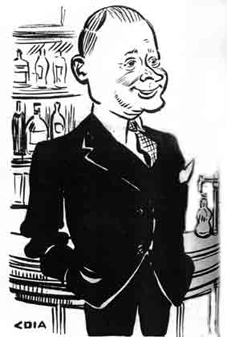
Cartoon of John E Jackson

This cartoon of John E Jackson by drawn by Coia. 1958.

Mr & Mrs John E Jackson

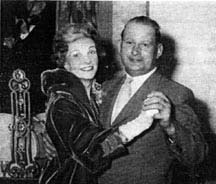
Mrs & Mr John E Jackson. 1960.

John E Jackson and Mr MacLean 1960

This photograph was taken at 100 Crown Street in 1960. John E Jackson, with friends Donald MacLean of the Coronation Bar, Rutherglen Road; Mrs Jackson and Mr A M Don, managing director of G & C Moore Ltd.

John E Jackson with friends

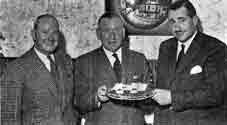
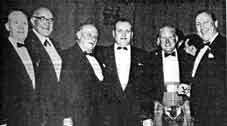
The photograph above is of Mr Tom Wilson, Council officer for the City of Glasgow, on retiring after 30 years service, was the principal guest at a party given by John E Jackson, at the Neuk, Carmunnock. The occasion was marked by the presentation to Mr Wilson of a set of Golf cuff links, one of them bearing a watch. This gift was handed over by A M Don, managing director of G & C Moore Ltd. on behalf of Mr John E Jackson. 1960.

Mr John E Jackson with friends

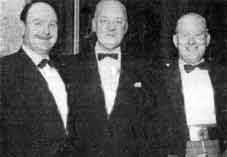
Left to right Mr D D Rennie, of Booth’s Gin; Mr John Young, “The Wee Mans”, Gallowgate; and John E Jackson. 1962.

John E Jackson with his sister

right to left John’s sister Mrs M Harris, Polonia Restaurant, London; John E Jackson and John’s wife. 1962.

John E Jackson with Mr A McAulay

right to left Mr B Brind, managing director, Sir Robert Burnett & Co., Ltd; John E Jackson and Mr A McAulay, ex-Kyle’s of Bute Bar, Govan. 1962.

J E Jackson with bunnet

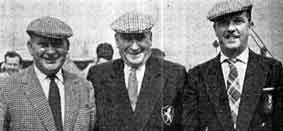
This 1960s photo was taken at the Gorbals Association outing. The three bunneteers; John E Jackson; George Grier and Mr J McIntosh.

John E Jackson group photo

Mr John E Jackson

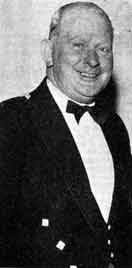
Mr John E Jackson. 1960s.

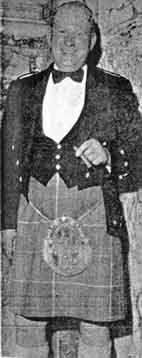
John Jackson with kilt

Mr Jackson with full celtic attire.

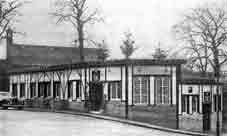
John E Jackson had a new adventure in the later 1950s. He opened a new lounge bar in Carmunnock called “The Neuk.” His new venture was situated five and a half miles from Glasgow in the old world village Carmunnock. For many years the Neuk was a tea-room. Repeated attempts were made for a licence but although the lower court granted the application on several occasions the decision each time was overturned by the Appeal Court. Mr Jackson, Glasgow Licensee, ultimately took over the premises and on him making a seventh application it succeeded at both Courts.

Exterior view of the Neuk Carmunnock

Exterior view of the Neuk Carmunnock. 1961.

To Mark the opening of the premises in their new form. Mr & Mrs Jackson were recently hosts to a party of Trade friends and personalities. The honour of performing the opening ceremony fell to Mr A M Don, Managing Director of G and C Moore Ltd.

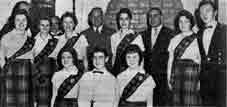
The Staff at the Neuk Carmunnock with John E Jackson

The Staff with John E Jackson, the Neuk, Carmunnock. 1960.

Referring to Jackson’s two other enterprises, the Dog House in Dundas Street and Jackson’s Bar, 100 Crown Street. Mr Don remarked on the success Mr Jackson has made of both these premises. He recalled that Mr Jackson in his youth was employed in the Dundas Street premises when it was a restaurant. The progress he had since made was a great credit to him. Under the supervision these new premises would prove an attraction in Carmunnock.

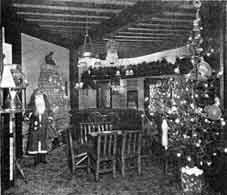
Interior of the Neuk Carmunnock

Interior view of the Neuk. Christmas 1961.

Neuk Bar interior carmunnock

The Neuk Bar.

The new Neuk, which surely ranked as a Carmunnock showpiece, moulded into the character of the village. With its tudor exterior in black and white and its rows of 16 hanging wrought-iron lanterns it presented a picturesque appearance. The alcoved, carpeted Tudor lounge bar had its counter panelled in rough-cut slices of elm and sycamore straight from the tree. In building up the old world atmosphere, Mr Jackson had been helped by friends, and he had been given three nag-at-the-wa’ clocks, one of which is 200 years old.

The Neuk dining area

The Neuk dining area.

Perhaps because it was at the seventh attempt that an application for a licence for the premises was successful that the bar downstairs had been named “Bruce’s Cave.” It was really is shaped like a cave. On the floor was a Bruce tartan carpet. On the curved walls were swords, a breast-plate and helmet, and bagpipes. Customers food was to be an attraction to the Neuk, where a well appointed dining room had accommodation for 30 patrons. The Neuk manager was Mr Charles Meranghi, who was for many years an experienced head waiter in the restaurant business.

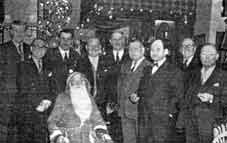
Santa at the Neuk Carmunnock

Santa at the Neuk, Carmunnock.

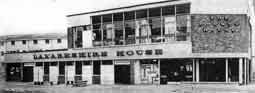
In 1962 Mr Jackson’s empire of licensed premises flourished, he opened yet another establishment the Lanarkshire House. A road house atmosphere with a Continental trend that is what he had achieved at the Lanarkshire House, Halfway, Cambuslang. The premises occupying a prominent corner site of the main road at Halfway, were replete with interesting designs, have an unusual blend of fabric and material, and delight the eye with striking colour. The architect drew his material from Italy, Denmark, West Germany, Africa and Japan.

Lanarkshire House exterior Halfway Cambuslang

Exterior view of the Lanarkshire House, Halfway, Cambuslang. 1962.

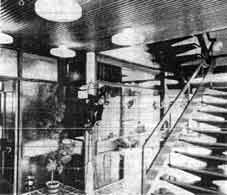
In the forecourt were four illuminated fountains, a new feature in Lanarkshire at the time, with attractive paving and three simple wayfarer seats. The exterior wall had an abstract design in mosaic representing tap founts and bottles. This is British designed. The Lanarkshire House speaks travel along the Hamilton Road. The entrance hall featured a terrazzo floor, German light fittings and most impressive a free tread cantilevered staircase made from Afromosia, a wood from Africa as durable as teak. The entrance gives access to a cocktail lounge and restaurant.

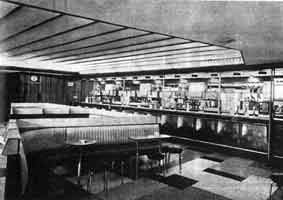
The Public Bar at Lanarkshire House

The Large public Bar. 1962.

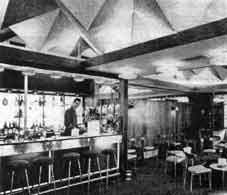
The ground floor cocktail lounge, known as the “County” is cosy and captures the style of decor… mauve carpet, flood-lit flame coloured curtains and olive walls. A decorated screen at the right of the bar is modernistic, using coloured glass bricks and coppered shapes. Here there are prize-winning design chairs made in Scotland. The lighting effects in this lounge are Danish.

Lanarkshire house interior

Cocktail Bar in the Lounge. 1962.

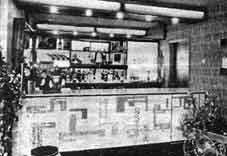
On the back wall of the stairway, a wall-paper mural captures the same colours as the restaurant carpet, green, orange and olive. The bar in the restaurant is spectacularly fronted with alternate panels of Italian marble and natural cowhide. There are three raised flood-lit ceilings in this room, which also contains the dance hall area and band platform. There is a resident band. Supper dances are being held every Thursday, Friday and Saturday.

Lanarkshire house interior

The Off Sales department.

The Lanarkshire House bar has the ingle-neuk, alcove and island seating arrangements. A surprise item in the decor is the wall-panel of Japanese sea-grass. The Bar here is cheerfully illuminated and the copper mirrors give a flattering glow. The restaurant caters for 100 people, and Mr Jackson is so certain of its success that he is already considering an extension. The manager of the Lanarkshire House was Mr Marcus Marenghi the head barman, Mr Stepanek and the head chef, Mr John McConnell.

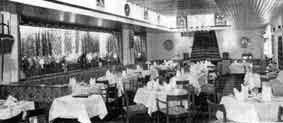
Lanarkshire House dining room

The Lanarkshire House Dining area. 1962.

Mr Jackson recalled that 20 years ago a lounge bar was a complete innovation. Now he said its a necessity. In the old days too the pub was a man’s world of drink, darts and dominoes. Now it has been invaded by the wives, and its no secret that they’re the bigger buyers. “When a couple have an evening out nowadays the woman, with her fancier drinks, accounts for about two-thirds of the bill. And, of course, she’s always on hand to let her husband know when he’s had enough.”

Lanarkshire House stairway

The interior entrance hall with stair-case.

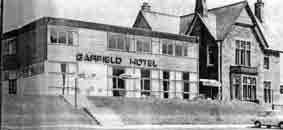
The Neuk, Carmunnock was destroyed by fire in 1965 and was refused a licence to reopen the premises. On that same year Mr Jackson opened the Garfield Hotel, on Cumbernauld Road. A seven day licence was finalized by the Lanarkshire Licence Courts, an agent on behalf of Mr Jackson agreed on conditions by the court that alterations and the construction be completed before the scheduled operation on June 30th 1965.

The Garfield hotel was prominently positioned at the end of the dual carriageway running to the new town of Cumbernauld. It was designed for the traveller and tourist in mind. The decor theme chosen for the hotel was based on vintage cars, which was imaginatively used throughout the hotel. The 19th century mansion house was skillfully preserved in the alterations carried out by adding a large an imposing new wing, completely modern ito its design. Garfield Hotel had 20 bedrooms, a main dining room with seating for 150 people for functions, a breakfast room, a lounge bar, a cocktail bar, public bar and residents lounge.

The Garfield Hotel Cumbernauld Road

The Garfield Hotel. 1965.

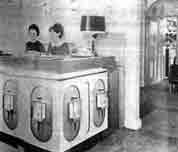
Georgian green, close fitted carpets laid in the entrance hall, reception area, staircase and throughout the residents lounge, which linked the new and older section of the hotel. The heavy wood on the staircase and the stained glass windows was a feature of the hotel. Vintage and classic cars was the theme of the hotel, with framed pictures adorning the walls. The theme continued throughout, leading off the reception hall was a wire wheel cocktail bar. Seating here was deep buttoned in natural tan leather and the carpet was also in green with curtains in two tones of green with vintage cars in bright colours. Chairs were of natural mahogany with tables in green marble.

Main Bar in the Garfield Hotel

The main bar in the hotel. 1965.

Reception hall in the Garfield Hotel

The reception Hall at the hotel. 1965.

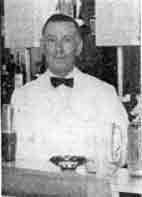
The resident manager of the hotel was a Mr G Fitzpatrick, who held a diploma from the Scottish Hotel School and who had extensive experience in management of hotels of all kinds. He was assisted by his wife in the running of the business. Head barman at the wire wheeled cocktail bar was Mr James Martin. The chef was Mr G Kousorou formerly of the Ca’doro Restaurant, Glasgow. Head waiter was Mr Frank Naismith.

Mr James Martin head barman of the Garfield hotel

Head Barman James Martin.

Mr Jackson’s empire didn’t end here, he took over the well known public house “the Regal”

Less than 2 years after the opening of the Garfield Hotel, Mr Jackson went bankrupt, this was a sad moment for one of Glasgow’s well known and colourful publicans. Mr Jackson held a meeting of his creditors in the Chartered Accountants Halls, 220 St. Vincent Street, Glasgow. Mr Jackson who resided at 18 Gordon Road, Netherlee, disappeared from the public meetings and licensed trade meetings, that must have been a sad moment in the Scottish Licensed Trade.

—————————————————————–

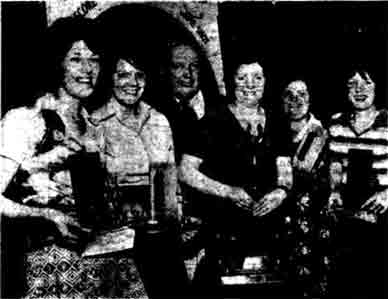
In the NEWS 1976…

Winners of the first Glasgow's ladies darts league 1976

Trophy night for the winners of the Glasgow woman’s darts league at the final of their competition for the Kensas Club Darts Trophy in the Grosvenor Hotel, Glasgow.

Winners were the Garfield Hotel team from Stepps, who beat the girls from the Sou Wester Bar, Gorbals, Glasgow.

Left to right are winners Nancy Taylor, Carol McKerron, Gil Brodie, area manager for Gallaher cigarettes, Margaret Devlin (team captain) and Janet Taylor. 1976.

Facts…

Raiders take £200.

Two raiders attacked the chargehand of a Glasgow public house and got away with about £200. The chargehand, Mr Frank Robertson, was alone in Jackson’s Bar, 100 Crown Street, checking the week-end talkings when the raid occurred.

Filed Under: Crown Street Gorbals, CrownStreetGorbals, J

J Gemmell

January 17, 2017 by John Gorevan Leave a Comment

2 Balgrayhill Road, Springburn, Glasgow.

J Gemmell

J Gemmell.

John Gemmell the proprietor of this old Springburn favourite was born in Galston in 1843. His father Hugh owned the Angel Inn, Kilmarnock where young John got his first insight into the licensed trade. John moved to the Springburn area of Glasgow where he met his wife Elizabeth, an Auchinairn lass.

John opened a public house at the bottom of the Balgrayhill Road in 1869, he and his wife lived in nearby Flemington Street, and had a large family of eight children. the Gemmell’s were fortunate enough to have a domestic servant Susan McKell from Auchinairn. Business was good in Springburn despite the competition in the area as Springburn had it’s fair share of pubs and licensed grocers.

The family moved to better accommodation to Myrtle Bank before moving to Athole Gardens. John opened another pub on Parliamentary Road at the corner of North Frederick Street in 1881 and another on North Street, this pub still stands today and is known as the Ritz Bar.

John died at his home in Athole Gardens in 1905, he was 62 years of age. He left an estate valued at £8798 19shillings and 2 pence. The licence for North Street was taken over by Michael Dunbar, the Parliamentary Road premises were taken over by John LLoyd and few years later while Stewart Armour a trustee was licence holder for Gemmell’s on Balgrayhill Road.

The licence was transfered to John’s son William in 1916, the pub stayed in the family for nearly one hundred years. In the 1960s the licensee was Edith Robertson Gemmell and the pubs became known as the Kelvin bar. In 1971 Tennent Caledonian Breweries was running the pub, managed by John Richmond, was also licensee for the Spur Bar, Polmadie Street, Flynn’s, London Road, the Vulcan, Springburn Road and The Lorne Bar on Northcroft Road.

The Kelvin Bar was finally demolished when the rest of Springburn saw the bulldozers flatten the tenements and the shop to make way for the new road system. I often find it difficult to imagine where the bottom of the Balgrayhill was, as Springburn has changed so much over the years. I was brought up in Springburn and today I still find if difficult to find my way around.

Filed Under: Balgrayhill Road, BalgrayhillRoad, J

Jack’s Bar & Lounge

January 17, 2017 by John Gorevan Leave a Comment

195 London Road, Calton, Glasgow.

exterior view of Jack's Bar 2005

Jack’s Bar, August 2006.

Jack's Bar

Jack’s Bar. 1991.

The history of Jacks Bar can be traced back to 1862. Well known Cambuslang and Glasgow Wine and Spirit Merchant William Cook was the first licensee. William lived in the Cairns, Cambuslang and had a tavern there too called Cook’s.

His son William also traded in Cambuslang and Glasgow. Between them they owned some of the best bars in the area, including., 169 Canning Street (London Road), Cathcart Road, Gorbals, Abercromby Street, Gallowgate, Clyde Street, Calton, South Albion Street (Albion Street). Old Mr Cook traded as a tavern keeper and wine and spirit merchant from the early 1840s.

William Cook traded here until 1883 and the business was taken over by William Speirs.

William Speirs and his wife lived at 58 Whitevale Street, off the Gallowgate. When William passed away his wife then took control of the pub until 1893.

In 1892 a well known Watchmaker & Jeweller family took over the old pub. Mrs S Vogt became the licensee while her son Joseph ran the pub. The Vogt family had a business at 200 North Street and 225 Great Western Road selling top quality watches and jewellery, they lived next door to the shop in North Street.

Mrs Vogt’s other son Robert was a famous bicycle racer, he had his own business too as a Cycle Agent at 225 Great Western Road. They all lived at 196 North Street.

In 1894 his brother Joseph took over the old public house licence for premises at 7 Great Hamilton Street now known as London Road a pub which stood a few doors away from the famous Old Burnt Barns.

Robert like his brother fancied the new life style of being a Glasgow publican and acquired his own premises from John McNee’s old pub at 102 Norfolk Street which sat at the corner of South Portland Street.

Robert was a talented craftsman and one of Glasgow’s famous cyclists not only in Scotland but had trophies from all over Europe. He had won over 500 prizes nearly all firsts from cycle tracks all over the country and abroad. Apart from all this he was an ardent Volunteer and a member of the 1st L R V, during this period he gained third prize for his shooting skills at the Wapinshaw.

……………………………………………..

image of Robert A Vogt with his trophies

World Champion Cyclist, Robert A Vogt standing proud with his bicycle and hundreds of Trophies.

More on the Vogt Family…

Robert Anton Vogt was born in Argyle Street and received his education at St. Mungo’s Academy then afterwards spent his last years of education at St. Aloysius School at Garnethill. Robert’s first job was to learn in the trade of cabinet-making with the well known Glasgow firm of Bryce & Martin at Charing Cross. Robert had other things on his mind and lasted only a year in his wood working career.

His mother Sophia had two jewellery businesses in town, young Robert followed in the footsteps in the trade which his family was so long and honourably connected with, the watch making and jewellery trade. His family was one of the city’s renowned clock, watchmakers and jewellers.

The family had a history of German clock making since 1840, having small premises in Saltmarket and traded under the name of Vogt & Fleck. His father Anton and mother Sophia had a large family of five sons and four daughters all of them having been connected with the family business at one time.

Young Robert started his apprenticeship with Hugh Wilkie, a small independent watchmaker at 181 Duke Street, he had what it took to be a great craftsman and obtained first prize and a diploma for his skills. At the great exhibition of 1888 his talent was recognised as he received the highest award and at the East End Exhibition, a diploma and medal for a watch constructed by himself.

On completion of his apprenticeship in 1889 he left to take charge of his mother’s shop, which was carried on by his brother Louis in Great Western Road, before transferring to the other shop at 200 North Street.

A Tea set made for Robert A Vogt by Royal Doulton

Royal Doulton made this tea set for Robert A Vogt.

———————————–

Other publicans to run this old pub were John McMahon, John Conlin, Victor Cairns (of the Barras market), and June Ferrie.

Mr John (Jack) Conlin took over this pub in the 1949 and renamed it Jack’s Bar. Jack Conlin bought the pub from John McMahon in 1949, the pub was very smart with an old wooden polished bar with a brass foot-rail running the full length of the bar.

As you walked into the bar, the public bar was right in front of you. Jack’s wife Margaret encouraged him to put ladies toilets in the upstairs part of the bar which turned out to be very successful as women were now allowed in the pub with their husbands or boyfriends.

interior view of Jack's Bar with Margaret and John Conlin

Interior view of Jack’s Bar with Margaret and John (Jack) Conlin.

During and after the Second World War Jack worked in Frank Kelly’s Pop Inn Bar, Cowcaddens. Frank also owned a well known bar called the House of Lords were Jack Conlin must have worked now and again when staff were short. Jack Conlin gave up the trade when he took a stroke in the 1960s.

Mr and Mrs Conlin’s daughters Marie and Rita were not encouraged to go to the bar, however both of them worked in the bar from time to time when Jack held private business affairs in the bar. The girls loved to work in the bar as the tip were good.

interior view of Jack's Bar with Marie, husband, cousin Jim and Patsy Conlin

Front Marie and Patsy with their husbands in the back. Photo taken in Jack’s Bar.

Outside Jack's Bar Marie and her husband standing outside

Marie and husband standing outside Jack’s Bar.

In 1970 the Barras Market boss Victor W Cairns took over as licensee and let the pub out to various publicans.

—————————————————-

The pub had a name change, “The Foggy Dew” 2012.

The Foggy Dew, 97 London Road.

A NOTORIOUS pub has become the first in Glasgow to be shut down with immediate effect after a crisis meeting. The Foggy Dew was closed at an emergency hearing of the city’s licensing board.
Police Scotland asked licensing chiefs to review the licence after alleged “serious violence” and “sectarian, religious prejudice behaviour” within the premises.
Officers claimed the London Road bar should be closed after a string of incidents, including an alleged serious assault at the weekend.
The licensing board heard how police said there was a “lack of co-operation from management and licence holder” at the East End pub.
Chief Inspector Hilary Sloan said: “The management has completely failed to engage with us and that’s a big issue for us. We can’t predict what may happen in future.

exterior view of the Foggy Dew bar London Road

The Foggy Dew, 195 London Road.
“But there’s a likelyhood that there will be further disorder as they have not taken on board any of the recommendations made by us.”
She asked for the closure order to be imposed for “sufficient time “for Police Scotland to return to the board for a review hearing of the premises.
It is the first time that closure order powers, within the licensing legislation, have been used in Glasgow Granting the order, Councillor Bill Butler said: “The board is satisfied that a closure order is necessary to prevent crime and disorder and secure public safety.”
The pub was named after a famous Irish ballad and was popular with both locals and city visitors. However, the bar caused controversy when it held a party to ‘celebrate’ the death of former Prime Minister Margaret Thatcher.
Police launched an investigation into the event after footage appeared on the internet.
Archie McIver, the solicitor appearing for the licence holder, East End Catering, told the board he had been instructed not to oppose any motion by the police.
The Foggy Dew’s designated premises manager, Lloyd Ingram, did not attend the hearing and no-one appeared on his behalf.

exterior view of the Foggy Dew bar 195 London Road

Foggy Dew.

The Foggy Dew did not last for long. After a short closure the pub was reverted back to Jacks Bar.

Filed Under: J, London Road, LondonRoad

  • « Go to Previous Page
  • Page 1
  • Interim pages omitted …
  • Page 5
  • Page 6
  • Page 7
  • Page 8
  • Page 9
  • Go to Next Page »

Primary Sidebar

Become a Member of Old Glasgow Pubs

We are very excited to announce that we have created a new membership! In return for supporting the site, you will gain fantastic perks! Click below to find out how you can support the site!

💖 Donate via PayPal

All content on this site is Copyright Old Glasgow Pubs (OGP). To use any history or images, please make sure you link back to our site.

This website uses cookies to improve your experience. We'll assume you're ok with this, but you can opt-out if you wish. Cookie settingsACCEPT
Privacy & Cookies Policy

Privacy Overview

This website uses cookies to improve your experience while you navigate through the website. Out of these cookies, the cookies that are categorized as necessary are stored on your browser as they are essential for the working of basic functionalities of the website. We also use third-party cookies that help us analyze and understand how you use this website. These cookies will be stored in your browser only with your consent. You also have the option to opt-out of these cookies. But opting out of some of these cookies may have an effect on your browsing experience.
Necessary
Always Enabled
Necessary cookies are absolutely essential for the website to function properly. This category only includes cookies that ensures basic functionalities and security features of the website. These cookies do not store any personal information.
Non-necessary
Any cookies that may not be particularly necessary for the website to function and is used specifically to collect user personal data via analytics, ads, other embedded contents are termed as non-necessary cookies. It is mandatory to procure user consent prior to running these cookies on your website.
SAVE & ACCEPT