• Skip to primary navigation
  • Skip to main content
  • Skip to primary sidebar
Old Glasgow Pubs

Old Glasgow Pubs

  • Home
  • About Us
  • Find A Pub
  • Find Address
  • Find A Publican
  • Further Reading
  • Shop
  • Contact Us
  • Members Area
  •  
  • Click Here to Search the Site
You are here: Home / Latest Posts

Latest Posts

Thomson’s Bar

January 25, 2017 by John Gorevan 2 Comments

275 Springburn Road, Springburn, Glasgow. G21 1SE. Tel: 01415585030.
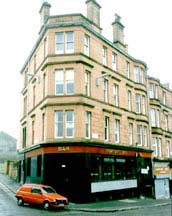
Thomson's Bar

Thomson’s Bar. 1991.

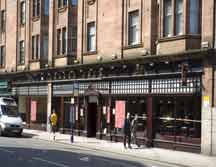
Thomson’s Bar in Springburn has been a landmark here for many years. In recent years it has had bad publicity for the involvement of the McGovern family, however this old Springburn local has an interesting history to tell. To read more keep an eye out for our second book here.

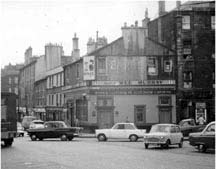
Thomson's Bar 2005

Thomson’s Bar, August 2005.

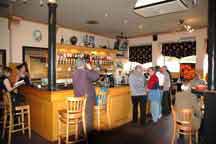
Thomson's Bar interior

Interior views of the main bar 2005.

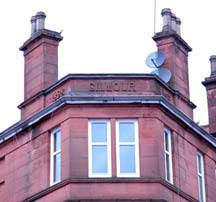
Thomson's bar date

A date of 1898 with Gilmour Place on the top of the tenement building.

also see Ruxton’s Bar, 21 Elderslie Street.
Filed Under: Springburn Road, SpringburnRoad, T

James Gilliland

January 25, 2017 by John Gorevan Leave a Comment

Gilliland’s Bar, 69 Castle Street, Townhead, Glasgow.

Interior view of James Gilliland's Bar

Interior view of James Gilliland’s Bar. 1888.

James Gilliland also owned a pub nearby at 4 Glebe Street, Townhead.

To read the full history of James Gilliland,  Click here.

Filed Under: Castle Street, CastleStreet, J

John M Gibson

January 25, 2017 by John Gorevan Leave a Comment

273-75 Buchanan Street, Glasgow.

John M Gibson

John M Gibson was situated at the corner of Buchanan Street and Renfrew Street. To Read more on the history of this popular bar, check out our book Click here.

Filed Under: Buchanan Street, BuchananStreet, J

Le Phonograph

January 25, 2017 by John Gorevan Leave a Comment


325 Hope Street, Glasgow. G2 Tel: 01413320905.

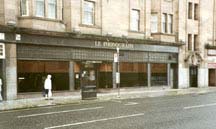
Le Phonograph

Le Phonograph. 1991.

This was originally Gershwins named after George Gershwin who was one of the most significant American composers of the 20th century, known for popular stage and screen numbers as well as classical compositions and his Jazz music.

In the NEWS 1979…

Shock ‘NO’ To A City Pub’s Licence…

Two Glasgow business men who re-mortgaged their houses, borrowing £40,000, and ploughed the money into a pub today lost their application for a licence on a technicality.

The city’s licensing board heard that the partners, Joseph Williamson and Alastair Goold, had sent off their renewal application in the post.

But, said advocate John Dowdalls, it had become “mislaid.”

DECORATIONS

He told the board that the public house, Gershwin’s in Hope Street, was one that the city “can ill afford to lose.” He added that the pub entered mainly for young people.

Mr Dowdalls said, “Both partners have put their entire life savings into the business and they have re-mortgaged their houses and borrowed £40,000. There are 10 full time staff and 25 part timers.

“They will have to be paid off if this petition fails. “There has also been, in the past year, £50,000 spent on the interior.”

The application for renewal should have been made five weeks before the sitting of the board. The board members ruled eight to four that the appropriate section of the Licensing Scotland Act, 1976, had not been adhered to and refused the application.

Neither partners had any comment to make after the case. Mr Dowdalls said they would be exercising the right to appeal. The Board also refused similar applications for two littlewoods stores and one Fine Fare store under similar circumstances.

————————————————

In the NEWS 1979…

Pop into Pipps for Local Atmosphere…

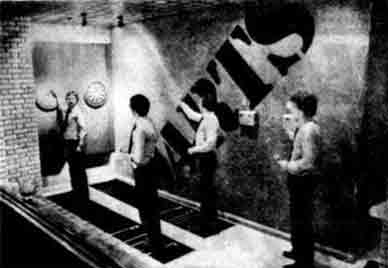
Interior view of Gershwins 1979

A novel feature of the new bar is the cleverly designed darts area which should prove popular with customers. 1979.

There was a time when Glaswegians complained that there were few places where they could spend a pleasant evening in the city centre.

But their pleas were heard and new places to eat, drink and dance began to spring up. One of the best bars to hit Glasgow opened its doors almost two years ago at the top of Hope Street.
In an ambitious venture, Eagle Inns took over premises which used to be MacConnell’s furniture shop and transferred park of them into Gershwins.

EXPANDED

Now, Gershwins is a family meeting place, both at lunch-time and in the evening, when those in the 20 to 35 age group congregate for a drink and a chat.

Gershwins has just expanded its horizons. Adjacent to the existing lounge bar, a new, as yet unnamed, bar and a lounge called Pipps have just opened for business.

They had been scheduled to open last Christmas, exactly a year after the first phase began business, but hitches occurred and the opening date was deferred until last Friday.

TALENTED

But Pipps was well worth waiting for. A subdued military theme has been used by the designer, who explained that the name was derived from the pips which donate military rank.

The management thought, however, that two “ps” would look more eye-catching on the sign over the door. Inside, the colour scheme is a muted green and military red. A talented sculpture, George Wylie, produced the talking-point brass helmets, surmounted by Glasgow sparrows in various poses, which are in evidence in specially- designed niches on the walls.

Business is just starting to pick up in Pipps, but the owners aren’t yet sure what type of clientele will prevail.

COUPLES

“We’ve seen quite a lot of couples so far,” they said.” “Their new public bar was designed to become the “Local” for the district. I was told, “There used to be a lot of pubs in the old Cowcaddens area, but most are gone now.

“All the people in the new flats need somewhere to go, so we hope they will come here.” Decor in the new bar, where prices are a pleasant surprise, as public bar prices are in operation, has concentrated on natural materials such as brick, timber, and cork.

Dominoes and darts are available to make the place seem even more like a “Local.” Heads are still being scratched, however, to choose a name which will register and be remembered.

Jokingly, one of Eagle Inns two partners suggested that a name finding competition might be necessary. Food is very much in the limelight in Gershwins, Pipps and the unnamed bar.

Although snacks are available at the bar, a full menu is offered at lunch time in two other areas. The chef produces standard meals each day, such as home-made steak pie, sirloin steak and southern fried chicken, and every week there is a speciality.

This week, it is veal cordon bleu. The menu starts with soup or juices and desserts include a delicious Black Forest gateau.

PLEASANT

Some £200,000 has been spent on making the old MacConnell’s furniture store into a place well worth a visit, either at lunch-time or in the evening.

And the adjacent car park (free after 7 p.m.) is another good reason for choosing this Glasgow hostelry. The 40 staff are especially pleasant and the surroundings are restful, and spotless.

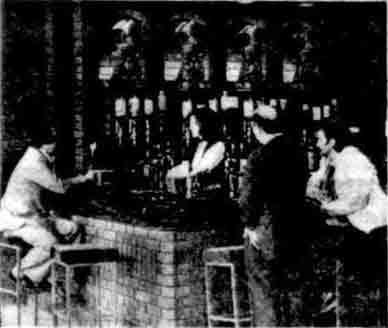
Interior view of Gershwins lounge 1979

Customers enjoy a drink in the pleasant surroundings. 1979.

Relax with music and real ale…

Camra, Campaign for real ale, supporters will be pleased to learn of the new hostelry. As they relax under the concealed lighting and listen to a variety of music, from the sixties hits to standards they will be able to sup real ale.

Surprisingly, audiences from the Theatre Royal, directly across the road, haven’t packed the place.

But the bar staff weren’t surprised to find that when Billy Connelly was drawing the crowds on his appearance at the theatre, the audience streamed across the road!

Their plans at the Hope Street site haven’t all been carried out yet. A still-empty area is being worked on just now and will open as a hairdressing salon around Christmas.

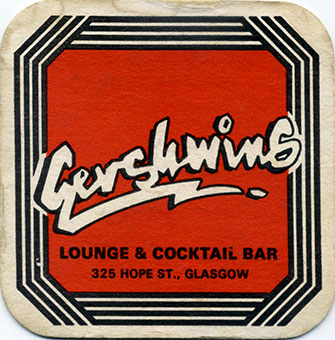
Gershwins Beer Mat

Gershwins Beer mat.

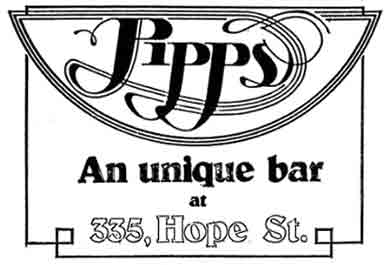
Pipps advert 335 Hope Street Glasgow

Pipps advert from 1979.

——————————————————————

Now called Trader Joe’s. 2007.

Trader Joe's

Trader Joe’s. 2007.

Filed Under: Hope Street, HopeStreet, L

McDevitt’s Bar & Lounge

January 25, 2017 by John Gorevan Leave a Comment

15-17 Norfolk Street, Glasgow.

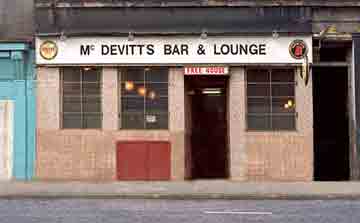
Exterior view of McDevitts Bar and Lounge 1980s.

McDevitt’s Bar 15-17 Norfolk Street.
There has been licensed premises on this site since 1877. The first licensee was wine & spirit merchant David Ballantyne. Mr Ballantyne also had pubs at 151 Hospital Street, 75 Caledonia Road, 62 Nelson Street, Tradeston. David lived with his family at an exclusive address 45 Abbotsford Place. Mr David Ballantyne contained in this pub until 1888.

Another well-known and respectable member of the Scottish Licensed Trade to own this pub was William Craig.

Mr Craig was already an established liquor merchant in Glasgow having premises at 52-54 West Street, Tradeston at the corner of Nelson Street; he also operated a licensed grocer’s shop on Pollok Street formerly owned by Thomas Bennett.
In 1889 he took over the pub at 15-17 Norfolk Street near to Gorbals Cross, at that time there were twelve pubs trading on Norfolk Street. William Craig came to Glasgow from Inchinan, Renfrew where he was born.
In 1881 he was living at Craigmiller, Nithsdale Road with his wife Janet and had a large family of three sons and three daughters. Also living with them was his father-in-law Robert Miller a retired Mercantile Clerk, along with his wife’s aunt Susan.

Mr Craig was making enough money in the licensed trade and could afford two domestic servants. When the Mr and Mrs Craig took over a beautiful villa in Nithsdale Road they named it Craigmiller after their surnames.

When the family moved to St John’s Road, Pollokshields they renamed this villa “Craigmiller”.

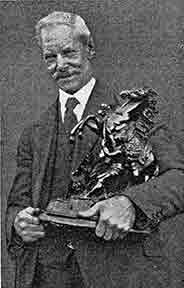
Image of Mr William Craig 1930s.

Mr William Craig 1930s.

Mr Craig was born in Kirkfield Burn, Lanark and came to Glasgow in 1881. His father William and family all worked as carpet weavers. When William came to Glasgow he worked for a short time in the railway, but gave this up to work with his uncle, Samuel Aitken, a wine & spirit merchant in both Duke Street and North Woodside Road.

Samuel also came from Kirkfield, Lanark, he lived in Greenock for a short spell before coming to Glasgow to set up a home in North Woodside Road, with his wife Elizabeth and a large family of five sons. In 1877 he acquired the licence for premises at 262 North Woodside Road near to he residence.

William Craig joined his uncle in the Duke Street premises and was soon managing the premises. On the death of his uncle, William became the new proprietor for Duke Street.
In 1898 William was the new landlord on the Arcade Bar, West Russell Street at the entrance of the Queen’s Arcade. The Duke Street premises were lost as a result of Dennistoun Ward Voting Limitations in 1920. William concentrated his efforts into one licence. He was a member of both the St. Rollox and Uddingston Bowling Clubs, this took up most of his spare time when he wasn’t serving his customers behind the bar.

William recalled the old days when children of tender years used to come for father’s refreshments and the heavy duty on whisky was from 10/6 to 72/6 per proof gallon. Rrestrictions that were imposed after the war dealt a crippling blow to the trade. Even before that the writing appeared on the wall when opening hours were cut down from 8am to 11 pm to 10 to 10 each day, these changes were welcomed by some and deplored by others. At the same time they were privileged people when it was remembered how the permitted hours were restricted during the war and how they were curtailed to 8 per day by the 1921 Act.

At the end of the 1890s William Craig was elected President of the Scottish Wine and Spirit Merchants Benevolent Institution. The grocers business was demolished many years age, West Street was demolished in the 1960s, Norfolk Street followed in the 70s, then owned by Michael Joseph Heraghty the well-known Garry Owen Bar, the Southern Bar was the last to survive and was demolished shortly afterwards.

In 1899 William Craig was licensee of 15-17 Norfolk Street, many will remember this old pub as the Garry Owen, 52-54 West Street, 27 West Russell Street and off license at 36 Pollok Street. In later years he owned a pub at 217 Duke Street.
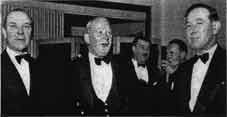
—————————————-

In the NEWS 1963…

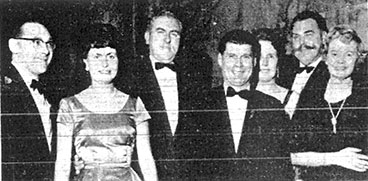
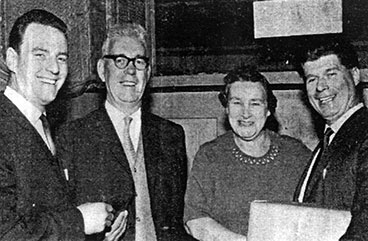
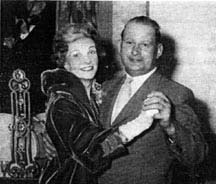
image of the Gorbals Ward with Mr & Mrs Reid; Mr P Smith; Mr M J Heraghty; Mrs P Smith; Mr H Scoffin; and Mrs N Derbyshire 1963.

Left to right Mr Reid (United Caledonian Breweries Ltd); Mrs Reid; Mr Peter Smith (The Crookit Bawbee); Mr Michael J Heraghty; Mrs P Smith; Mr H Scoffin (Old Smuggler); Mrs N Derbyshire (the Anderson Bar, Ardrossan). 1963.

——————————–

In the News 1965…

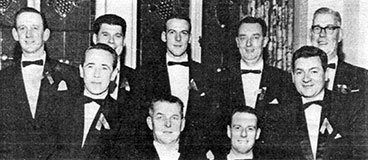
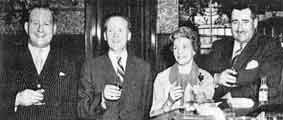
Gorbals Ward image of group with M J Heraghty 1965.

Left to right back row: Mr J Thom; M J Heraghty; N Douglass; Charles Sweeney; James K Webster.

Front row: P McGovern; Hugh Gallagher (Convener); Sam Falconer (Secretary); Raymond McCrudden (Vice Convener). 1965.

This image was taken at the Gala Night for the Gorbals Ward in 1965 at the Grosvenor. It was one of the most successful Halloween dances ever held by the Gorbals Ward Licensed Trade Association.

—————————————

In the News 1968…

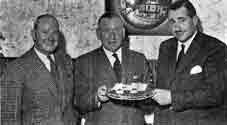
image of Gorbals Ward Sam Falconer, James K Webster and Michael J Heraghty 1968

Left to right Sam Falconer, Mr & Mrs James K Webster and Michael J Heraghty 1968.

This image was taken at the retirement of James K Webster, with his premises Webster’s Bar being taken over for redevelopment by the City Council. Mr Webster decided that the time was opportune for him to retire from the trade.

——————————-

In the News 1971…

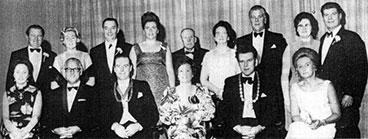
Gorbals ward large group with Mr M J Heraghty 1971

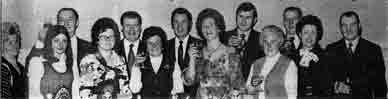
Annual dinner dance for the Gorbals Ward held in the Bellahouston Hotel, Glasgow 1971. Many well known and respected members of the Gorbals are in this image can you name any of the men and women.

————————-

In the News 1972…

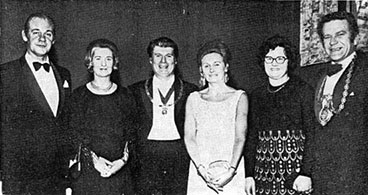
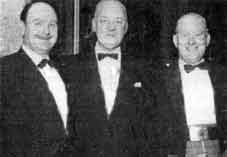
image of the Gorbals Ward with Michael J Heraghty and others 1972

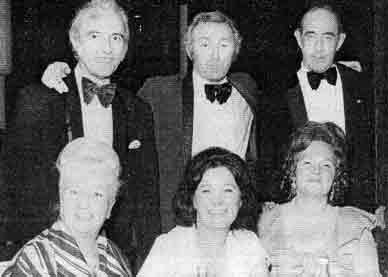
Left to right Mr L Brady (Brady & Co.); Mrs Brady; Mr Michael J Heraghty (Convener); Mrs G Grier; Mrs Heraghty; Mr George Grier (President) of the Licensed Trade Association. 1972.

———————————–

In the News 1972…

Gorbals Ward with M J Heraghty 1972

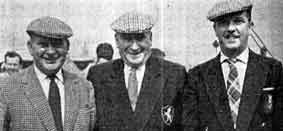
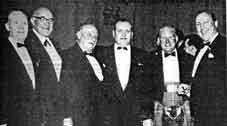
This image was taken in the Garry-Owen when Mr & Mrs Michael J Heraghty entertained friends and colleagues as a farewell gesture, included in the image are L Brady (Brady & Co.); D A MacLean (Phoenix); Hugh Gallagher (Gallagher’s Bar); J McKell (Turf Bar); Sam Falconer (The Matelot); E O’Doherty (Hampden Bar); P McGovern (Central Bar); and J McCann (Mally Arms). 1972.

Due to the redevelopment of the Gorbals Michael J Heraghty had to give up the Garry-Owen Bar in Norfolk Street. He still has the Heraghty Inn in Oxford Street.
—————————-

In the News 1974…

Gorbals Wrad image with M J Heraghty 1974.
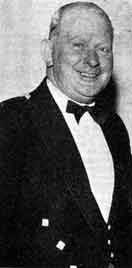
Left to Right: R T Grier (Sen Vice President); Mrs Grier; Mr William D B Wishart; Mr M J Heraghty; Mrs Heraghty; Mr J B McCann (secretary); Mrs McCann. 1974.

In the News 1974…

image of the Gorbals Ward 1974

Included in this image of the Gorbals Ward in 1974 at the Beechwood restaurant, Glasgow are: Mrs M Millarky; Charles Sweeney; M J Heraghty; Mrs Heraghty; G Watt (Bells); E O’Doherty; Mrs O’Doherty; Hugh Gallagher; Mrs Gallagher; J Donaghey; Mrs Donaghey.

group image with J McDevitt 1975.

Left to right James McDevitt of the Killearn Bar; John Boyle of Dixon Blazes; and Peter Byrne of the New Hawthorn Bar. 1975.

Licensees…

Michael J Heraghty 1960s.

Alexander C Keenan 1950.

John Cowan 1940s-1904.

William Craig 1903-1889.

David Ballantyne 1885-1877.

Filed Under: M, Norfolk Street, NorfolkStreet

Jackson’s Bar

January 25, 2017 by John Gorevan 1 Comment

100 Crown Street, Gorbals, Glasgow.

Jackson's Bar Crown Street

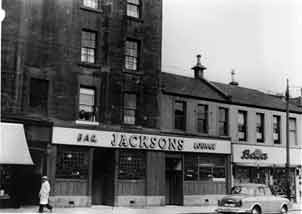
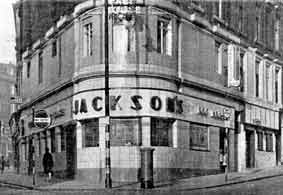
Jackson’s Bar, Crown Street, Gorbals. 1960s.

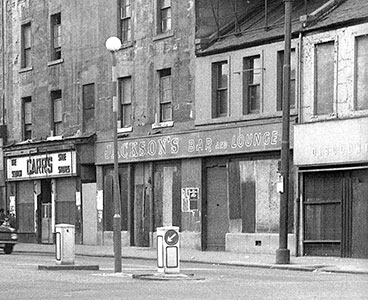
There has been a pub on this site since the 1870s. At that time is was a very small establishment and was later enlarged to take in the next door tenement building.

Thomas Kerr a well known and respected member of the Scottish Licensed Trade was landlord in 1875. He first started out in a public house at the corner of Trongate and King Street in the city centre of Glasgow. A few years serving the locals here meant he had enough money to buy a small pub outright, at 100 Crown Street, this proved to be a wise move as it was very hard to buy your own business then. Mr Kerr was very successful here and obtained another public house at 282 South Wellington Street this street later became known as Lawmoor Street. The old pub at 100 Crown Street was known as the Old Hundredth.

Jackson's Bar 100 Crown Street image 1960s.

Jackson’s Bar & Lounge, 100 Crown Street. 1960s.

Thomas Kerr was born in Tollcross in the east end of the city in 1833, he met his wife Janet in the city, afterwards taking up residence at 285 Cumberland Street, Gorbals to bring up a family of three daughters and two sons, Janet C, Isabella B, Agnes S, Thomas jun, and baby John S Kerr. The family moved house often from Cumberland Street to 203 Crown Street, before moving to better accommodation in the posh area of 33 Abbotsford Place.

In 1899 Thomas Kerr passed away at the age of 66, his daughter Janet was left as trustee of the businesses of which she carried on until her young brother John took over the South Wellington Street pub. Young John was then running the two public houses by 1912. The following year John sold the South Wellington Street business to William Thomson, however he continued to run the family business in Crown Street until after the First World War.

During the 1930 and the start of the Second World War Donald McNab took over the pub. He was a very successful businessman having a small empire of public houses at 41 Maryhill Road (the Highlanders Bar) McNab’s Bar at 614 Rutherglen Road and 100 Crown Street.

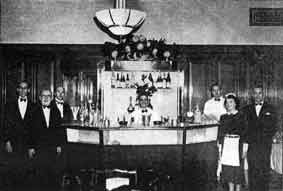
After the war John E Jackson took over the pub. Mr Jackson was one of the best known publicans of his time, having many friends in the licensed trade and in the golf clubs in and around central Scotland. In 1947 Mr Jackson was residing at 56 Croftfoot Road. He soon became a very large character in the licensed trade, he was secretary of the Gorbals Ward Committee before he was appointed Convener and representative in the Board of the Glasgow Association. John was one of the first publicans in the city to have a portable bar, he called it a mobile bar which he used when operating a special licence at functions.

John E Jackson's mobile bar

Jackson’s Mobile Bar with barmen, waiters and waitress, John E Jackson on the extreme right. 1951.

In the early 1950s John took over a public house at 91 Dundas Street which was run by James Denholm. Jackson renames the premises after a complete refurbishment the new name stood out from all the other pubs in the city and was well known as Jackson’s bar before it became known as Jackson’s Dog House.

Jackson's Dog House

Jackson’s Dog House, Dundas Street, Glasgow. 1961.

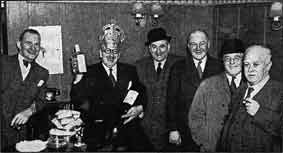
Many trade organisations held parties in Jackson’s Dog House, in 1954 popular trade personality Mr J H Wyllie, West of Scotland representative of Booth’s Distilleries, Ltd, was honoured here by numerous friends in a note worthy and unique manner. Many friend turned out for the occasion including Mr Jackson,. Mr George Grier, president of the Royalty Burns Club; John Raeside manager of Gordon Restaurant; Mr W Doherty manager of the Pavilion Theatre; Bob Hendry a former Queens Park Footballer.

John E Jackson with friends

Left to right John E Jackson, J H Wyllie, George Grier, B Hendry, A C Dickson and J B Akers. 1954.

As a token of esteem paid to him by his many friends. Mr Wyllie was presented with a special chair and having been seated up at the chair and raised to his place of elegance by Mr Hendry, he wa crowned “King High and Dry”. Mr Hendry himself was previously honoured with the presentation to him of a special seat in the bar labeled “Hendry’s Retreat.” To honour the occasion a large bottle of Chief Whisky (Rintoul’s) was presented by Mr Wyllie’s friends. It was duly opened and its contents shared with the customers at the bar.

Jackson's Dog House 1956

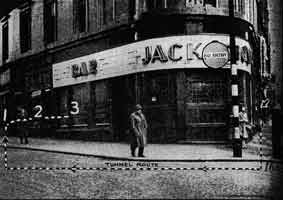
They Tunnelled 20 ft to enter Jackson’s Dog House.

In 1954 thieves tunnelled their way 20 feet up a brick wall and breaking into three Glasgow shops at the weekend, safe raiders reached their objective, a public house safe in Jackson’s Bar at the corner of Dundas Street and Dundas Place. The thieves had an hour’s work to get to the safe. When they did reach it they ripped the bottom off and escaped with about £30.

C.I.D men found that the thieves had started tunnelling from the basement of a nearby close. From there the raiders had tunnelled 20 feet, then knocked a hole in the wall of a music shop. Inside this shop, they crossed to a wall next to a florist’s and smashed their way in. They next knocked another hole in a wall leading to the public house. The raiders escaped by the same route.

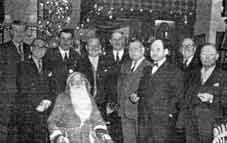
John E Jackson and friends

This photograph was taken in December 1955. On the occasion of the opening of Charles Watson’s new bar. Mr Charles Watson’s Old Vic Bar at 669 Govan Road, had a new bar fitted, and there to wish Mr & Mrs Watson well with the new venture were some of the well known personalities in the trade, including, G C Millen, N Foulger, George Grier, I Sinclair, John E Jackson, C Cullen, J H Wyllie, W Johnston, R Lemon and J Millen. They drank a cordial toast to the Old Vic and Mr & Mrs Watson.

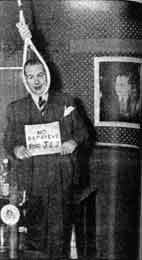
John E Jackson with a noose round his neck

John E Jackson with a noose around his neck. 1956.

This photograph was taken on the occasion of a portrait of Mr Jackson being hung in his Crown Street Bar, known as the Old Hundredth. Mr Jackson and Mr Grier were firm friends, and, with their wives, have on several occasions gone holidaying together. The portrait was handed to him by members of the Gorbals Ward Committee as Mr Jackson announced his retirement of the convenership of the Ward.

John E Jackson

John E Jackson with friend H W Carmichael. 1957.

John E Jackson and friends

Top: John E Jackson and Mr S Guymer; middle: Mr C Watson, Mr D Garrow and Mr A Thomson, Oakbank Bar; front: Mr N Foulger, secretary of the Govan Ward. 1958.

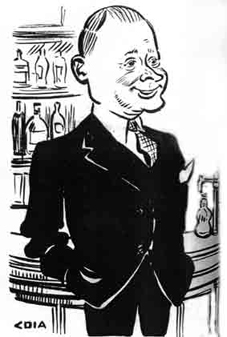
Cartoon of John E Jackson

This cartoon of John E Jackson by drawn by Coia. 1958.

Mr & Mrs John E Jackson

Mrs & Mr John E Jackson. 1960.

John E Jackson and Mr MacLean 1960

This photograph was taken at 100 Crown Street in 1960. John E Jackson, with friends Donald MacLean of the Coronation Bar, Rutherglen Road; Mrs Jackson and Mr A M Don, managing director of G & C Moore Ltd.

John E Jackson with friends

The photograph above is of Mr Tom Wilson, Council officer for the City of Glasgow, on retiring after 30 years service, was the principal guest at a party given by John E Jackson, at the Neuk, Carmunnock. The occasion was marked by the presentation to Mr Wilson of a set of Golf cuff links, one of them bearing a watch. This gift was handed over by A M Don, managing director of G & C Moore Ltd. on behalf of Mr John E Jackson. 1960.

Mr John E Jackson with friends

Left to right Mr D D Rennie, of Booth’s Gin; Mr John Young, “The Wee Mans”, Gallowgate; and John E Jackson. 1962.

John E Jackson with his sister

right to left John’s sister Mrs M Harris, Polonia Restaurant, London; John E Jackson and John’s wife. 1962.

John E Jackson with Mr A McAulay

right to left Mr B Brind, managing director, Sir Robert Burnett & Co., Ltd; John E Jackson and Mr A McAulay, ex-Kyle’s of Bute Bar, Govan. 1962.

J E Jackson with bunnet

This 1960s photo was taken at the Gorbals Association outing. The three bunneteers; John E Jackson; George Grier and Mr J McIntosh.

John E Jackson group photo

Mr John E Jackson

Mr John E Jackson. 1960s.

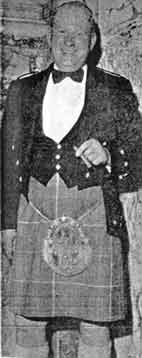
John Jackson with kilt

Mr Jackson with full celtic attire.

John E Jackson had a new adventure in the later 1950s. He opened a new lounge bar in Carmunnock called “The Neuk.” His new venture was situated five and a half miles from Glasgow in the old world village Carmunnock. For many years the Neuk was a tea-room. Repeated attempts were made for a licence but although the lower court granted the application on several occasions the decision each time was overturned by the Appeal Court. Mr Jackson, Glasgow Licensee, ultimately took over the premises and on him making a seventh application it succeeded at both Courts.

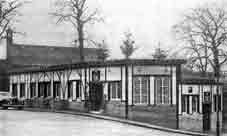
Exterior view of the Neuk Carmunnock

Exterior view of the Neuk Carmunnock. 1961.

To Mark the opening of the premises in their new form. Mr & Mrs Jackson were recently hosts to a party of Trade friends and personalities. The honour of performing the opening ceremony fell to Mr A M Don, Managing Director of G and C Moore Ltd.

The Staff at the Neuk Carmunnock with John E Jackson

The Staff with John E Jackson, the Neuk, Carmunnock. 1960.

Referring to Jackson’s two other enterprises, the Dog House in Dundas Street and Jackson’s Bar, 100 Crown Street. Mr Don remarked on the success Mr Jackson has made of both these premises. He recalled that Mr Jackson in his youth was employed in the Dundas Street premises when it was a restaurant. The progress he had since made was a great credit to him. Under the supervision these new premises would prove an attraction in Carmunnock.

Interior of the Neuk Carmunnock

Interior view of the Neuk. Christmas 1961.

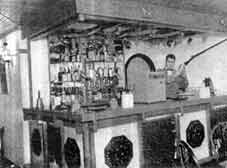
Neuk Bar interior carmunnock

The Neuk Bar.

The new Neuk, which surely ranked as a Carmunnock showpiece, moulded into the character of the village. With its tudor exterior in black and white and its rows of 16 hanging wrought-iron lanterns it presented a picturesque appearance. The alcoved, carpeted Tudor lounge bar had its counter panelled in rough-cut slices of elm and sycamore straight from the tree. In building up the old world atmosphere, Mr Jackson had been helped by friends, and he had been given three nag-at-the-wa’ clocks, one of which is 200 years old.

The Neuk dining area

The Neuk dining area.

Perhaps because it was at the seventh attempt that an application for a licence for the premises was successful that the bar downstairs had been named “Bruce’s Cave.” It was really is shaped like a cave. On the floor was a Bruce tartan carpet. On the curved walls were swords, a breast-plate and helmet, and bagpipes. Customers food was to be an attraction to the Neuk, where a well appointed dining room had accommodation for 30 patrons. The Neuk manager was Mr Charles Meranghi, who was for many years an experienced head waiter in the restaurant business.

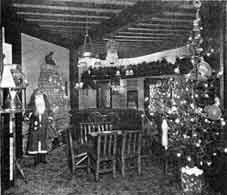
Santa at the Neuk Carmunnock

Santa at the Neuk, Carmunnock.

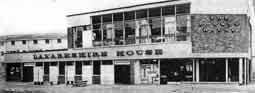
In 1962 Mr Jackson’s empire of licensed premises flourished, he opened yet another establishment the Lanarkshire House. A road house atmosphere with a Continental trend that is what he had achieved at the Lanarkshire House, Halfway, Cambuslang. The premises occupying a prominent corner site of the main road at Halfway, were replete with interesting designs, have an unusual blend of fabric and material, and delight the eye with striking colour. The architect drew his material from Italy, Denmark, West Germany, Africa and Japan.

Lanarkshire House exterior Halfway Cambuslang

Exterior view of the Lanarkshire House, Halfway, Cambuslang. 1962.

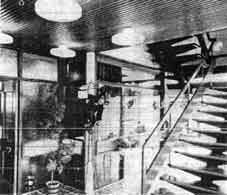
In the forecourt were four illuminated fountains, a new feature in Lanarkshire at the time, with attractive paving and three simple wayfarer seats. The exterior wall had an abstract design in mosaic representing tap founts and bottles. This is British designed. The Lanarkshire House speaks travel along the Hamilton Road. The entrance hall featured a terrazzo floor, German light fittings and most impressive a free tread cantilevered staircase made from Afromosia, a wood from Africa as durable as teak. The entrance gives access to a cocktail lounge and restaurant.

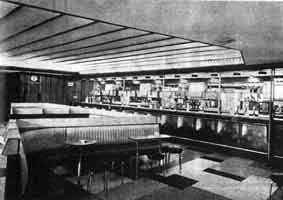
The Public Bar at Lanarkshire House

The Large public Bar. 1962.

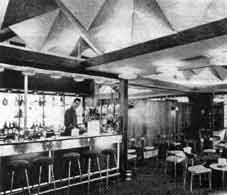
The ground floor cocktail lounge, known as the “County” is cosy and captures the style of decor… mauve carpet, flood-lit flame coloured curtains and olive walls. A decorated screen at the right of the bar is modernistic, using coloured glass bricks and coppered shapes. Here there are prize-winning design chairs made in Scotland. The lighting effects in this lounge are Danish.

Lanarkshire house interior

Cocktail Bar in the Lounge. 1962.

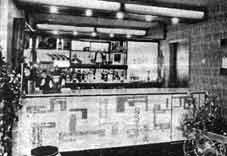
On the back wall of the stairway, a wall-paper mural captures the same colours as the restaurant carpet, green, orange and olive. The bar in the restaurant is spectacularly fronted with alternate panels of Italian marble and natural cowhide. There are three raised flood-lit ceilings in this room, which also contains the dance hall area and band platform. There is a resident band. Supper dances are being held every Thursday, Friday and Saturday.

Lanarkshire house interior

The Off Sales department.

The Lanarkshire House bar has the ingle-neuk, alcove and island seating arrangements. A surprise item in the decor is the wall-panel of Japanese sea-grass. The Bar here is cheerfully illuminated and the copper mirrors give a flattering glow. The restaurant caters for 100 people, and Mr Jackson is so certain of its success that he is already considering an extension. The manager of the Lanarkshire House was Mr Marcus Marenghi the head barman, Mr Stepanek and the head chef, Mr John McConnell.

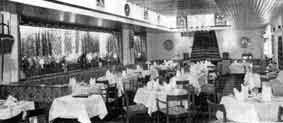
Lanarkshire House dining room

The Lanarkshire House Dining area. 1962.

Mr Jackson recalled that 20 years ago a lounge bar was a complete innovation. Now he said its a necessity. In the old days too the pub was a man’s world of drink, darts and dominoes. Now it has been invaded by the wives, and its no secret that they’re the bigger buyers. “When a couple have an evening out nowadays the woman, with her fancier drinks, accounts for about two-thirds of the bill. And, of course, she’s always on hand to let her husband know when he’s had enough.”

Lanarkshire House stairway

The interior entrance hall with stair-case.

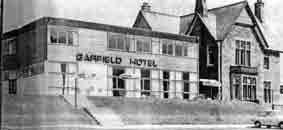
The Neuk, Carmunnock was destroyed by fire in 1965 and was refused a licence to reopen the premises. On that same year Mr Jackson opened the Garfield Hotel, on Cumbernauld Road. A seven day licence was finalized by the Lanarkshire Licence Courts, an agent on behalf of Mr Jackson agreed on conditions by the court that alterations and the construction be completed before the scheduled operation on June 30th 1965.

The Garfield hotel was prominently positioned at the end of the dual carriageway running to the new town of Cumbernauld. It was designed for the traveller and tourist in mind. The decor theme chosen for the hotel was based on vintage cars, which was imaginatively used throughout the hotel. The 19th century mansion house was skillfully preserved in the alterations carried out by adding a large an imposing new wing, completely modern ito its design. Garfield Hotel had 20 bedrooms, a main dining room with seating for 150 people for functions, a breakfast room, a lounge bar, a cocktail bar, public bar and residents lounge.

The Garfield Hotel Cumbernauld Road

The Garfield Hotel. 1965.

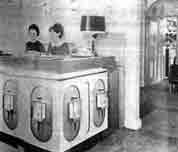
Georgian green, close fitted carpets laid in the entrance hall, reception area, staircase and throughout the residents lounge, which linked the new and older section of the hotel. The heavy wood on the staircase and the stained glass windows was a feature of the hotel. Vintage and classic cars was the theme of the hotel, with framed pictures adorning the walls. The theme continued throughout, leading off the reception hall was a wire wheel cocktail bar. Seating here was deep buttoned in natural tan leather and the carpet was also in green with curtains in two tones of green with vintage cars in bright colours. Chairs were of natural mahogany with tables in green marble.

Main Bar in the Garfield Hotel

The main bar in the hotel. 1965.

Reception hall in the Garfield Hotel

The reception Hall at the hotel. 1965.

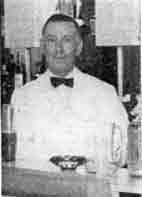
The resident manager of the hotel was a Mr G Fitzpatrick, who held a diploma from the Scottish Hotel School and who had extensive experience in management of hotels of all kinds. He was assisted by his wife in the running of the business. Head barman at the wire wheeled cocktail bar was Mr James Martin. The chef was Mr G Kousorou formerly of the Ca’doro Restaurant, Glasgow. Head waiter was Mr Frank Naismith.

Mr James Martin head barman of the Garfield hotel

Head Barman James Martin.

Mr Jackson’s empire didn’t end here, he took over the well known public house “the Regal”

Less than 2 years after the opening of the Garfield Hotel, Mr Jackson went bankrupt, this was a sad moment for one of Glasgow’s well known and colourful publicans. Mr Jackson held a meeting of his creditors in the Chartered Accountants Halls, 220 St. Vincent Street, Glasgow. Mr Jackson who resided at 18 Gordon Road, Netherlee, disappeared from the public meetings and licensed trade meetings, that must have been a sad moment in the Scottish Licensed Trade.

—————————————————————–

In the NEWS 1976…

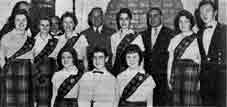
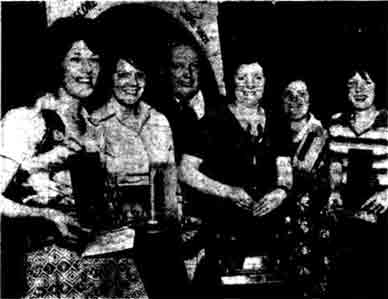
Winners of the first Glasgow's ladies darts league 1976

Trophy night for the winners of the Glasgow woman’s darts league at the final of their competition for the Kensas Club Darts Trophy in the Grosvenor Hotel, Glasgow.

Winners were the Garfield Hotel team from Stepps, who beat the girls from the Sou Wester Bar, Gorbals, Glasgow.

Left to right are winners Nancy Taylor, Carol McKerron, Gil Brodie, area manager for Gallaher cigarettes, Margaret Devlin (team captain) and Janet Taylor. 1976.

Facts…

Raiders take £200.

Two raiders attacked the chargehand of a Glasgow public house and got away with about £200. The chargehand, Mr Frank Robertson, was alone in Jackson’s Bar, 100 Crown Street, checking the week-end talkings when the raid occurred.

Filed Under: Crown Street Gorbals, CrownStreetGorbals, J

  • « Go to Previous Page
  • Page 1
  • Interim pages omitted …
  • Page 336
  • Page 337
  • Page 338
  • Page 339
  • Page 340
  • Interim pages omitted …
  • Page 437
  • Go to Next Page »

Primary Sidebar

Become a Member of Old Glasgow Pubs

We are very excited to announce that we have created a new membership! In return for supporting the site, you will gain fantastic perks! Click below to find out how you can support the site!

💖 Donate via PayPal

All content on this site is Copyright Old Glasgow Pubs (OGP). To use any history or images, please make sure you link back to our site.

This website uses cookies to improve your experience. We'll assume you're ok with this, but you can opt-out if you wish. Cookie settingsACCEPT
Privacy & Cookies Policy

Privacy Overview

This website uses cookies to improve your experience while you navigate through the website. Out of these cookies, the cookies that are categorized as necessary are stored on your browser as they are essential for the working of basic functionalities of the website. We also use third-party cookies that help us analyze and understand how you use this website. These cookies will be stored in your browser only with your consent. You also have the option to opt-out of these cookies. But opting out of some of these cookies may have an effect on your browsing experience.
Necessary
Always Enabled
Necessary cookies are absolutely essential for the website to function properly. This category only includes cookies that ensures basic functionalities and security features of the website. These cookies do not store any personal information.
Non-necessary
Any cookies that may not be particularly necessary for the website to function and is used specifically to collect user personal data via analytics, ads, other embedded contents are termed as non-necessary cookies. It is mandatory to procure user consent prior to running these cookies on your website.
SAVE & ACCEPT