• Skip to primary navigation
  • Skip to main content
  • Skip to primary sidebar
Old Glasgow Pubs

Old Glasgow Pubs

  • Home
  • About Us
  • Find A Pub
  • Find Address
  • Find A Publican
  • Further Reading
  • Shop
  • Contact Us
  • Members Area
  •  
  • Click Here to Search the Site
You are here: Home / Latest Posts

Latest Posts

The Grapes

January 25, 2017 by John Gorevan 1 Comment

54 Crown Street, Glasgow. S.S.
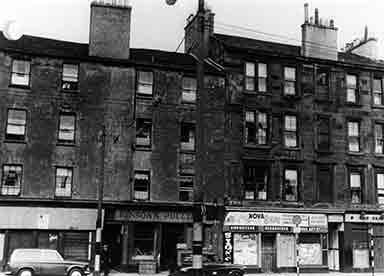
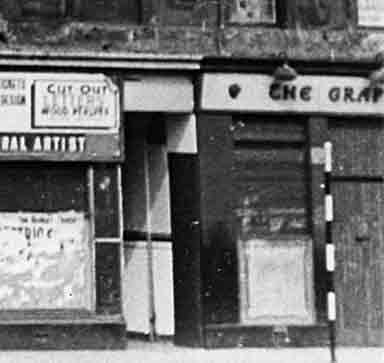
The Grapes 54 Crown Street Glasgow

The Grapes on the far right.

image of the Grapes 54 Crown Street

A close-up of the image above, The Grapes. Thanks to Norrie McNamee for the photographs.

James Whyte a smart wine and spirit merchant started out with a small public house in the notorious Adelphi Street, Gorbals. His first pub was at no. 42 Adelphi Street. His residence was next to his pub.

In 1861 Mr Whyte acquired another public house at 38 Crown Street.

In 1870 James Whyte was now living with his wife at 20 Apsley Place, a much better accommodation than Adelphi Street. His Adelphi Street premises sat at the corner of 1 Muirhead Street.

A few years later James had moved address again, this time to better accommodation, his house was called “Matrin”, Albert Road, Pollokshields.

Business must have been good and prosperous. In 1873 James was running a pub at 54-56 Crown Street and 43 Adelphi Street.

In 1880 Mr Whyte was running another pub at 8-10 Eglinton Terrace.

In 1890 he was running 8-10 Eglinton Street and his Crown Street establishment but had lost his Adelphi Street premises.

4 years later another pub was added to his small empire of pubs, 400 Victoria Road (Victoria Bar). Mr James Whyte sold the Crown Street business to Peter McMenemy in 1897.

Other licensee after Mr Whyte…

Peter McMenemy, 1897-1914.

Thomas Elliot, 1914-1932.

Michael A Elliot, 1932-1937.

Charles Bell, 1937-1945.

Kenneth Grant, 1945-1960s.

In 1960 Kenneth Grant also ran pubs at 705 Gallowgate (Crown Bar) and 143 George Street.
Filed Under: Crown Street Gorbals, CrownStreetGorbals, G

The Grand Theatre

January 25, 2017 by John Gorevan Leave a Comment


Cowcaddens, Glasgow.


Mr W H Webster was manager of the Grand Theatre, Cowcaddens, Glasgow. Born in Nottingham in 1857 and educated at the High School there, he finished his studing at Trent College.

Originally intended for the Bar, his abilities and aptitude for the front and at an early age was manager of the theatre a very responcible position for someone so young.

He was a well-known amateur actor and was the founder of the Byron Amateur Dramatic Club, in connection with which he was introduced to the late Mr Joseph Eldred, who, till his death, remained his warm and esteemed friend, and under whose advice and guidance he entered the profession. His first engagement was with Mr Eldred’s company, with which he had a most successful tour in 1880, playing the part of Tremolini, the waiter, in Princess of Trebizonde.

His versatility was shown in his next engagement, at the Theatre Royal, Sheffield, he acted the part of Mrs Sinbad in the pantomime of Sinbad the Sailor.

Filed Under: Cowcaddens, Cowcaddens street, G

The Grand Hotel

January 25, 2017 by John Gorevan Leave a Comment

560 Sauchiehall Street, Glasgow.

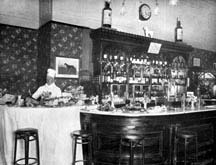
Grand Hotel Interior

Interior view of the bar and buffet room. 1930s.

Mr J Fritz Rupprecht managed the Grand Hotel in 1903, he formerly managed various hotel in Glasgow including the Alexandra Hotel, Bath Street in 1887. He was assisted by his wife who followed him in his carrier in the hotel business.

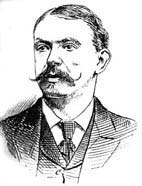
J Fritz Rupprecht

Mr J Fritz Rupprecht.

Mr Rupprecht started out in the hotel trade in 1864, he was known for many years in the Banavie Hotel, where he was familiarly known as “Fritz,” he was also in the Edinburgh Hotel under the proprietorship of Mr Middlemass. In 1887 Mr Rupprecht took over the Alexandra Hotel, 148 Bath Street, Glasgow. He was assisted by his wife who had a wide knowledge in Culinary matters, and took charge of that department in the hotel. Several of the principal hotels in Glasgow benefited from his services. He died in 1905.

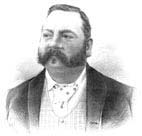
Another well known figure in the Grand Hotel was manager Mr H W Hayward in the 1890s. Mr Hayward was employed with Messrs. Bertram & Roberts, the well known Crystal Palace Refreshment Contractors at Norwood, near London, he managed afterwards for the same firm the Royal Aquarium, Westminster.

In 1882 the North East Coast Exhibition was held at Tynemouth, for which he catered, and was its success that it was the originator of the well known Fisheries Exhibition being held in London. He was also connected with the Alexandra Palace in London for five years as manager and caterer. He had the honour of entertaining many aristocrats during his carrier in England, he also catered for Royal Highnesses the Prince and Princess of Wales, Princess mary of Cambridge (Duchess of Teck,) Princess May and her family. He had a photograph of the Royal family with him in it at their visit to the Alexandra Palace in 1888.

Mr H W Hayward

Mr H W Hayward.

Mr Hayward was a Freemason and managed for a considerable time the Bridge House Hotel, London Bridge, which was then the headquarters of the twenty-one Masonic Lodges. He also had a long history in military work in Okahampton (Royal and Horse Artillery,) Abergavenny and Lavernock, he was also in the Volunteer Artillery.

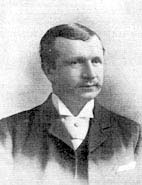
In 1898 manager of the Grand Hotel was Mr C Ulbrich. He was born in Dresden in Saxony, after leaving school he entered the hotel trade. He was apprenticed in the British Hotel, Dresden, one of the finest in the city and on the same street as the Houses of Parliament and much frequented by British Tourists. Working in Europe he went to Ems to the Four seasons Hotel, where he filled the post of Head Waiter.

He then went on to Bavaria in the Victoria Hotel, Rotterdam then to Amsterdam to the Du Pay Bas hotel. This was the year of the famous Amsterdam Exhibition in 1883. On leaving Amsterdam he came directly to Glasgow and worked in the Marine Hotel, Hunter’s Quay, the headquarters of the Royal Clyde Yacht Club, he then went on to Arran, working in the Brodick.

Mr C Ulbrich

Mr C Ulbrich. 1898.

Again back the Marine Hotel, he acted as under manager, after a unfortunate fire took place at the hotel, he had charge of the temporary buildings, and on there completion he was appointed manager of the new club and hotel.

After eight years with the firm he left to work in the Grand Hotel under Mr Hayward. In his spare time he played a good game of Bowls and curling, he was a Freemason of lodge no 335, Dunoon.

Filed Under: G, Sauchiehall Street, SauchiehallStreet

McPhabb’s

January 25, 2017 by John Gorevan Leave a Comment

23 Sandyford Place, Glasgow. G3 7NG. Tel: 0141 221 0770.

You would have to try very hard not to feel welcome at McPhabbs!

Situated on Sauchiehall Street at Sandyford Place, 500 yards west of Charing Cross, it was established in 1997 and has rapidly gained one of the most eclectic clienteles in the city.

Local residents in Glasgow’s historic Anderston ward have long known about the understated charms of this alehouse. They have been joined by many in the west end’s business and student communities who have all come to cherish the sharp and friendly service and excellent food which offers astonishing value for money.

This popular alehouse was once known as “The Grafton”.

In the News 1971…

A good old name in a grand new place!

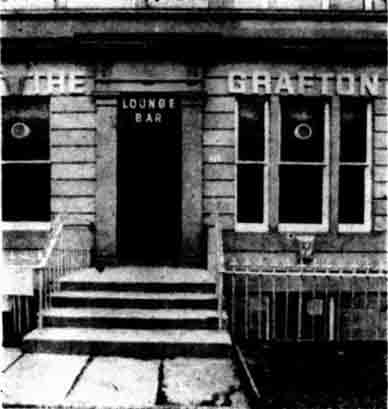
The Grafton 1971

The Grafton Lounge Bar. 1971.

When a smart new Pub called the Grafton opened its doors for the first time a week ago in Dandyford Place, Charling Cross, the name had familiar ring to quite a few people, especially former students at Strathclyde University and the Central College of Commerce.

their special pub at the corner of Grafton Street and Cathedral Street, was called the Grafton, but demolishers moved in with bulldozers at the end of 1969 and their howff vanished in a heap of rubble.

The owner of the old Grafton and the new Grafton is one and the same, 40 year-old Frank Mcguire. “Mt father and I ran the pub at Cathedral Street for 12 years,” he told me in the lounge bar of his new premises. “When it was demolished I had to look for somewhere else and didn’t come upon this site until the end of 1970.

“From then on we got things moving very quickly. The workmen moved in at the start of the year and were finished by last week.” It’s obvious that both a lot of expence and effort have gone into transforming 23 Sandyford Place from dingy offices into a cosy traditional pub with lots of atmosphere.

Old World

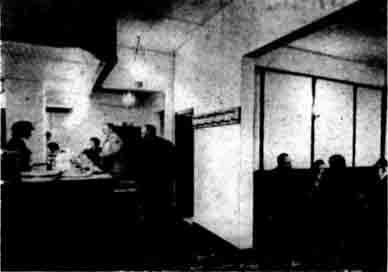
“I designed the interior,” said Mr McGuire. “The decor in the old pub was so popular that I decided to model this one on it. “There’s no chrome or plastic laminates here,” he laughed. “I think that’s only suitable for ice-cream shps.” Instead there are traditional white walls with black beams to give an old-world atmosphere. The red and gold carpets and matching red brocade curtains add a touch of luxury.

Round the walls are red bench seats, and there are also fumed oak tables and chairs. The lights are attractive imitation oil lamps. Downstairs, in the cocktail bar, the decor is similar but in a green and gold theme.

Ideal situation

The new situation of the Grafton is ideal for both business men looking for a quick, good lunch and for people having an evening out. Something which should make the pub especially popular is the private car park which has a direct entrance to the cocktail bar.

I asked Mt McGuire if he planned to have music in the bar in the evenings. “We had thought of having a group,” he told me, “but I eventually decided against it. The layout of the place doesn’t lend itself to a group. Anyway, I think there are still some people who like to spend their evening over a quiet drink.”

Interior view of the Grafton 1971

Interior view of the Grafton. 1971.

Good selection

He invited me to have lunch in the lounge bar and showed me a menu with an amazingly good selection of meals at very reasonable prices. There were three kinds of soup, all at 10p; seven main dishes ranging in price from 25p, and either biscuits and cheese or grapefruit cocktail to follow at 10p . Coffee is 5p. Downstairs in the cocktail bar salads and sandwiches are served at lunch time. I chose stewes steak and was served almost immediately with a good, hot meal, including both potatoes and chips.

I noticed that already the Grafton has attracted a big following at lunch time. “Quite a few are old regulars,” explained Mr McGuire, “and we think we will attract plenty of new lunch time customers.” Because so many offices are now working a six day week, the Grafton is also going to open for lunch on Saturdays.

Filed Under: M, Sandyford Place, SandyfordPlace

The Grafton Bar

January 25, 2017 by John Gorevan Leave a Comment

274 Cathedral Street, Glasgow.

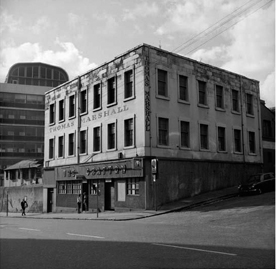
Grafton Bar Cathedral Street

The Grafton Bar. 1960s.

The Grafton Bar was named after the street on the corner of the pub, Grafton Street.

The first licensee to hold a certificate was a publican called Francis Anthony Mulholland Dailly, he acquired the pub in October 1909. He continued to serve the locals here until after the First World War.

During the depression on the 1930s Mrs C McGarrigle and Mr J McGarrigle were running the pub. They soon gave up the business and sold it to William Cran Forbes a wine and spirit merchant, in 1937.

Many of the drinkers will still remember James McGuire, the licensee who ran the pub in the 1960s. Like many of the old houses and businesses in Cathedral Street the pub too was demolished in 1969 in the City Council’s redevelopment scheme in the 1960s and 70s.

However Mr. McGuire reopened a new Grafton lounge bar in Sandyford Place a few years later.

During the WW1 there were another 6 public houses on Cathedral Street, which included McLaren’s at number 137, Pragnell’s at 214-16, McArthur’s at 339-41, Stewart’s at 486, Lang’s at 481-83 and the Cosy Den at 496 Cathedral Street at the corner of Buchanan Street.

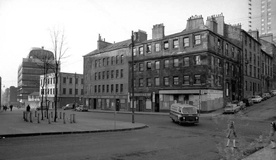
Cathedral Street 1960s

Cathedral Street in 1960s. The Grafton can be seen on the left hand side of the image.

Other Cathedral Street Pubs…

Filed Under: Cathedral Street, CathedralStreet, G

MacLeod, Alexander William

January 25, 2017 by John Gorevan 2 Comments


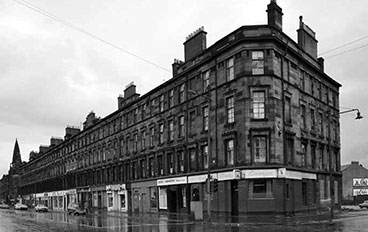
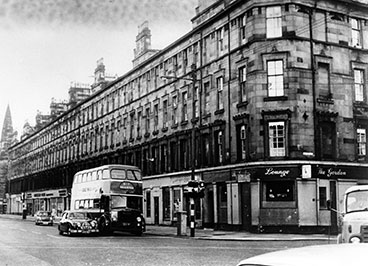
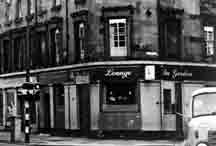
MacLeod’s Bar, 429 Eglinton Street, corner of 1 Elgin Street, Glasgow.

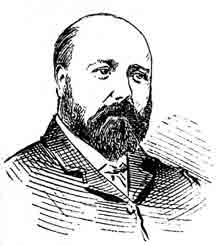
Alexander William MacLeod

Mr Alexander William MacLeod. 1887.

Alexander William MacLeod was born in Dunvegan, Isle of Skye in the 1830s. At an early age he lost both his parents, year after year he struggled to get on in life and moved to Glasgow where he became connected with the spirit trade in 1867 by entering the services of Mr D Crawford, Queen Street, Glasgow, after five years of hard work he left to work with Messrs. H & E Taylor in their premises at Stirling Street now Blackfriar Street, this firm later became known as Stevenson Taylors.

Hard work paid off and his employers helped him buy his first public house in 1877, a small pub on Herbertson Street at the corner of South Coburg Street, paying an annul rent of £50.00. Mr MacLeod prospered in this old pub this was due to the fact that he had very good training with H & E Taylor. In 1883 Alexander opened another pub at 429 Eglinton Street, Glasgow, this pub became the Gordon Bar sitting at the corner of Elgin Street. Another pub was added to his small empire at 45 Cheapside Street which he acquired in 1888.

Alexander loved the outdoors, he was President of the Wanderers Angling Club, he was also Vice President of the Glasgow Skye Association and in this connection he had taken a warm and active interest in all the movements for the amelioration of the condition of his crofter counrtymen. In his spare time he enjoyed a good book.

The Gordon Bar 429 Eglinton Street

The Gordon Bar, Corner of Eglinton Street and Turriff Street.

exterior view of the Gordon Bar 1960.

The Gordon Bar 1960s.

The Gordon Bar

The Gordon Bar. 1960s.

License Holders for the premises at 429 Eglinton Street, the Gordon Bar.

1973 Margaret Dougan.

1960 Robert P Johnston.

1937 Duncan McLennan.

1919 Christine Ann MacLeod (for the trustees of Alexander macLeod.

1899 – 1883 Alexander W MacLeod.

Facts…

Turriff Street was formerly Elgin Street.

Filed Under: Eglinton Street, EglintonStreet, Publican M Tagged With: Eglinton Street, MacLeod, MacLeod's Bar

  • « Go to Previous Page
  • Page 1
  • Interim pages omitted …
  • Page 334
  • Page 335
  • Page 336
  • Page 337
  • Page 338
  • Interim pages omitted …
  • Page 437
  • Go to Next Page »

Primary Sidebar

Become a Member of Old Glasgow Pubs

We are very excited to announce that we have created a new membership! In return for supporting the site, you will gain fantastic perks! Click below to find out how you can support the site!

💖 Donate via PayPal

All content on this site is Copyright Old Glasgow Pubs (OGP). To use any history or images, please make sure you link back to our site.

This website uses cookies to improve your experience. We'll assume you're ok with this, but you can opt-out if you wish. Cookie settingsACCEPT
Privacy & Cookies Policy

Privacy Overview

This website uses cookies to improve your experience while you navigate through the website. Out of these cookies, the cookies that are categorized as necessary are stored on your browser as they are essential for the working of basic functionalities of the website. We also use third-party cookies that help us analyze and understand how you use this website. These cookies will be stored in your browser only with your consent. You also have the option to opt-out of these cookies. But opting out of some of these cookies may have an effect on your browsing experience.
Necessary
Always Enabled
Necessary cookies are absolutely essential for the website to function properly. This category only includes cookies that ensures basic functionalities and security features of the website. These cookies do not store any personal information.
Non-necessary
Any cookies that may not be particularly necessary for the website to function and is used specifically to collect user personal data via analytics, ads, other embedded contents are termed as non-necessary cookies. It is mandatory to procure user consent prior to running these cookies on your website.
SAVE & ACCEPT