• Skip to primary navigation
  • Skip to main content
  • Skip to primary sidebar
Old Glasgow Pubs

Old Glasgow Pubs

  • Home
  • About Us
  • Find A Pub
  • Find Address
  • Find A Publican
  • Further Reading
  • Shop
  • Contact Us
  • Members Area
  •  
  • Click Here to Search the Site
You are here: Home / Archives for Address G / Gallowgateroad

Gallowgateroad

The Carnmore.

November 17, 2016 by John Gorevan Leave a Comment

328 Gallowgate, Glasgow G4 0TX. Demolished.
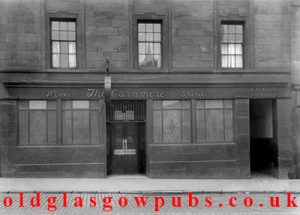
The Carnmore. 1930s.

This was originally the Hielan Jessie tavern. To read more on this popular Gallowgate pub click here.
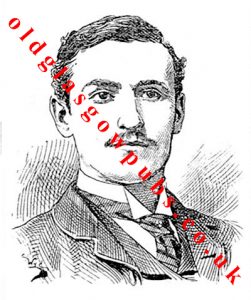
Landlord Mr John McGuire. 1892.

Other names this old pub’s had in the past was the Star Bar, the Old Barrack Vaults, Hielan Jessie Tavern, and the Mone Inn, owned by Arthur Mone, he also owned a pub on 485 Govan Road and 75 Main Street, Bridgeton.
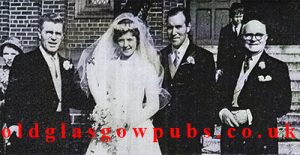
The wedding day of Dr Arthur Mone to Miss M Curran. 1958. Left to right Dr Arthur Mone, Miss Curran, Dr Gerald Mone and Arthur Mone Sen. The wedding took place at Our Lady of Lourdes Church, Cardonald, the wedding ceremony was performed by Arthur’s brother the Rev. John Mone. Dr A J Mone was a director of the Clyde F. C. and a doctor to the team.
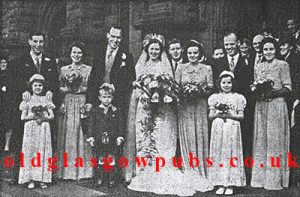
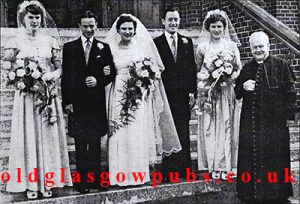
This photograph was taken at the wedding of Mr John E Lynas and Miss Kathleen Mone daughter of Mr & Mrs Arthur Mone in 1945.The wedding took place at the Holy Cross Church, Crosshill and was conducted by Father Gerard Dunn, Kirkintilloch, the uncle of the bride. Nuptial Mass was celebrated and the Papal blessing was afterwards conveyed to the bride and groom.

The bride wore a dress of white chiffon velvet, with long flowering veil, and she carried sheaf of white lilies. Three bridesmaids were in attendance, Miss Philomena Mone (sister of the bride); Miss Rosemary McCabe (cousin); and Miss Maureen Travers. Three little cousins of the bride, Frances, Catherine and Edward Dunn, acted as trainbearers. The bridesmaids were attired in rose pink with floral headdresses, their bouquets consisting of anemones. Mr Joseph Lynas a brother of the groom was best man.

Following the ceremony a reception was held in the Grosvenor Restaurant, Gordon Street.Over two hundred guests attended. A large number of clergy were amongst the guests and a large contingent of friends had made the journey from Ireland to do honour to the occasion. Mr & Mrs Arthur Mone received, and Father Gerard Dunn, who presided at the wedding repast, proposed the health of the newly wedded couple, the bridegroom’s acknowledgment being heartily applauded. The toast of the bridesmaids was given in felicitous terms by Dr. Aloysius Dunn, Mr Joseph Lynas replying. Father Peter Boland, M.R., proposed the toast of the bride’s parents.

Mr Arthur Mone responding. A like compliment was paid to the Lynas family by Father Thomas McGhie and was acknowledged by Dr Edward Lynas. Mr John McMahon, J.P., toasted “The Clergy,” Canon Mullins, M.R., replying and others who spoke included Dr. Joseph Dunn, Father Gerard McDade and Mr Cedric Hale.

Following the reception the guests were entertained at the Plaza and at the Alhambra Theatre. The guests included a large number of personalities in the trade and sporting life of Glasgow., the Licensed Trade and the medical profession being well represented. Amongst those present were :- The very Rev. Canon Mullins, Canon Galbraith, M.C., Fathers Boland, Boyce, Conway, Earley, Healy, Hill, Kilcoyne, McCranor, McDade, McEwan, McGhie, Noon, O’Leary, Sheridan and the Rev. Dr Treanor; Bailie J. Carmichael and Bailie Mrs A Cullen; Dr Aloysius Dunn, Dr John Dunn, Dr Joseph Dunn, Dr T Kivilichan, Dr Edward Lynas, Dr James McCusker, Dr J Scanlon.

Arthur Mone incidentally was a medical student in Glasgow and took a keen interest in Irish organisation’s. Amongst his many interests were the licensed premises at 485 Govan Road, formerly called “The Grand Central Bar”. In 1920 he contested Dalmarnock Ward at the municipal elections and succeeded in polling over 3000 voters.

To read more on the pubs on the Gallowgate read up & Doon the Gallowgate by John Gorevan. A copy can be bought for a few pounds at the Hielan Jessie on the Gallowgate or contact me at [email protected]

Do you remember this old pub? If so please leave a comment.

END.
Filed Under: C, Gallowgate, Gallowgateroad Tagged With: Arthur Mone, Gallowgate, Hielan Jessie Tavern, Mone Inn, Old Barrack Vaults, Star Bar, The Carnmore

M Cairns.

November 13, 2016 by John Gorevan 1 Comment

524 Gallowgate, Glasgow. G40 2DU. Demolished.

M Cairns.

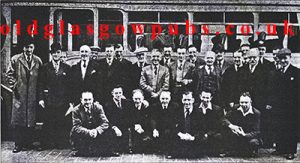
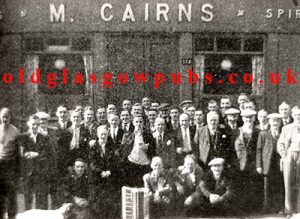
The image above was taken on a Sunday morning as the pubs closed on Sunday’s back in the day. Most of the pubs in those days had a holiday fund, which the customers and staff would put a small amount of money away each week and the licensee would keep it safe until the holiday mostly to the seaside or in the countryside.

Michael Cairns owned this well established Gallowgate howff from the 1930s, it stayed in the family until the 1960s.

Michael’s son Desmond F Cairns assisted his father in the running of the business, Michael Joseph another son occasionally helped out in the bar.

In 1949 Michael senior organised a bus run for the staff and customers, this was a popular outing amongst many other pubs in the city, usually on a Sunday when the pubs in Glasgow were closed. Mr Cairns and the customers went to Fife on this occasion on August of 1949, Kirkcaldy was their centre for the day, where they would play games such as football, the three legged race and sprinting. They had lunch and high tea in the Dunnikier Arms, where Mrs Grace Penman was licensee for many years. The guests of Mr Cairns were looked after by her daughter in-law Mrs Adam Penman, she was a well known variety stage performer in her day, known as Rita Halkett.

The following year Desmond was married in Our Lady of Lourdes, Cardonald to Miss Bridie Agnes Mulhern an Irish lass from Breenagh, Co. Donegal. Desmond’s brother Joseph was best man.

The history of the pub can be traced back to the 1860s when Robert Clugston a wine & spirit merchant owned the pub, he also owned premises on Howard Street which became known as the Snaffle Bit. William Gardner then took over the pub, he also ran a public house on London Road, many will remember this old bar as “Jack’s Bar.”.

In 1878 David Thomson took over the licence, he continued in the pub until the early 1900s.

William McGregor Watt took over the business before the First World War, after a long illness his wife had to run the pub, William died in 1920 at his residence 14 Kyle Park, Uddingston. Mrs Norris sold the pub to Alexander Norris in 1926. Mr Norris was a thirty year old manager who ran a shop on Argyle Street, prior to this he managed his mother public house at 180 French Street, Bridgeton.

Mr Michael Cairns took over in the 1930s, his son Desmond took over the licence and ran the pub until the 1960s. The other son Michael ran a pub at 63 Shamrock Street at the corner of Garnethill Street.

The last owner of Cairns bar was Elizabeth McCormick Callaghan, the pub was finally demolished along with other pubs on the Gallowgate in the early 1970s. This was the result of the City Council’s redevelopment scheme which saw many of our famous Gallowgate landmarks disappear.

The customers and staff of Cairns bar, on their way to Ayr. 1950.

Desmond F Cairns wedding day with bride Miss Bridie Agnes Mulhern. Bridesmaids were Miss Annie Teresa Mulhern and Miss Eileen Selina Mulhern, the best man was Desmond’s brother Michael. The ceremony was performed by Canon George Galbraith. M.C. 1950.

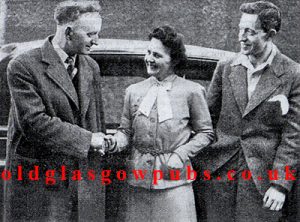
Michael Cairns shaking hands with Mrs Penman and his on the right. 1949.

To read more on the pubs on the Gallowgate read up & Doon the Gallowgate by John Gorevan. A copy can be bought for a few pounds at the Hielan Jessie on the Gallowgate or contact me at [email protected]

Facts…
Licence Holders.
1973-1968 Elizabeth Callaghan.
1960 Desmond F Cairns.
1937 Michael Cairns.
1926 Alexander Norris.
1926-1920 Mrs Watt.
1919-1909 William McGregor Watt.
1902-1878 David Thomson.
1875-1865 William Gardner.
1865-1861 Robert Clugston.

Do you remember this old pub? If so please leave a comment.

Do you remember any of the old pubs on the Gallowgate? If so please leave a comment.

END.
Filed Under: Gallowgate, Gallowgateroad, M Tagged With: Desmond Cairns, Gallowgate, M Cairns, Michael Cairns

The Cabin Bar.

November 13, 2016 by John Gorevan 3 Comments

258 Gallowgate, Glasgow. G4 0TU. Tel: 0141 552 1017.

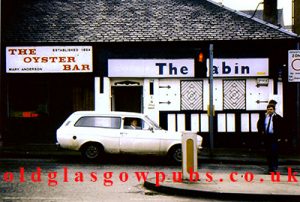
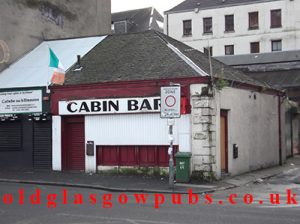
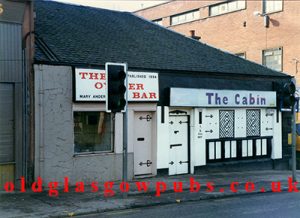
The Cabin Bar 1991.

This bar is probably the smallest in Glasgow. Situated at the corner of the Gallowgate and Gibson Street and next to the old Barrowland Ballroom. Like many of the pubs in the area they depend on passing trade when the famous Barras opens at the weekend.

There’s been a pub on this site since at least 1819 occupied then by the Inglis family. The pubs has also been known in the past as the Cabin Vaults.

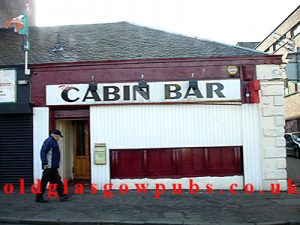
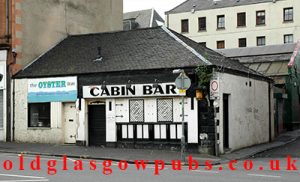
The Cabin Bar 2005.

The Cabin .

The Cabin Bar. 2012.

The Cabin Bar. 2012.

Update Tuesday 10th June 2009…

Glasgow’s smallest public house closed down after a Fire.

The Cabin Bar has been badly damaged in a blaze. This popular bar at the corner of Gallowgate and Gibson Street in the east end of the city, is popular with Celtic fans, especially on match days. Visitors to the famous Barras market are known to got in for a pint or two.

The Fire broke out at 11 in the morning before the pub was open for trade, fortunately no-one was hurt. A Strathclyde Fire and rescue crew attended the scene rapidly and had the fire quickly under control. They then spent a few hours dampening down the premises. Investigations are continuing into the cause of the blaze. It is not known when the pub will be back in business.

Update 14/09/2013…

I popped into the Cabin Bar today to put some posters up for the Glasgow Doors Open Day. I also measured the pub the full size of the Cabin Bar is 19 feet 8 inches X 21 feet 2 inches. The bar itself is 7 feet by 11 feet 6 and a half inches. So if your local is smaller than this get in touch.

As far as I can see this is the smallest pub in the city of Glasgow.

To read more on the pubs on the Gallowgate read up & Doon the Gallowgate by John Gorevan. A copy can be bought for a few pounds at the Hielan Jessie on the Gallowgate or contact me at [email protected]

Facts…
Licence Holders.
1991 Bernadette Devlin.
1973-1966 Annie Devlin or Dillon.
1937-1914 Peter Dalgleigh.
1902 Agnes Wellwood.
1899 James Wellwood.
1863 John Gibson.
1860 Joseph McKenzie.
1858 John Hall.
1854 William Anderson.
1847 John Aikle.
1838 James Maxwell.
1827 Robert Inglis.

Do you remember this old Gallowgate Pub or any other pub on the Gallowgate? If so please leave a comment.

END.
Filed Under: C, Gallowgate, Gallowgateroad Tagged With: Cabin Bar, Gallowgate, The Cabin, The Cabin Vaults

Black Boy Tavern.

November 11, 2016 by John Gorevan Leave a Comment

27-39 Gallowgate Glasgow.

The Elephant and Black Boy Tavern. 1870s.

The Black Boy Tavern, Gallowgate was situated not far from Glasgow Cross near where the Chrystal Bell’s now sits.

The Black boy, recalls the fashion of black boys pages, and in after years the Black Boy Close was notorious for robberies and several murders. It now forms part of the D. and F. Warehouse at the Cross.

A well-known Glasgow citizen, in touring round the world, landed at a township near the Fraser River, British Columbia, and was accosted by a well-dressed well set-up man. After a conversation he said, “Tou come from Glasgow.” “Yes,” said Mr L “Did you know the Black Boy Close?,” “Yes,” again was the reply. “Well, “said the speaker,” I was born there, and now I am Mayor of this town.”

In the two following years the tavern keeper was James Boyd, who provided dinner to the Provost, Bailies, and Council and “other honest men.” These dinners were usually associated with the riding or “reeding” of the marches, or boundaries marked by march stones, the first perambulation recorded being the date 1st June, 1574. The custom was discontinued, but a record of these stones was kept.

In an anecdote of Glasgow, written by Robert Alison and published in 1892 was a story of the Black Boy Tavern, he wrote the following: “During the commercial crisis and panic of 1837 which swept over the country, Glasgow, as a great merchantile and industrious centre, suffered severely. Prices of all kinds of manufactured goods sunk to nearly one half; many workers were thrown idle, and the wages of those still employed were reduced, which reduction again led to general and foolish strikes, at the instance of their trades unions, of the whole Colliers and Iron miners in Lanarkshire.

The effect of these two strikes was to let loose, upon an already over-distressed community, above 80 thousand persons, all in a state of utter destitution, and yielding implicit obedience to their trade leaders. To cope with this formidable and well-organised body there, was in and around Glasgow, a police force to only two hundred and eighty men.

Bands of eight hundred to a thousand men traversed the streets, with banners flying and drums beating; and the colliers assembled in such numbers as to render any attempt to dispose them, except by military force, out of the question. Many violent assaults were made on the nobs or new hands, who took the place of the men out on strike, and at length, on the 22nd July of that year, a new hand was shot dead on one of the street of Glasgow.

The masters met and offered a reward of £500 for the discovery of the persons implicated in the murder, and three days afterwards 2 informers met sheriff Alison by appointment in a Vault under the Old College, to which the informers were admitted by a back door through the College green. They disclosed to the sheriff a plot “to assassinate the new hands and masters, manufacturers in Glasgow, one after another, till the demand of the combined workmen were complied with” that the men shot three days before had been selected at the first victim and that Mr Arthur, master-manufacturer, was to be the next victim. The informers told the sheriff that the next meeting of committee would be held on the evening of Saturday 29th July, in the Black Boy Tavern, Gallowgate, Glasgow.

At 9 o’clock that night the sheriff left his office, with no arms but his walking stick, accompanied by Mr Salmond the procurator fiscal, and Mr Nish, the principal sheriff- officer. They met Captain Miller of the Police Force, with 20 constables, at the mouth of the Gallowgate, near to the Cross. Four constables were stationed at the entrance of the close, with instructions to let no one out or in; 12 others were stationed round the tavern at the front, and 4 at the back, with orders to seize anyone attempting to escape.

Sheriff Alison, Mr Salmond, Captain Miller and Mr Nish then entered the tavern. They at once passed by a trap-door, in the chief room, and to which they ascended by a moveable wooden stair or ladder into the room above, Captain Miller first, the sheriff second, Mr Salmond and Mr Nish following in rotation. They found the whole committee, 16 in number, seated round a table in consultation, with a lot of money spread out before them, and only one light from a gas pendant descending from the roof, lighting the apartment. The sheriff brought up 8 of the police, whom he stationed in the room below, re-entered the upper room and took up his position under the gas light to prevent it from being put out. He them looked round and saw that the committee were so panic-struck that no resistance would be offered, though they were in the room 4 to 1. Captain Miller next called out the names of each member of the committee, and as each was named, beckoned him to go out and they were thus one by one secured by the police in the room below. Not a blow was struck, so coolly, quietly, and firmly did sheriff and other officials go about their work.

On Monday following (31st July) the cotton-spinners met on Glasgow Green, and by a great majority resolved to resume their work on the masters terms; and on Tuesday the courageous sheriff had the delight of seeing the whole of the tall chimneys in Calton and Bridgeton sending forth their wanted smoke, after a stoppage of three months. The trial of the cotton-spinners came on at Edinburgh on 8th January 1838 and resulted in the whole of the would-be assassins receiving sentence of transportation for seven years.

In 1858 reporter Shadow, brought out a book entitled Midnight Scenes and Social Photographs, Glasgow. He describes how (with a couple of friends for reasons of safety) he followed an evil-looking woman from Glasgow Cross along the Gallowgate. She was helping alone a young man who was half drunk. Shadow and his friends followed them into a court off the Gallowgate and entered a two-roomed house and an earthen floor. There were four beds in the two rooms and two loathsome women in each bed.

As we smell the whisky, writes “Shadow” and pass it round, a feeling of disappointment is evidently felt, “I doot you dinna like the whisky,” says Jenny. “It’s real gude by what we get maist times at this time o’night.” I daresay it is, we remark, “It can’t be expected good at so late an hour. A proposal is made to form a circle round the fire, and enjoy ourselves. However giving a significant look to the young man, who by this time is again beginning to be a little elevated, we make our way towards the door, but find it locked. A trifle of money to the door-keeper, who remonstrates against our leaving, and we forthwith our departure, congratulating ourselves on an escape from a very dangerous den of the worst of thieves and prostitutes.

To read more on the pubs on the Gallowgate read up & Doon the Gallowgate by John Gorevan. A copy can be bought for a few pounds at the Hielan Jessie on the Gallowgate or contact me at [email protected]

Facts…
The Black Boy Tavern, Gallowgate, was on land west of where the Chrystal Bell’s now stands.
The Black Boy Tavern was kept by a buxum woman, who ultimately doffed her weens and became the landlady of the Buck’s Head where an “ordinary” was kept daily, at the moderate charge of 8p per head.
Members of the Grog Club gathered in the Black Boy and drank diluted navy rum.
This notorious tavern was well known for criminals to gather, policemen know this and would regularly raid the tavern to find some of the rooms were fill on criminal activity.

Do you have memories of any of the Gallowgate Pub? If so please leave a comment and we will post your views.

END.

Filed Under: B, Gallowgate, Gallowgateroad Tagged With: Black Boy, Black Boy Tavern, Gallowgate

The Old Black Bull.

November 10, 2016 by John Gorevan 1 Comment

1316-18 Gallowgate, Glasgow. G31 4DR. Tel: 0141 551 0400.

The Old Black Bull. 1991.

The Old Black Bull near Parkhead Cross was founded in 1760 and is still a landmark on the Gallowgate.

In the 1860s Andrew Stout the landlord was more than just a publican he also manufactured his own aerated water, soda water and brewed his own ginger beer, he was also a pastry baker. He did all this within the grounds of the Old Black Bull. His mineral water was carted to the iron-workers and coal-men in the many factories in the area including Parkhead Forge. Mr Stout’s son’s worked in the Old Black Bull as well as in the old weaving shop where the ginger was manufactured, George did the bottling and James delivered the goods to the thirst workers in the district. Ancestors of Mr Stout still ran the pub in the 1950s.

The Old Black Bull, Gallowgate taken before demolition. Today’s Old Black Bull sit’s on the site of the old pub.

One of the licensee Margaret Rennie worked in the pub when she was 14 years of age.

William Rennie a trustee and licence holder worked as a check weigher at the Parkhead Forge.

A G Barr took over Mr Stout’s ginger and aerated water business in 1887. Barr’s became known as Scotland’s other national drink, Irn-Bru the drink that was advertised as been made from girders.

The Old Black Bull. 2005.

The Old Black Bull. 2006.

Old Black Bull. 2012.

Black Bull. 1960s.

To read more on the pubs on the Gallowgate read up & Doon the Gallowgate by John Gorevan. A copy can be bought for a few pounds at the Hielan Jessie on the Gallowgate or contact me at [email protected]

Facts…
Licence Holders.
1991 William Mitchell.
1972-1957 John Hamilton.
1950 Mrs M Rennie.
1928 Margaret Whitton.
1912 Allan Shaw.
1899-1896 Mary Stout Shaw.
1895-1863 Andrew Stout.
1856 William Smith.
1853-1847 William McNee.
Do you have anything to say about the Old Black Bull? If so please leave a comment.

END.
Filed Under: Gallowgate, Gallowgateroad, O Tagged With: Black Bull, Gallowgate, The Old Black Bull

Norma Jeans.

November 9, 2016 by John Gorevan Leave a Comment

257 Gallowgate, Glasgow. G4 OTP.

Norma Jeans. 1991.

This old pub has had numerous name changes over the years, it’s now called Bar 67.

There has been a pub on this site since at least 1842. One of the most famous Glasgow publican’s to hold a certificate for the premises was Norman Stevenson who also owned the Kirk House, Shettleston.

Another well known family to own this pub was the Hurrel family.

Norma Jeans. 1980s.

Over the years it has been known as the Corunna, Hurrel’s, Royal Bar  and many more names. It was once a great sing song pub, it now attracts Celtic fans and only opens at weekends when the Barras market is trading.

Below the many paint jobs Bar 67 has had over the years.

Bar 67. 2005.

A Banner hangs over the door “God Bless Tommy Burns.”

To read more on the pubs on the Gallowgate read up & Doon the Gallowgate by John Gorevan. A copy can be bought for a few pounds at the Hielan Jessie on the Gallowgate or contact me at [email protected] .

Do you know anything about this pub? If so please get in touch.

Facts…
Licence Holders.
1991 Robert Bunton.
1973-1960 John Joseph Hurrel.
1937 Frank McGowan.
1919-1891 Norman Stevenson.
1863-1854 Thomas Draffon.
1850 Mrs P Campbell
1845 Mrs Morrison.
1842 George Morrison.

END.

Filed Under: Gallowgate, Gallowgateroad, N Tagged With: Bar 67, Corunna, Gallowgate, Gallowgate Pubs, Hurrel's, Norma Jeans, Royal Bar

  • « Go to Previous Page
  • Page 1
  • Interim pages omitted …
  • Page 6
  • Page 7
  • Page 8
  • Page 9
  • Go to Next Page »

Primary Sidebar

Become a Member of Old Glasgow Pubs

We are very excited to announce that we have created a new membership! In return for supporting the site, you will gain fantastic perks! Click below to find out how you can support the site!

💖 Donate via PayPal

All content on this site is Copyright Old Glasgow Pubs (OGP). To use any history or images, please make sure you link back to our site.

This website uses cookies to improve your experience. We'll assume you're ok with this, but you can opt-out if you wish. Cookie settingsACCEPT
Privacy & Cookies Policy

Privacy Overview

This website uses cookies to improve your experience while you navigate through the website. Out of these cookies, the cookies that are categorized as necessary are stored on your browser as they are essential for the working of basic functionalities of the website. We also use third-party cookies that help us analyze and understand how you use this website. These cookies will be stored in your browser only with your consent. You also have the option to opt-out of these cookies. But opting out of some of these cookies may have an effect on your browsing experience.
Necessary
Always Enabled
Necessary cookies are absolutely essential for the website to function properly. This category only includes cookies that ensures basic functionalities and security features of the website. These cookies do not store any personal information.
Non-necessary
Any cookies that may not be particularly necessary for the website to function and is used specifically to collect user personal data via analytics, ads, other embedded contents are termed as non-necessary cookies. It is mandatory to procure user consent prior to running these cookies on your website.
SAVE & ACCEPT