• Skip to primary navigation
  • Skip to main content
  • Skip to primary sidebar
Old Glasgow Pubs

Old Glasgow Pubs

  • Home
  • About Us
  • Find A Pub
  • Find Address
  • Find A Publican
  • Further Reading
  • Shop
  • Contact Us
  • Members Area
  •  
  • Click Here to Search the Site
You are here: Home / Archives for Address M

Address M

The Park Bar

March 15, 2017 by John Gorevan Leave a Comment

112 Maitland Street, Glasgow.
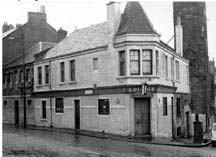
The Park

The Park Bar was situated at the corner of Maitland Street and Dobbie’s Loan.

This part of old Glasgow was embraced what was known as the Northern. This locality was eminently the home of the working class and abound with relics of old Glasgow. Some of the city’s oldest licensed premises were in this area, amongst them the Northern House at the corner of Maitland Street and Dobbie’s Loan, which had been in the Drummond family for generations.

The first of the Drummond’s who held the licence was John, a smart and robust gentleman who never was impeded by obstacles. He lived on the premises at the time. In the olden days this was the favourite rendezvous of the canal men who travelled between Glasgow and Edinburgh and long before the Forbes MacKenzie Act, this old house flourished and prospered, in those times it was not unusual for Mr Drummond to remain open for three days and nights at a stretch during the Fair week. He became a well known and respected citizen of Glasgow. In 1842 Mr Drummond the occupant of the house, secured from the Corporation of Glasgow the contract for the cleansing of the city. The citizens of Glasgow were satisfied with his work and in a short period of time he accumulated money.

In 1852 William Drummond acquired a licence for the premises, he traded as a Hay, Straw, Grain and a Spirit Merchant. He lived on the premises at this time, with his wife Jane and had a family of three daughters and a son James. When his son was old enough to join him in the running of this popular store, the name above the door changed to William Drummond & Son, with the Northern Bar in large letters on both streets. James took over the licence in 1894, by this time the hay, straw and grain disappeared and the business was turned into a full licensed premises, selling wines spirits and ales.
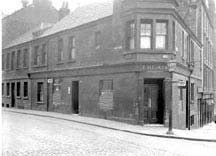
Park Bar old

The Park Bar, 1933.

The old premises had to be refurbished as they were now very old, a new bar counter made from the finest mahogany was installed, the three rooms in the main part of the building had been altered to make two larger rooms to give more room at the bar. The three steps that used to lead up to the house had been removed and the floor was considerably lowered, the old plaster ceiling had to go and was replaced with a new wooden one. There were two entrances, one leading from Maitland Street and the family department from Dobbie’s Loan

In 1925 the pub was sold to Mr J Black who ran the business until the 1930s. The pub was then known as the Park Bar. The Innes family were the last licensee to run the pub. It survived until the early 1960s when most of the area was flattened.
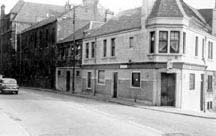
Park Bar2

Another view of the Park Bar. 1963.
Licence Holders.
1963-1947 John Innes.
1937 Mary McWilliam Innes.
1933-1926 J Black.
1925-1894 James Drummond.
1890-1852 William Drummond.

Filed Under: Maitland Street, MaitlandStreet, P

Park Lane Tavern

March 15, 2017 by John Gorevan 2 Comments

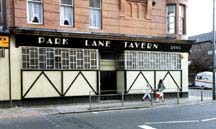
79 Main Street, Bridgeton Glasgow. G40 1QB. Tel: 01415542925.

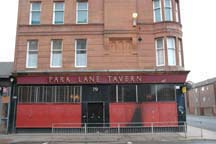
Park Lane Tavern 79 Main street Bridgeton

Park Lane Tavern. 1991.

Victualler and Spirit Dealer James Denholm occupied licensed premises on this site in 1849. When Mr Denholm died his wife took over the licence and sold up shortly afterwards.

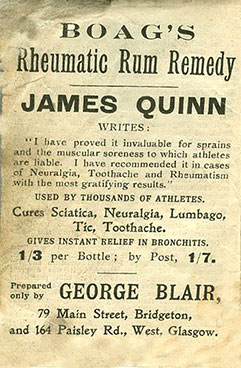
In 1858 James Boag took over the running of the old pub which was then called the Old Blythswood Bar. The old building was demolished and a new tenement with a pub on the ground floor was erected in 1905. James Boag’s nephew George Blair took over the licence in 1891 and when the new pub was built he became the new tenant. George also ran a pub at 164-66 Paisley Road West, many will remember this old pub as the Planatation Inn.

George Blair Advert

This early advert Boag’s Rheumatic Rum Remedy.

When George died his wife took over the running of the pub during the 1930s. His son George then took over after the Second World War. It was finally sold to Mr Anderson after over one hundred years in the same family.

Other names this old pubs had… The George, Old Blythswood Bar, and George Blair.

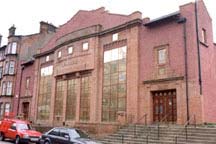
Park Lane Tavern 2005

The Park Lane Tavern, August 2005.

Licence Holders.
1978-1953 Charles Little Douglas.
1953-1948 D J Anderson.
1947 George Blair.
1937 Elizabeth Blair.
1930-1891 George Blair.
1891-1858 James Boag.
1857 Bernard Quin.
1855 Mrs James Denholm.
1851-1849 James Denholm.

Filed Under: Main Street Bridgeton, MainStreetBridgeton, P

The Parade Bar

March 15, 2017 by John Gorevan Leave a Comment

Meadowpark Street, Dennistoun, Glasgow.

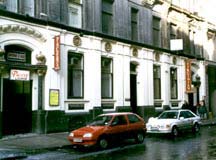
Parade Bar

The Parade Bar. 1991.

This was the famous Parade Cinema situated in Meadow Park Street in the east end of the city. The locals called the cinema the Flee Pitt. The Parade Bar is owned by Frank Marley a well known and respected east end publican who owned the New Monaco Bar. Over his long career in the licensed trade Mr Marley has run some of the best known pubs in this part of the city including the Traders Tavern, Kent Street, The Barrowland Bar, Kent Street, Jacks Bar, London Road and Gordie’s Byre in the Barrowland Ballroom.

Frank Marley sadly died this year 2007. R.I.P

Filed Under: Meadowpark Street, MeadowparkStreet, P

The Virginian

March 15, 2017 by John Gorevan 4 Comments

53-59 Miller Street, Glasgow. G1.

Pacers

The Virginian Tavern was opened in the summer of 1974 by Tony Queen and Pat Harkins.

A touch of the New Orleans had been introduced to Glasgow with the opening of the Virginian in Miller Street. The joint enterprise was the brains of Tony Queen, who had sold most of his bookmaking interests and Pat Harkins a master chef and publican who had travelled the world.

It was from the restaurants of New Orleans that the Virginian took its inspiration. Pat Harkins collected a range of recipes from that city so that Glasgow could have a taste of Creole cuisine. Creole cuisine is a combination of the best French/Spanish/Italian cooking traditions and there is also a fair mixture of the native American Indian influence.

The Virginian had two lounges a restaurant and a dance floor.

In the 1990s this once famous pub diner was called Pacers.

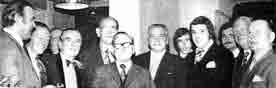
Interior of the Virginian

Included in this photograph are Tony Queen, Pat Harkins, A McAuley, Pig & Whistle, C Sweeney, Arlington Bar, J Murray, Dunn & Moore, W Martin, Calypso Bar, J Bailie manager of the Virginian, Mr Smyth, the Anvil and T Doherty, Dunn & Moore. 1974.

——————————————————

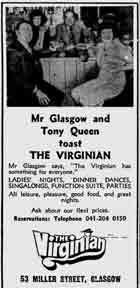
Virginian advert 1979

Virginian advert 1979.

Filed Under: Miller Street, MillerStreet, V

Old Gorbals Wine & Spirit Vaults

March 15, 2017 by John Gorevan Leave a Comment


85-105 Main Street, Gorbals.

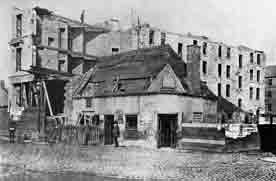
Old Gorbals Wine & Spirit Vaults

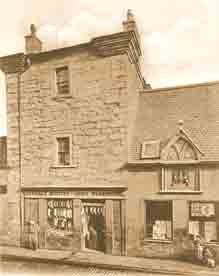
Old Gorbals Wine & Spirit Vaults. c 1870s.

The Old Gorbals Wine & Spirit Vaults was once part of the chapel which formed part of the 17th century mansion house of Sir George Elphinstone of Blythswood. The building was demolished under the City Council Improvement Trust around 1870s.

Elphinstone2

This venerable pile, so long identified with the Barony of Gorbals, was erected between the years 1600 and 1608, by Sir George Elphinstone, the son of a merchant in Glasgow, who had acquired the lands on the south side of the river known as “St. Ninian’s Croft,” from Boyd, the Protestant Archbishop of the See. With the view of forming a suitable residence, Sir George enclosed part of the croft for an orchard and garden, and built thereon the erections which so long formed the most prominent objects on the east side of the Main Street of Gorbals.

Tradition informs us that he also erected a small Chapel adjoining, part of which still exists at the corner of Main Street and Rutherglen Loan. It was in this baronet’s favour that the village of “Gorbals” was erected into a Burgh of Barony and Regality. Although this gentleman enjoyed great distinction in his lifetime, and rose to the rank of Lord Justice Clerk in the reign of Charles I., he afterwards became reduced in circumstances, and died miserably and in poverty about 1634. According to McUre, he was privately interred “in his own chapel, adjoining to his house.” The property was then sold by the creditors of the deceased to Robert Douglas, Viscount Belhaven. This nobleman extended the mansion in Gorbals, and built a square Tower or “Fortulice,” which is now almost the only part of the venerable buildings existing. Until within a few years ago, the Tower in question exhibited four turrets, which of course gave an imposing appearance to the structure. On the building adjoining the Tower may still be seen the family arms of Viscount Belhaven, pretty well cut in stone, the whole surmounted by the letters S. G. E., which are apparently meant for the initials of Sir George Elphinstone. It is not at all improbable that this was not the original position of the arms referred to, but that at some period when alterations were made on the Tower, they had been removed from it, and placed so as to face the Main Street of the Barony.

The Viscount, at his death, was succeeded by his nephew, Sir Robert Douglas of Blackerston, who sold the Gorbals Mansion House and lands in cumulo, some time prior to 1661, to the town of Glasgow, the Trades’ House, and the Trustees for Hutcheson’s’ Hospital. They were retained as a sort of co-partnery possession till 1790, when a division was made, and the central portion, containing the old buildings, fell to the lot of the city. The most important event connected with the Baronial Hall structure is found in the fact that at one time it formed the residence of Sir James Turner, Commander-in-Chief of the Forces in Scotland in the reign of Charles II., and who is understood to be the personage who supplied Sir Walter Scott with the portrait of Dugald Dalgetty.

The terms on which Sir James obtained possession of the house are somewhat singular; for it appears by the minutes that on the 18th July, 1670, the Bailie’s and Council “ordains ane tack to be wrytten and subscryvit in favors of Sir James Turnor, of the toune’s houss and tour in Gorballs, quhilk he presentlie possesses, and that dureing his lifetyme, for payment yearlie of three punds Scots, if the samyne be requyred.” Sir James accordingly died in possession of the subjects; and from the records kept in the College, it would appear that at the sale of his effects, a part of his scanty library was purchased by the University of Glasgow. Amongst his books were several works upon the art of war; but the soldier of fortune had not overlooked productions of a more elevating and humanising kind, for Milton’s “Paradise Lost” and various kindred tomes are found in his catalogue. Who were the successors of Sir James Turner, in the “toune’s houss and tour,” we have no way of knowing. At all events, as the locality was never an attractive one for the Glasgow merchants, the occupants must have gradually descended in the scale of quality. Before the close of the last century, and for some time afterwards, the principal room in the Tower, which was of a spacious kind, was used as a place of meeting by the magistrates, heritors and feuars of the parish of Gorbals; and here also the inhabitants mustered previous to performing the dutes of watching and warding, in days when a police force did not exist. Latterly, part of the old building was fitted up as a police-office, with adjoining cells. But it lost all its importance, excepting such as it retained from olden associations, when the official staff was removed to the present extensive police establishment in Portland Street.

It was then given over to very humble uses – the ground floors to the street being let as whisky shops, and the upper flats having been split up into dwelling-houses for the lowest class of the people. The greater part of the structure built by Sir George Elphinstone was taken down early in 1849 by order of the Dean of Guild Court, from its having exhibited symptoms of insecurity. It was then a fine remnant and wreck of the Scottish urban Manor House style, with its oriel windows, ornamental ceilings, and stout oaken staircases. The Tower, which remains, though sadly dilapidated externally and internally, still exhibits evidences of the aristocratic aspect it wore in the days of other years.

Elphinstone

The Old Baronial Hall was built by Elphinstone in 1601. Following his death in 1634 the building passed down through several owners including Robert Douglas, Viscount Belhaven (who added a distinctive square tower), Gorbals Town Council and Sir James Turner. It was demolished in the early 1870s. Thank to the Mitchell Library.

Main Street Gorbals2

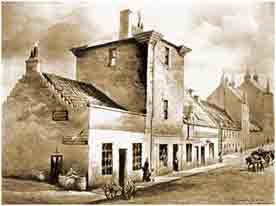
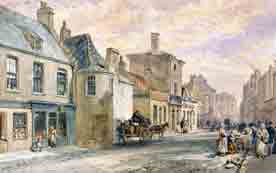
Main Street, Gorbals by William Simpson (1823-1899).

This watercolour provides a view of Main Street (later Gorbals Street) looking south. Sir George Elphinstone became MP for Glasgow in 1583 and Provost in 1605. He acquired land in the Gorbals in 1601 and built a mansion and chapel (left). He died in 1634 and his estate was sold to pay his debts. Robert Douglas, Vicount Belhaven, purchased the barony and added the square tower (middle distance) to the old baronial hall. Only the bases remain here, of the square turrets which once adorned each corner. The round tower in the street has also been reduced in height. By the 1840s the chapel had been converted into a pub, identifiable by the gilt board sign hanging outside. The Citizens’ Theatre now occupies the site of the house and church.

This watercolour is one of a series of fifty-five painted by Simpson between 1893 and 1898. Most are based on sketches he completed fifty years earlier and which appeared as black and white illustrations in Views and Notices of Glasgow in Former Times, published in 1848 by Allan & Ferguson.

Elphinstone Interior

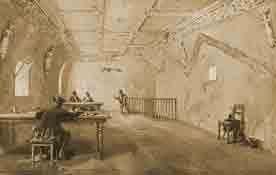
William Simpson’s impression of the interior of the old Gorbals Baronial Hall, as it appeared on 23 August 1858.
By the time Simpson visited in 1858 a part of the hall (with the neighbouring chapel) had been converted into a public house, the Old Gorbals Wine and Spirit Vaults. However, the ornate ceiling and cornicing and the statuettes on the walls are reminders of the building’s former glories, as the home of one of Glasgow’s most prominent men of affairs. The initials S G E and D A B on the ceiling were part of the original decoration and stood for Sir George Elphinstone and his wife Dame Agnes Boyd.

Filed Under: Main Street Gorbals, MainStreetGorbals, O

Napoleon’s

March 6, 2017 by John Gorevan Leave a Comment

128-134 Merrylee Road, Glasgow. G44 3DL. Tel: 0141 629 1900.

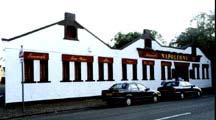
Napoleon's

Napoleon’s. 1991.

Napoleon’s was built on the site of J & A Ferguson Ltd, Chocolate manufacturers and bakers. Now called Rare Bird. 2007. Tel: as above.

Napoleon’s latest name is ‘The White Elephant’. Previously Merrylee Road
Bar and Kitchen. I think it had other names since it opened as Napoleon’s,
will try and find out for you – unless you have details already.

Napoleon’s opened in 1984. The owner was Sylvester Sweeney, who for several
years beforehand ran The Mulberry Hotel at the corner of Camphill Avenue
and Langside Avenue. The Mulberry’s name changed several years ago and is
currently known as ‘The Ivory Hotel’, bar and restaurant. I remember
Sylvester left Napoleon’s and took over Seamill Hydro. His online profile
shows he has been proprietor/owner at Seamill Hydro since June 1989.

I took the pic of The White Elephant this evening. As always, I’ll try and
get a better daylight pic without umpteen cars blocking the view.

Thank’s to Tich Keltie for his email.

Filed Under: Merrylee Road, MerryleeRoad, N

  • « Go to Previous Page
  • Page 1
  • Interim pages omitted …
  • Page 5
  • Page 6
  • Page 7
  • Page 8
  • Page 9
  • Interim pages omitted …
  • Page 17
  • Go to Next Page »

Primary Sidebar

Become a Member of Old Glasgow Pubs

We are very excited to announce that we have created a new membership! In return for supporting the site, you will gain fantastic perks! Click below to find out how you can support the site!

💖 Donate via PayPal

All content on this site is Copyright Old Glasgow Pubs (OGP). To use any history or images, please make sure you link back to our site.

This website uses cookies to improve your experience. We'll assume you're ok with this, but you can opt-out if you wish. Cookie settingsACCEPT
Privacy & Cookies Policy

Privacy Overview

This website uses cookies to improve your experience while you navigate through the website. Out of these cookies, the cookies that are categorized as necessary are stored on your browser as they are essential for the working of basic functionalities of the website. We also use third-party cookies that help us analyze and understand how you use this website. These cookies will be stored in your browser only with your consent. You also have the option to opt-out of these cookies. But opting out of some of these cookies may have an effect on your browsing experience.
Necessary
Always Enabled
Necessary cookies are absolutely essential for the website to function properly. This category only includes cookies that ensures basic functionalities and security features of the website. These cookies do not store any personal information.
Non-necessary
Any cookies that may not be particularly necessary for the website to function and is used specifically to collect user personal data via analytics, ads, other embedded contents are termed as non-necessary cookies. It is mandatory to procure user consent prior to running these cookies on your website.
SAVE & ACCEPT