• Skip to primary navigation
  • Skip to main content
  • Skip to primary sidebar
Old Glasgow Pubs

Old Glasgow Pubs

  • Home
  • About Us
  • Find A Pub
  • Find Address
  • Find A Publican
  • Further Reading
  • Shop
  • Contact Us
  • Members Area
  •  
  • Click Here to Search the Site
You are here: Home / Archives for W

W

The Woodside Inn

January 25, 2017 by John Gorevan 1 Comment

239 Maryhill Road, Glasgow. G20 7YB. Tel: 01413328639.

Woodside Inn

The Woodside Inn. 1991.

The Woodside Inn is at the corner of North Woodside Road.

From 1873 till the end of the First World War this public house was known as Thomas Galloway’s. This part of Maryhill Road was called New City Road at the time. Mr Galloway a renowned wine, spirit and beer merchant ran some of the best bars in the city of Glasgow, having premises on Hope Street, Sauchiehall Street, North Street, Cowcaddens, Raeberry Street and another pub on New City Road. Many will still remember the old pub on Hope Street as the Savoy Bar and the Grand Bar, Cowcaddens.

James D Wilson Maryhill Road

James D Wilson with the Tramcar Vaults in the background. 1960s.

In the 1890s Thomas Galloway employed a manager James Paterson to look after the pub on New City Road, he later went on the manage the pub on Hope Street. Mr Paterson was born in 1854 in Carlton Place facing the River Clyde. He was educated at the Old Gorbals School which was transformed into the Board School under the well known ascetic head teacher “Specky Walker.” On leaving his education young James joined the staff of Willie Gilchrist, the theatrical printer. He then when on to work as a cooper, his boss was Bailie Stewart, after a year he moved to Stirling an became a jobbing smith. A years later he returned to Glasgow on the death of his father, where he looked after his mother and the youngest of the family. Mr Paterson then worked for A Alison, wholesale grocer for three years.

After working in the wholesale trade with C Sandeman, wine merchant he joined the staff of Thomas Galloway.

In his spare time he played the banjo, cycled and was a great swimmer.

In the 1930s James D Wilson took over the running of the pub on Maryhill Road, Mr Wilson also owned pubs on West Nile Street and Byres Road and later 9 Sauchiehall Street. During the 1960s and 70s Robert Morgan Wilson was licensee for the pubs.

Grand Bar

The Grand Bar one of Galloway’s establishments. 1960s.

The Inn Crowd is part of the Woodside Inn.

James Paterson

James Paterson, Manager for Thomas Galloway. 1893.

Licence Holders.
1991 Elizabeth Evans.
1973-1963 Robert Morgan Wilson.
1960 Margaret Wilson.
1937 James D Wilson (Check out our book for more info).
1919-1873 Thomas Galloway.

Filed Under: Maryhill Road, MaryhillRoad, W

The Woodhill

January 25, 2017 by John Gorevan Leave a Comment


100 Auchinairn Road, Glasgow. G64 1NQ. Tel: 01417721271.

Woodhill

The Woodhill. 1991.

Originally known as The Glen built in 1955 and designed by architect L W Hutson, O.B.E and his assistant G H E Hall. Another pub was designed by the same architect The Royal Oak, Old Edinburgh Road, Viewpark and opened a day before the Glen. The two pubs were very similar in design.

James Abernethy was the first licensee, it was his first pub, although he had previous experience in the trade. At the opening in 1955 many trade personalities were present. The pub is situated next to the golf course and across the road from Auchinairn’s oldest established pub the Auchinairn Tavern.

The Glen old

Exterior view of The Glen, Auchinairn. 1955.

James Abernethy

James Abernethy right being congratulated by J C McIIwraith, secretary of the Hamilton and District Licensed Trade Association. 1955.

Filed Under: Auchinairn Road, AuchinairnRoad, W

Windjammer’s

January 17, 2017 by John Gorevan 1 Comment

1321 Argyle Street, Yorkhill, Glasgow. G3 Tel: 01413340594.

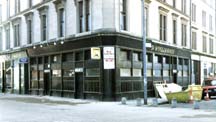
Windjammer's

Windjammer’s. 1991.

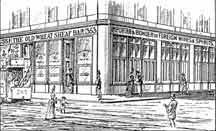
Built in 1877 and known as the Wheat Sheaf, it takes it’s name from the fact that this part of the city was once covered by fields and wheat sheaf’s.

The first licensee for the newly built property was wine & spirit merchant James Meiklem Coubrough, who formerly owned an old tavern at the corner of Anderston Quay and Washington Street. Mr Coubrough took advantage of the great Exhibition which was across the road, all the best catering and beverages were stoked at the Wheat Sheaf which was one of the cleanest public houses in the area, the large mirrors and tables were spotless, the brass was polished like gold, nothing was out of place here and only the best of everything was stocked. Mr Coubrough prided himself in a first class establishment a rule he adhered to on starting the business. An old show-card hung on one of the walls in the back saloon “James Steel’s Mild Ales, Craigend Brewery, Edinburgh,” a reminder of a long and forgotten brewery. Mr Counrough’s family, for generations came from Stirlingshire but James was born in Glasgow and was proud of the fact he was a Glaswegian. Mr Coubrough continued as licensee until 1896, the licence was transferred to James Clark a well known and respected member of the Scottish Licensed Trade.

Wheat Sheaf

Etch of the Wheat Sheaf 1887.

James Clark ran pubs in Jackson Street, Dunlop Street and the Sheddens, Busby. The Jackson Street premises were demolished when the railway company took over the ground. Mr Clark also ran a good public house, he stocked a vast range of rare Old Scotch Whiskies. In his spare time he was regularly seen shooting, golfing and bowling. A free mason of Lodge 458, he was chosen R. W. M. in the late 1890s. Having resided in Busby for many years he was better known in this district than in the city center. He was a member of the Perthshire Society, the Glasgow Southern Merchants, the Corporation Masons and Anderston Weavers.

Another well known spirit merchant to own the pub was Alexander Duthie, he payed an annul rent of £92 for the property in 1907. Mr Duthie also had licensed premises on Adelphi Street and Wallace Street. Alexander continued to serve the locals until the end of the First World War.

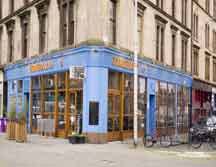
Over the years the pub has been known under different names such as The Wheaf Sheaf, Robert Clark’s Exhibition Bar, Fraser’s, The Frying Pan Bar, Windjammer and is now called Firebird. Jim and wife Margaret Claven managed the Frying Pan Bar before immagrating to Australia in 1968. They also managed the Waldorf Bar in Cambridge Street.

Firebird

Firebird. 2007.

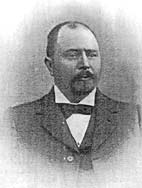
Robert Clark.

Robert Clark. 1901.

Licence Holders.
1973 Patricia Kelly McQueen.
1960-1947 W D Anderson.
1940-1937 Joseph T Fraser.
1920-1907 Alexander Duthie.
1903-1899 Robert Clark.
1895-1877. James Meiklem Coubrough.

Filed Under: Argyle Street, ArgyleStreet, W

The Whye Not

January 16, 2017 by John Gorevan Leave a Comment

117 Bishop Street, Anderston.

Unknown Pub Bishop Street

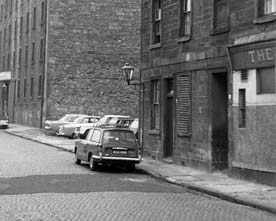
The Whye Not.

The pub sat at the corner of 117 Bishop Street, and William Street, Anderston.

It was originally called Gilmour’s Bar. Hugh Gilmour the owner of the pub in the 1890s had other premises in the city, the most famous one still survives today and is known as Thomson’s Bar, 579-81 Springburn Road which he took over in 1886, his other two public houses were Ruxton’s Bar, at 21 Elderslie Street and 39-41 Cowlairs Road, this pub is better known as the Highland Fling in Springburn area, north of Glasgow.

The Bishop Street premises were sold to well known and respected publican Francis Meichen in 1900. Mr Meichen also ran a pub at 56 Dale Street, Bridgeton, which he took over in 1888, and 326-28 Possil Road, acquiring it in 1890. Other pubs Francis Meichen had were the Old Toll Bar, Paisley Road West and Meichen’s Bar in Parliamentary Road and the Old College Bar on the High Street.

In 1908 the Bishop Street premises were sold to publican Patrick Shanley, he also ran a pub at 394 Parliamentary Road at the corner of Calderwood Street, which he acquired two years later. Mr Shanley continued in the pub in Bishop Street until the end of the 1930s.

After World War Two Daniel R Anderson took over the business, he also ran a successful pub at 79 Main Street, Bridgeton. The name of the pub then was “The Exchange Bar.” In 1947 Mr Anderson was residing at 8 Moraine Avenue, Drumchapel. His wife Mary continued as licensee until the pub finally closed down and demolished in the mid 1960s, when most of the buildings in Bishop Street and William Street were flattened.

The pub had three rooms two of which were male only and the other room was the only one which women were allowed to enter, in fact they were not even allowed to purchase alcohol at all.

The cellar which was below the pub and often quite damp had a massive rodent infestation. Manager Denis Challans used to bash the cellar flap with an old wooden truncheon to scare the rodants. Many of Glasgow’s old pubs had a cat living on the premises this helped to reduce the number of rats in the cellars.

Filed Under: Bishop Street, BishopStreet, W Tagged With: The Whye Not

William Donnelly’s Bar. The Golden Acre.

January 8, 2017 by John Gorevan 1 Comment

431 London Road, Glasgow. G40 Demolished.

image of the Golden Acre bar London Road 1960s
Golden Acre. 1950s.

This old Tavern was situated at the corner of Great Hamilton Street now London Road and Craignestock Street. There has been licensed premises here since 1845. The first licensee was wine and spirit merchant Robert McIssac.

I am not sure of the name of this old Tavern, however it was a very old one. In 1866 Bowman Miller was trading from here. Bowman lived next door from the pub. He served the locals until 1888.

 William H Parker took over in 1889, William was not new to the trade as he was licensee of a public house at 155 Graeme Street now Bell Street since 1885. Mr Parker’s public house in Bell Street sat at the corner of St John’s Place and next to St John’s Church. Mr & Mrs William Parker lived at 65 Great Hamilton Street a little west from his pub on London Road.

Close-up image of the Golden Acre London Road 1960s
Golden Acre. 1960s

William H Parker’s wife Margaret took over the as licensee of both pubs in 1896 possibly as her husband concentrated on his other business as a Telegraph Office and Newsagent at 174 Great Hamilton Street which was across the road from the pub. William, Margaret and family were now living at Monteith Row an exclusive address in those days, so business was good. Margaret continued as licensee just before the First World War. By this time the pub on Graeme Street was closed down.

Image of The Golden Acre Tavern Great Hamilton Street 1916
The Golden Acre Tavern. 1916.

Thanks to Mitchell Library.

The pub and the tenement building was demolished in 1916. The Parker family ceased to trade and the business across the road was also closed. It wasn’t until 1920 that son John B Parker acquired a licence at new premises at 171 Great Hamilton Street.  In 1928 the address was changed to 431 London Road. John continued as licensee until the 1940s.

During the 1950s and 60s the pub was run by Denis McEneny then William Donnelly. The City Council saw that the old tenements in the east end of the city were in need of demolition this resulted in the loss of many shops and pubs disappearing for good during the 1960s and 70s.

Image of William Donnelly's premises London Road 1960s 1960S
William Donnelly. 1960s.
Facts…
Today London Road starts from Glasgow Cross to Mount Vernon where Mount Vernon railway station stands. However in the 19th century this stretch of road had four different addresses from Glasgow Cross to Ross Street was known as London Street.
From Ross Street to Craignestock Street it was called Great Hamilton Street.
From Craignestock Street to Bridgeton Cross was Canning Street.
From Bridgeton Cross onward’s was London Road.
London Street had 7 public houses.
Great Hamilton Street had 10 public houses.
Canning Street 10 public houses.
London Road had 20 public houses.
Total 47 pubs.
Do you remember this old pub or any of the 47 pubs on London Road? If so please leave a comment.

END.

Filed Under: London Road, LondonRoad, W Tagged With: Bowman Miller, Craignestock Street, Denis McEneny, East End Pubs, Elizabeth Parker, Golden Acre, Golden Acre Tavern, Great Hamilton Street, John B Parker, London Road, Pubs in the East End, Robert McIssac, The Golden Acre Bar, William H Parker

William Cook.

January 2, 2017 by John Gorevan Leave a Comment

226-228 Main Street, Cambuslang. G72 7EN. Tel: 0141 641 2407.

Image of William Cook's Bar Cambuslang
William Cook.

In 1880 William Cook acquired a licence to well wines, spirits, and beer from these premises and called it “The Black Bull.” Another member of his family James Cook also acquired a licence, his pub was James Cook Wine & Spirit Merchant, Main Street.

Image of William Cook's Bar Cambuslang
William Cook.

William Cook’s public house was called the Black Bull and sat at the corner of Main Street and West Coats Road. The large white building was William Eadie’s property. Mr Eadie went on to own a large pub on that site which is now called Finlay’s.

This is what the pub looks like today…

Image of the Black Bull Main Street Cambuslang 2012
The Black Bull. 2012.

Do you remember any of the old Pubs in Cambuslang? If so please leave a comment.

END.

Filed Under: Main Street Cambuslang, MainStreetCambuslang, W Tagged With: Cambuslang Pubs, Main Street Cambuslang, Old Black Bull, The Black Bull, William Cook

  • « Go to Previous Page
  • Page 1
  • Interim pages omitted …
  • Page 7
  • Page 8
  • Page 9
  • Page 10
  • Page 11
  • Go to Next Page »

Primary Sidebar

Become a Member of Old Glasgow Pubs

We are very excited to announce that we have created a new membership! In return for supporting the site, you will gain fantastic perks! Click below to find out how you can support the site!

💖 Donate via PayPal

All content on this site is Copyright Old Glasgow Pubs (OGP). To use any history or images, please make sure you link back to our site.

This website uses cookies to improve your experience. We'll assume you're ok with this, but you can opt-out if you wish. Cookie settingsACCEPT
Privacy & Cookies Policy

Privacy Overview

This website uses cookies to improve your experience while you navigate through the website. Out of these cookies, the cookies that are categorized as necessary are stored on your browser as they are essential for the working of basic functionalities of the website. We also use third-party cookies that help us analyze and understand how you use this website. These cookies will be stored in your browser only with your consent. You also have the option to opt-out of these cookies. But opting out of some of these cookies may have an effect on your browsing experience.
Necessary
Always Enabled
Necessary cookies are absolutely essential for the website to function properly. This category only includes cookies that ensures basic functionalities and security features of the website. These cookies do not store any personal information.
Non-necessary
Any cookies that may not be particularly necessary for the website to function and is used specifically to collect user personal data via analytics, ads, other embedded contents are termed as non-necessary cookies. It is mandatory to procure user consent prior to running these cookies on your website.
SAVE & ACCEPT