501 Crow Road, Glasgow. G11 2DN. Tel: 0141 958 1221.
Check back soon for the history of this pub.
501 Crow Road, Glasgow. G11 2DN. Tel: 0141 958 1221.
Check back soon for the history of this pub.
Carrick Street, Anderston, Glasgow.
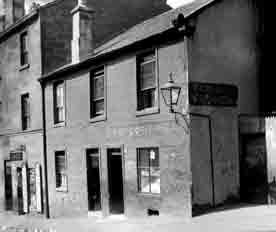
Thomas Brownlie’s old pub, Carrick Street.
Thomas Browlie sold Herb Beer from these premises as the dark sign on the side of the building is an advert for Herb Beer, Brownlie.
This was the birthplace as Artist William Simpson. Born into poverty in Glasgow on 28 October 1823, Simpson went on to become one of the leading ‘special artists’ of his day, and sketched many scenes of war for the Illustrated London News. His early years were very difficult living in a house with an abusive and alcoholic father, and in 1834 he was sent to live with his grandmother in Perth. Simpson’s only formal schooling took place during this period and within a few years, he was working as an apprentice in the Glasgow lithographic firm of Macfarlane. The artist stated later that “this was the turning point which changed all my boyish intentions.” It was during the years in Glasgow that he attended the Andersonian University and the Mechanics Institute in the evenings. His next position was with the lithographic company of Allan and Ferguson where he spent four years learning the trade.
In 1851 Simpson moved to London where he was hired by Day & Sons. While at Day’s he was able to work on several important lithographic sets.
He became famous initially for his work in the Crimean War where he was sent by the firm of Colnaghi to create a series of watercolors suitable for lithographing. In the late 1850’s he was sent to India to sketch scenes relating to the recent Sepoy Revolt. He joined the ILN in 1866 and covered the Abyssinian Campaign of 1868. In 1870 he went to France to sketch the war with Prussia, and in the following year observed the barricades of the Paris Commune. During a trip around the world, he stopped off in California and traveled to the Lava Beds area to report on the Modoc War in 1873. Five years later, he journeyed to Afghanistan to provide illustrations of the Second Afghan War that had broken out; he returned to London in the summer of 1879. In 1890, he observed the opening of the Forth Bridge and caught a chill which was to have detrimental effects on his health.
He died at home in Willesden, north London, on August 17, 1899, and was buried in Highgate Cemetery. Besides his war pictures, he covered state events, coronations, funerals, and other ceremonies. He was particularly interested in India and sketched scenes of the Kashmir Maharajas.
Simpson was a noted ethnographer and antiquarian, and wrote extensively on ancient religions, customs, and ancient artifacts. During his time in Afghanistan, he excavated several ancient Buddhist topes. He was a frequent visitor to Windsor and Balmoral, and Queen Victoria acquired a number of his works. It is said that she intervened to prevent him from going out to Italy in 1859 to cover the Austro-Sardinian War, for fear that he would get killed.
Taken from Wikipedia
113 Buchanan Street, Glasgow. G1 3HF. Tel: 01412216996.
T G I Friday’s logo..
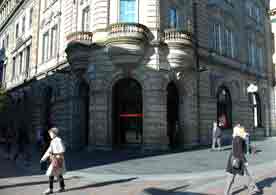
T G I Friday’s. 2007.
52-58 Cowcaddens Street, Glasgow.
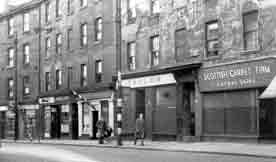
Taylor’s Bar. 1963.
778 Pollokshaws Road, Pollokshaws, Glasgow. G41. Tel: 0141 424 0858.
Opened in the early 1990s.
Check back soon for the history of this pub.
98 Glebe Street, Townhead, Glasgow.
Glebe Street once housed 7 public houses, this number was greatly reduced when the M8 was being built. Many of the pubs there could have stood today as the ground was not used for anything. The other pubs that were left were demolished to make way for new car parks likes of the Royal Bar and the famous Manx Bar.
The Tavern was formerly called Wully’s Bar during the 1940s names after the landlord William S MacLean and during the 1950s the pub was known as the Tavern.
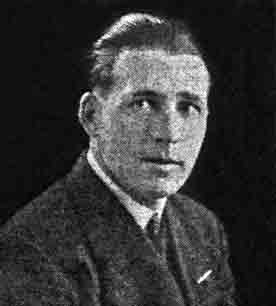
Mr William S MacLean. 1946.
In 1946 Mr MacLean donated a £5 note to the Matron of Eastpark Homes to help her buy some necessary equipment for the children who suffered from all kinds of troubles. He also donated £7 12 shillings to the Royal Infirmary. Since the beginning of that year £20 had been sent of the Royal, the money being raised by collecting boxes, raffles and the proceeds of an outing. Another outing for the customers of Wully’s Bar was being arranged for September and any surplus accruing will find its way to charity.
In 1948 Mr MacLean again did charity work for the children of Eastpark Homes, Maryhill when they were entertained by a party on 30th December. The show was compared by Mr McGregor of the Gay Birds Dance Band, who led the children in community singing. Mr D Howat presided at the piano and the Two Mantons supplied accordion music and vocal numbers, various party games also being played.
At the close of the proceedings each child received a gift of an apple an orange and a parcel of sweets, the gift of Mr MacLean, who was accompanied by his wife.
An interesting feature of the afternoon was the presentation to the Matron of a cheque for £70, money raised by Mr MacLean by means of prize draws for articles gifted by himself. It was explained that the money was to be devoted towards the fund for the purchase of a cinema projector, this to be used for the education and entertainment of the children and for the instruction of the nurses at Eastpark.
It was announced that Mr George West, the well-known Scots comedian, was unable to be present, due to there being a matinee performance at the Royal Theatre, Glasgow, but that he had promised to visit the Homes at a later date with his own cinema.
£50 was still needed to purchase the cinema. I bet Mr MacLean and his customers raised the rest of the money?
The pub was established in the 1870s, one of the early licensee was a lady called Margaret Hudson. James McDaid took over the pub in 1875, Mr McDaid lived nearby at 32 Grafton Street, Townhead for many years. James ran the pub for many years well after the First World War. The name of the pub then was James McDaid with Wines & Spirits at each end of his name.
James Grubb then took over the establishment and ran the pub during the 1930s and sold the business to William S MacLean just before World War 2.
Many will still remember John Hamilton who ran the pub during the 1950s and 60s, he was the last one to hold the licence when the M8 was being built which resulted in the heart of Townhead being ripped apart.
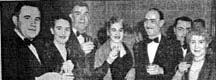
Dinner dance at the Glasgow Vintners’ Golf Club. 1958. Left to right Mr & Mrs Edward Hamilton, Tap Bar, Argyle Street, Mr & Mrs H McLaughlan, Central Bar, Prestwick, Mr Paul Kearney, Kearney’s Bar, Castle Street, Mr & Mrs John Hamilton, The Tavern, Glebe Street.
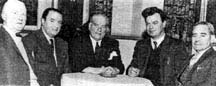
Left to right Mr P McElholm, Black Bull, Gallowgate, Mr John Hamilton, Tavern Bar, Townhead, Mr M MacLeod, director and president of the Glasgow Vintners, Mr Raymond Strain, secretary of the Glasgow Vintners, Mr Peter McCabe. 1965.
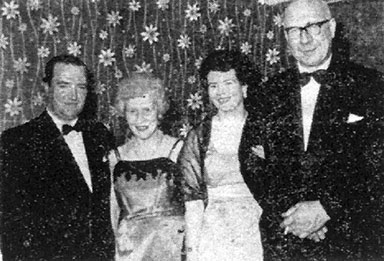
Left to right Mr & Mrs J Hamilton, Mrs & Mr J Culligan. 1962.