• Skip to primary navigation
  • Skip to main content
  • Skip to primary sidebar
Old Glasgow Pubs

Old Glasgow Pubs

  • Home
  • About Us
  • Find A Pub
  • Find Address
  • Find A Publican
  • Further Reading
  • Shop
  • Contact Us
  • Members Area
  •  
  • Click Here to Search the Site
You are here: Home / Latest Posts

Latest Posts

The Clyde Shipping Bar

January 2, 2017 by John Gorevan Leave a Comment

85-87 Finnieston Street, Glasgow. G3 8HB. Demolished.
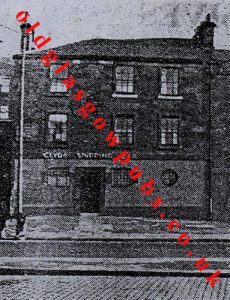
Image of the Clyde Shipping Bar, *5-87 Finnieston Street, Glasgow
The Clyde Shipping Bar. 1950

There has been a public house on this site since 1850. The first licensee to acquire a licence for these premises was spirit dealer James Higgins. Mr Higgins continued serving the locals here until 1867.

William Richardson was the next spirit merchant to own this old pub. William lived with his wife and family at 1 Kent Road. By 1875 Mr Richardson also owned a public house in Cranston Street many will remember this old pub as the Prince of Wales Tavern. William continued to hold the licence until 1892.

In 1881 William Richardson was 56 years of age and living at 111 Finnieston Street with his daughter Mary.

The next gentleman to hold the licence was John Bathgate. John was also a restaurateur in Linthouse Hall, Govan. John only lasted a few years here and gave it up in 1895.

In 1895 John Fraser acquired the licence. John paid an annual rent of £90 for the premises. He lived at 30 Derby Street before moving to better accommodation at Comleypark, Dunfermline. Mr John Fraser continued in this pub until 1923.

Alexander S Donald then took over the licence in 1924. Alexander also owned the Clyde Vaults, 150 Gallowgate and a public house at 13 Green Street, Clydebank. Mr Alexander S Donald was the last person to hold the licence and the pub was demolished in the early 1950s.

In the News 1950…

The Clyde Shipping Bar at World’s End.

Iv’e been to the World’s End – not somewhere over the rainbow, but along the dreary congested Street of Glasgow’s Dumbarton Road to the once rural village of Finnieston where now giant cranes and multicoloured ship funnels tower up from the docks like giant ungainly flowers stretching to reach the sun.

It is doubtful if one in a hundred of the dockyard workers who daily stream up the Finnieston Main Street realises that they constantly pass World’s End, or if many of the customers who sip their beer in the Clyde Shipping Bar know that the pub looks into man-made “eternity.”

Pity that the Shipping Bar did not think to perpetuate this old Finnieston name and allow some artist’s imagination full scope to design a sign as unique as the name “World’s End Bar.”

There is certainly no doubt that the Clyde Shipping Bar, in spite of it’s modern front is entitled to associate itself with the oldest memories of Finnieston. It is housed in an old building built one believes in the early 1800s. At one time the building was an inn and between the grocer’s shop at one end and the pub at the other one can just discern the faint printing on the walls, “Finnieston Inn and Tavern.”

Below the grocer’s shop are the old inn cellars and above, where once the Finnieston Inn provided its humble hospitality, are dwelling houses out of one of which the day I passed that way trundled a little old man with a slice of bread for a cart-horse. It is a bitterly cold day and frankly, I was wearing two pullovers, my heavy coat and a scarf. “You’ll catch a cold,” I suggested. He looked at me who I am sure must be over ninety, “Cold!” he exclaimed. “It’s nae cold!” They breed them tough in Finnieston.

The Blind Man’s

At one time the pub was known as the Blind Man’s because, I’m told, the landlord was blind. The present licence-holder is Mr A Donald who has been keeping a merry weather eye on this convivial port for almost 30 years.

Probably the tavern building was built about the time the Townhead weavers in Glasgow gathered up their looms and flocked to the new village laid out by Matthew Orr, of Barrowfield in 1768 and named Finnieston in honour of the Rev. John Finnie who had been tutor to Orr and to Anderson, founder of the Anderston and Finnieston villages.

World’s End, now known as Greenhill Place, down which the port-hole windows of the Clyde Shipping Bar face, was more than an affectionate local name, for it appeared in the Glasgow Post Office Directory in the middle of last century. There are various suggestions as to how the name World’s End came into being. The one generally accepted is regarding the weavers who, it is said, took a very gloomy view of the state of the country and thought it was finished. They said they would go “to the end of the world” rather than live in such a country. They disappeared and then turned up in the little village of Finnieston!

Another Suggestion

An old Finnieston worthy in The Shipping Bar had another suggestion. He pointed out of the port window to the vacant ground at the corner of Greenhill Place. “There he said,” used to be the road there a man McGreath’s farm which stood on the Stobcross estate. A farm were nothing but green fields. I waited for the further explanation and the worthy looked slightly exasperated. “So that was the end of the world,” he added as though unnecessarily.

A third suggested explanation was that the weavers, who were dead religious had waited at some time at the corner, or at least a selection of the population of Finnieston had waited there, for the end of the world. The tenements at the World’s End are old and decrepit and in Greenhill Place only two “closes” remain in their turnpike stairways. Greenhill Street now lacks such grace. Finnieston Main Street is busy and spacious and the fresh breeze from the Clyde blows its cobwebs and litter up to Dumbarton Road. The old village has lost almost all its glamour, but so lang as a few Glaswegians remember how it was once the World’s End a little romance and a little sentimental attraction will always linger round the Clyde Shipping Bar at the end of the world.

Do you remember the old  Clyde Shipping Bar or any of the old pubs in Finnieston Street? If so please leave a comment.
Filed Under: C, Finnieston Street, FinniestonStreet Tagged With: Finnieston Street, Greenhill Place, James Higgins, John Bathgate, John Fraser, Mr A Donald, Pubs in the west end, The Clyde Shipping Bar, The World's End, West End, William Robertson

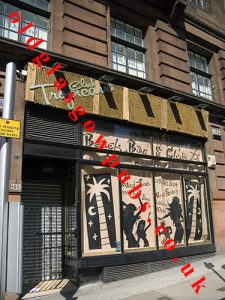
Club Tropicana

January 2, 2017 by John Gorevan Leave a Comment

165 Hope Street, Glasgow G2 2UQ.

Image of Club Tropicana Hope Street Glasgow 2007
Club Tropicana. 2007.

Closed down February 2009.

Once known as Club V Dub.

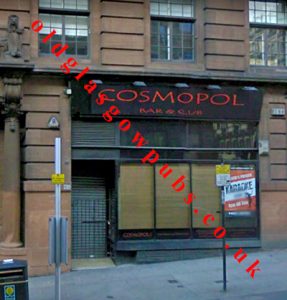
Cosmopol 165 Hope Street 2010
Cosmopol. 2010.

Cosmopol is situated near to the corner of West George Street.

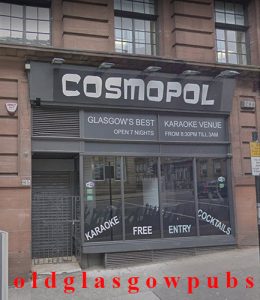
Image of Cosmolop 165 Hope Street 2018
Cosmopol. 2018.
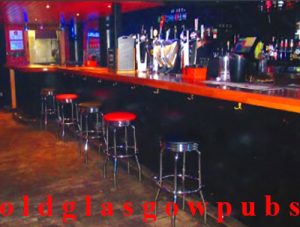
Image of the interior of Cosmopol 2017
Interior View of the cocktail Bar.

Cosmopol has a great cocktail bar and Karaoke.

Cosmopol website.

Do you have any memories of this well known venue? If so please leave a comment.
Filed Under: C, Hope Street, HopeStreet Tagged With: Club Tropicana, Club V Dub, Cosmopol, Hope Street, Hope Street pubs

The Club Bar

January 2, 2017 by John Gorevan Leave a Comment

190 Pollokshaws Road, Glasgow. G41 1PS. Demolished.

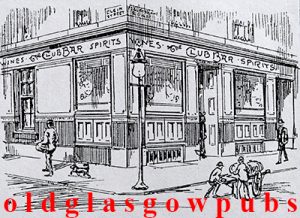
Drawing of the Club Bar Pollokshaws Road 1895
The Club Bar. 1895.

The Club Bar, 190 Pollokshaws Road corner of Elgin Street.

The Club Bar sat at the corner of Pollokshaws Road and Elgin Street later Turriff Street.

In the early part of the 1900s Pollokshaws Road and nearby Eglinton Street was a great thoroughfare for shopping and a nice place for dwelling housing. The street were also well stocked with public houses.

The history of the Club Bar can be traced back to 1861 when Spirit Merchant James Vance was granted a licence to sell wine and spirits. The tenement building on which the pub was situated was called the Rosebank buildings.

Mr Vance lived in the close next door to the pub above with his wife and children. James only had this pub for a short while and the pub was then owned by Donald Currie in 1865.

Donald Currie was a Wine & Spirit Merchant, residing at 161 Cumberland Street in the Gorbals, before moving to better accommodation five years later to 20 Salisbury Street, then to 48 McKinlay Street by 1880.

Donald continued to serve the locals until 1884.

In 1885 Thomas N Reid then took control of the pub, Thomas had the pub for a few years and sold up in 1890. Mr Reid was living at 5 Lilybank Street.

The pub lay empty for two years before Mrs Elizabeth Anderson took over the running of thew pub. She was also a Wine and Spirit Merchant living at 93 London Street before moving to 227 Hospital Street in the Gorbals. Elizabeth used to run a pub at 11 Back Wynd just off the Trongate before taking over the Club Bar.

Mrs Anderson again only had the pub for a few years and sold up in 1894.

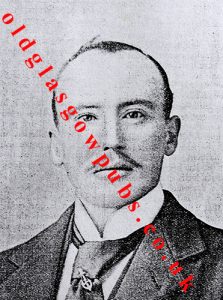
The next licensee was a Wine and Spirit Merchant called James McCorry.

Image of Mr James McCorry of the Club Bar Pollokshaws Road 1895
Mr James McCorry. 1895

When Mr James McCorry took over the Club Bar he redecorated the pub inside and out. As you walked into the establishment to the right on entering, was a long semi-circular bar, running the full length of the interior, right facing you was the well stocked gantry with various blends of Scotch Whisky, Liquors, Sherries, Bass Ale, Guinness Stout and the “Club special” old Scotch Whisky.

The woodwork looked bright and well varnished, the roof and walls were covered with Japanese Wallpaper. Beautiful mirrors around the walls with such names as “Roderick Dhu”, the “Premier” and “Bass made the bar look larger that it was and gave a bright feel to the place as the light came through the large windows.

The sitting rooms were neatly finished and upholstered with stained glass windows with good ventilation. In the winter months each sitting room had a large glowing fireplace.

Underneath the pub there was ample room for cool cellarage with a beer raising machine at work to send the liquor up the the bar counter.

James McCorry gained his knowledge in the Wine and Spirit trade in Dunoon, where his mother carried on business for many years. He came to Glasgow and joined the staff and services of William Morton, 21-23 Dixon Ave, Crosshill, the Old Queen’s Park Bar.

James worked in the Queen’s Park Bar, for 6 years, where he gained both the goodwill of his employer and the patrons of that well-known establishment. On leaving the pub he received a handsome gold Albert and pendant bearing the following:- “Presented to James McCorry by the employees and customers of William Morton Esq., and friends, 1894”.

About a year after leaving he was charge hand of the Empire Vaults in West Nile Street, now the Iron Horse.

When the pub on Pollokshaws Road came onto the market, James was determined to embrace the opportunity to strike out for himself and got the licence. James had very few hobbies and found no time to attach himself to any of the incorporated bodies, he spent all his time in the pub.

After James McCorry, Thomas Foote was now the owner.

In 1898 Thomas Foote obtained the licence and lived at Laura Cottage, Cumbernauld Road and also ran a pub at 220 Castle Street. In 1899 Thomas paid an annual rent of £34. He continued to run the pub until 1928.

In the 1930s licensee’s John Shearer, Murdo Maciver and John Donovan ran the pub.

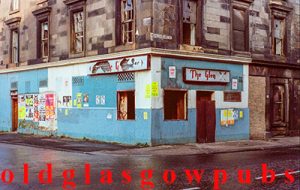
In the 1940s Alexander W Douglas was licensee, when he passed away his wife Eileen took over in the 1950s trading under the title of A W Douglas & Son Ltd. Eileen was still licensee in the 1970s. The pub was then known as the Glen Bar. It was demolished in the early 1980s.

Image of the Glen Bar Pollokshaws Road 1983
The Glen Bar. 1982.

Thanks to Bob Grisly, Flickr for the image of the Glen Bar.

Do you remember this old Pub? If so please leave a comment.
END.

Filed Under: C, Pollokshaws Road, PollokshawsRoad Tagged With: Alexander W Douglas, Donald Currie, Elgin Street, Elizabeth Anderson, James McCorry, James Shearer, James Vance, Pollokshaws Road, The Club Bar, The Glen, The Glen Bar, Thomas Foote, Thomas N Reid, Turriff Street

The Club Bar

January 2, 2017 by John Gorevan 2 Comments

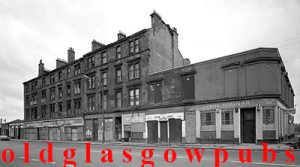
588a Gallowgate, Glasgow. G40 2PE. Demolished.

Image of John Bonnar's Club Bar, Gallowgate 1960s
The Club Bar. 1960.

The Club Bar on the right hand side.

When this image was taken in the 1960s, The Club Bar was then owned by Celtic Football fame John Bonnar. The Club bar sat at the corner of Gallowgate and Orr Street.

John Bonnar will go down in Celtic folklore for his part in ensuring one of the great unique triumphs in Celtic history.

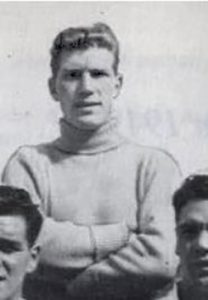
Image of John Bonnar
Mr John Bonnar.

Thanks to the Celtic Wiki.

Born in West Calder – John was signed in August 1948 from Arbroath Bonnar – the son of Donegal parents – he had originally made a name for himself as a junior. However it would be in the Coronation Cup of 1953 that the keeper would earn his place in Celtic and football folklore. Prior he was a shale-miner but was much sought after as a player.
John Bonnar was nicknamed as ‘Tiger’ due to a perceived similarity in looks to the great Moscow Dynamo keeper ‘Tiger’ Khomich, not a bad accolade.

This very old and popular Gallowgate howff was originally called “Wyper’s Bar.”

In the summer of 1878 James Wyper, son of the founder of the business John Wyper acquired this pub. His father had pubs in many parts of the city including Gallowgate, Dale Street, Shuttle Street, Main Street, Bridgeton, Dalmarnock Road, London Road and Sauchiehall Street.

To read more on the pubs on the Gallowgate read up & Doon the Gallowgate by John Gorevan. A copy can be bought for a few pounds at the Hielan Jessie on the Gallowgate or contact me at [email protected]

Also see Celtic Football players that owned pubs.

Facts…

Licensees’…

1973 Hugh McLellan Hall.

1960 Allan Anderson.

1950 David Fulton Watson Sim.

1941 Peter McPhee.

1924 Alex Mowat.

1922 John Strang Wyper.

1921 John Strang Wyper, also a pub in Kirkintilloch.

1878 James Wyper.

Do you remember the Club Bar or any of the old Pubs on the Gallowgate? If so please leave a comment.
Filed Under: C, Gallowgate, Gallowgateroad Tagged With: Alex Mowat, Allan Anderson, Celtic goalkeeper, David Fulton Watson Sim, Gallowgate, Gallowgate Pubs, Hugh McLellan Hall, James Wyper, John Bonnar, John Strang Wyper, Peter McPhee, The Club Bar

Outhouse

January 2, 2017 by John Gorevan 1 Comment

1155 Cathcart Road,Glasgow. G42 9HB. Tel: 0141 649 0184.

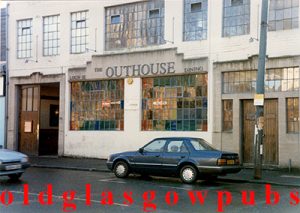
Image of the Outhouse Cathcart Road 1991
The Outhouse. 1991.

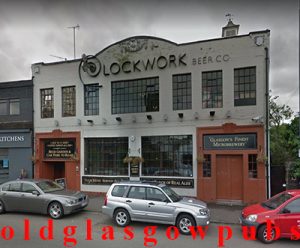
The Outhouse has a different name now it was changed to the Rocking Horse then to Boon’s Yard then in 1997 the Clockwork Beer Company.

Owners Robin and Gay Graham brew their own beer here. Robin and Gay formerly ran the Boswell Hotel in Mansionhouse Road were they served real ale.

Image of the Clockwork Beer Co Cathcart Road 2018
Clockwork Beer Co. 2018.

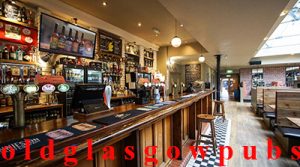
Main Bar area of the Clockwork Beer Co Cathcart Road 2018
The Main Bar.

Image of the Bar Booths in the Clockwork Beer Co Cathcart Road
Bar Booths.

Do you have any memories of this place? If so please leave a comment.
Filed Under: Cathcart Road, CathcartRoad, O Tagged With: Boons Yard, Cathcart Road, Clockwork Beer Company, Gay Graham, Robin Graham, Rocking Horse, The Outhouse

The Clock Bar

January 2, 2017 by John Gorevan Leave a Comment

35 Bedford Street, Gorbals, Glasgow. G5. Demolished.

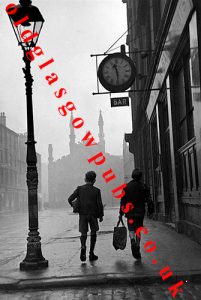
Image of t
The Clock Bar. 1960s.

Two boys on their way to school with the Clock Bar on the right.

The history of this old bar can be traced back to 1844.

In 1844 George Johnston and partner James Neil traded as Johnstone & Neil. George was living not far from the pub at 18 Abbotsford Place and James Neil at 17 Bedford Street.

Within a few years things were looking up for the partners, and business was good. George was now living at 111 Hill Street, Garnethill while James was residing at Coustenholm, Pollokshaws.

In 1860 George Johnston jun had the title of Counting house, South area, Royal Exchange and Wine Merchant & Agent at 15 Bedford Street and was living at 55 Cumberland Street.

Image of the Clock Bar Bedford Street Gorbals with two ladies walking by
The Clock Bar. 1960s.

Thanks to Getty Images.

Clock Bar this time with two young ladies walking by.

In 1878 the address of the pub was 35 Bedford Street sitting at the corner of Abbotsford Lane. The pub was now under the control of licensee John Ferguson.

Well known and respected Wine & Spirit Merchant Thomas Gallacher took over the pub in 1883. The locals called the pub Gallacher’s. Many locals in the Gorbals named their pub after the owners and sometimes the pub had a name above the door.

Mr Gallacher also ran a public house at 23 Crown Street.

Another well know publican to own the pub was William Sweeney. One of the last licensee’s was William McAfee who had the pub in 1960.

Facts…
Licensee’s for these premises…
1960 William McAfee.
1950 William Sweeney.
1920 William C Thomson.
1919 John Mullaney.
1900 Thomas Gallacher.
1883 Fletcher Pool.
1880 John Ferguson.
1876 William Beswick.
1870 George Johnston jun.
1850 George Johnston jun and James Neil.
1844 George Johnston and James Neil.

Do you remember the Clock Bar? If so please leave a comment.
Filed Under: Bedford Street, BedfordStreet, C Tagged With: Bedford Street, George Johnston, Gorbals, James Neil, pubs in Gorbals, The Clock Bar, William C Thomson, William McAfee, William Sweeney

  • « Go to Previous Page
  • Page 1
  • Interim pages omitted …
  • Page 374
  • Page 375
  • Page 376
  • Page 377
  • Page 378
  • Interim pages omitted …
  • Page 437
  • Go to Next Page »

Primary Sidebar

Become a Member of Old Glasgow Pubs

We are very excited to announce that we have created a new membership! In return for supporting the site, you will gain fantastic perks! Click below to find out how you can support the site!

💖 Donate via PayPal

All content on this site is Copyright Old Glasgow Pubs (OGP). To use any history or images, please make sure you link back to our site.

This website uses cookies to improve your experience. We'll assume you're ok with this, but you can opt-out if you wish. Cookie settingsACCEPT
Privacy & Cookies Policy

Privacy Overview

This website uses cookies to improve your experience while you navigate through the website. Out of these cookies, the cookies that are categorized as necessary are stored on your browser as they are essential for the working of basic functionalities of the website. We also use third-party cookies that help us analyze and understand how you use this website. These cookies will be stored in your browser only with your consent. You also have the option to opt-out of these cookies. But opting out of some of these cookies may have an effect on your browsing experience.
Necessary
Always Enabled
Necessary cookies are absolutely essential for the website to function properly. This category only includes cookies that ensures basic functionalities and security features of the website. These cookies do not store any personal information.
Non-necessary
Any cookies that may not be particularly necessary for the website to function and is used specifically to collect user personal data via analytics, ads, other embedded contents are termed as non-necessary cookies. It is mandatory to procure user consent prior to running these cookies on your website.
SAVE & ACCEPT