• Skip to primary navigation
  • Skip to main content
  • Skip to primary sidebar
Old Glasgow Pubs

Old Glasgow Pubs

  • Home
  • About Us
  • Find A Pub
  • Find Address
  • Find A Publican
  • Further Reading
  • Shop
  • Contact Us
  • Members Area
  •  
  • Click Here to Search the Site
You are here: Home / Latest Posts

Latest Posts

Burns Howff.

November 11, 2016 by John Gorevan 7 Comments

56 West Regent Street, Glasgow. G2 2RA. Closed.

In 1948 56 West Regent Street was a plumbers store owned by John Richmond & Company. In the 1950s it was opened as “The Nosh Bar.” In 1960 it was owned by Mr. A Nobile. The premises was also known as the Colony Restaurant. However it will be best remembered as Burns Howff for its live rock bands, music and sing-a-longs.

John Waterson took over the pub in March 1967 and turned it into one of the best known bars in the city. He formerly owned Burns Cottage in Paisley Road.
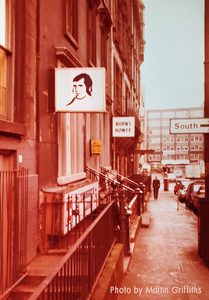
Burns Howff, West Regent Street.

Glasgow architect Dan Kemp was responsible for the transformation of the new Burns Howff which was formerly the Colony restaurant. The popularity of music in Mr. Waterson’s other premises the Burns Cottage was on a television show about a singing competition, see Burns Cottage, the popularity of the event sparked Mr. Waterson to open up in town, which was the first free house in the city for some years.

A public lounge bar had been laid out on the lower floor, with spacious seating, in black leather upholstery. Red lights were sunk in the low ceiling, while the bar was simply illuminated, including spot lights on the gantry pointing to the bust of the Bard.
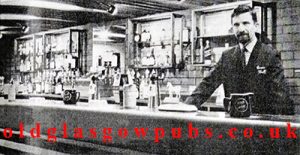
John Waterson in the long bar of the main lounge in Burns Howff. 1967.

Upstairs another long bar had similar seating for about 140 and here Grace Boyle presides on the bar, designed on a smaller scale with the main bar downstairs. Another form of entertainment in one corner holds the five-piece “Ploughman” group which performs daily, except Saturday mornings, when the Jazz Centre offers music.

Closed circuit TV had been introduced, if the demand is there, to permit customers in the lower lounge to watch the band performing above. The music is relayed throughout the premises.

At the rear of the premises on the lower floor there was also a special cold room which had something new in beer containers. These were three stainless steel containers each holding the equivalent of five barrels. They are thermostatically controlled. A pilot light at one end of the main bar indicates where beer is being drawn at any particular time.

In charge of the Main Bar was Margaret MacNeil, while managing the premises was Mr. Tom McGunn. Mr. Waterson, who was carrying on the Burns Cottage and the Market Bar, Paisley, has been in the Trade for some 30 Years.
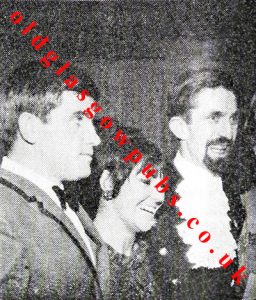
Another photograph of John Waterson with full highland attire. 1960s.
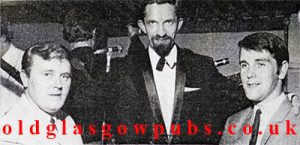
John Waterson with the leaders of the Bards and Sabres. 1966. Also see Burns Cottage.
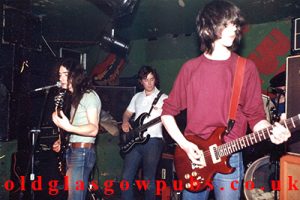
Burns Howff, Exorian. 1982.
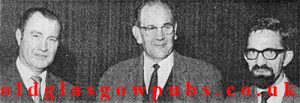
John Waterson on the right next to Anthony McAulay of the Pig & Whistle and J Donaghey of the Devon Bar. 1970.
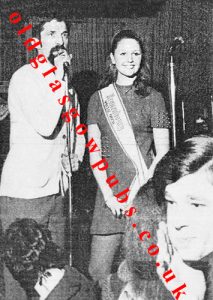
Mr. John Waterson with Miss Kronenbourg, 1970.

Miss Kronenbourg, Fiona MacDonald from Glasgow, being introduced by John Waterson at a reception at Burns Howff, West Regent Street, Glasgow to promote the French lager. Miss Kronenbourg had just completed a tour of central Scotland and the Borders accompanied by salesmen from Tennent Caledonian Breweries, agents for the lager in Scotland. 1970.
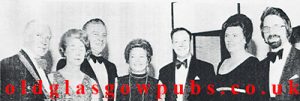
Left to right Mr. J Flynn, president of the Glasgow Vintners; Mrs. Flynn; Mr. George Ramster, secretary of the Glasgow Association; Mrs. J Waterson; Mr. W Martin, Calypso Bar; Mrs. Ramster and John Waterson. 1974.
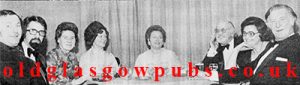
Left to right, Bailie McGrath; John Waterson; Mrs. A Stewart; Mrs. J McCabe; Mrs. J Waterson; Mr. J McCabe; Mrs. McGrath; and A Stewart of Buchanan Booth’s. 1973.

Burns Howff finally closed in 1984.

Farewell to a true trade man.
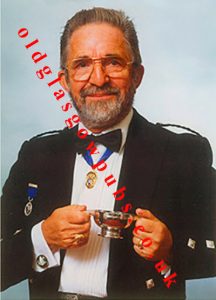
Mr John Waterson.

February 21, 2013

JOHN Waterson was one of the great characters of the Scottish trade. Well-known and highly-respected, he had a successful career spanning more than 70 years.

Not only did he own some of Glasgow’s most famous pubs, but successful hotels, nightclubs and off-sales too.
A former president of both the Strathclyde and Scottish Licensed Trade Associations, John was also very active in trade politics. He was a past director of The Scottish Licensed Trade Benevolent Society, a member of The Incorporation of Maltmen in Glasgow, a past chair of Strathclyde Youth and formerly a member of the Children’s Panel in Glasgow.

John Waterson was born in Great Hamilton Street in the Calton district of Glasgow in 1925. Not too much is known of his early years, although growing up in the Calton in the mid 1920s and ‘30s must have been interesting to say the least. He went to St Alphonse Primary School, but to suggest he had a good attendance record would be stretching the truth – he always said he was far too busy for lessons.

In 1938, aged 13, he popped into The Central Hotel in Glasgow on a whim to ask if there were any jobs. He was told that if the bellboy uniform fitted he could start the next day. It did, and so started a career that would last a lifetime.

His next step was as a waiter, and he learned his trade in various Glasgow hotels and restaurants. After the war he joined MacLauchlan’s the brewer, which employed him as a waiter in the famous Whitehall Restaurant on Renfield Street. Later he took charge of the cocktail bar and became an active member of The United Kingdom Bartenders’ Guild.
In 1957 MacLauchlan’s leased him The Moss-Side Inn in Paisley. This was very successful and in 1962 he bought his first pub – the run down Burns Bar in Govan.

On the face of it, it was perhaps not a great career move at the time – a Catholic buying a run-down Rangers pub in Govan, frequented by hardened dockers. On his first day the regulars came in only to tell him they had all barred themselves. By closing time he had sold two pints of heavy – one to a Catholic docker who wanted to meet the bravest publican in Glasgow, the other to the Jewish shopkeeper next door who wanted to meet the most stupid.

However, slowly but surely he worked his magic. Regular customers came back, the Rangers bus ran from the pub again, and within a year he had revamped the décor, filled it with Burns memorabilia and changed its name to Burns Cottage. It became one of only two pubs in Glasgow licensed for live music, and musicians flocked there in their droves.
John was one of the first to turn Scottish pubs into more than places to drink. He was involved in the Scottish music scene and between the ‘60s and early ‘80s gave a platform to many aspiring musicians.

He installed closed circuit television so patrons in the bar could watch the live bands in the lounge, which was revolutionary at the time. STV even broadcast a live talent show from the lounge on a Saturday night – a 1960s Scottish X-Factor from surely Britain’s first themed pub. He was always ahead of the game.

He opened his most famous pub, The Burns Howff in Glasgow, in 1967. Both the Cottage and The Howff played host to most of Scotland’s best musicians, including Maggie Bell, Frankie Miller, James Dewar, Alex Harvey, Simple Minds, Midge Ure, and The Average White Band. All played for John, although his relationship with musicians could be fraught. When one was interviewed he said he would never forget John for giving him his big break, but bemoaned the fact that he and his band were only paid £20 a night. John retorted that this was slander – he never paid any band more than £15!

Over the years till the mid-’90s, surely the golden age for the pub business, he also opened The Burns Howff in Renfrew and The Wee Howff in Paisley. Other acquisitions were McCalls Bar in Hope Street, which became The Pot Still. Much to his enjoyment he also bought The Whitehall, which became The Maltman, in 1982. The 39 Steps followed in 1986. That was the last pub John Waterson owned. He moved into hotels, first at the Gleniffer in Paisley then The Stuart and Bruce Hotels in East Kilbride and lastly The Golden Lion hotel in Stirling, which the family still owns.

Underpinning everything he was a licensed trade man, a publican through and through. Professional, disciplined and totally dedicated, he expected the same from everyone else. He instinctively knew what his customers wanted and always saw change coming – who else would have taken the chance and opened a no smoking bar, the successful Maltman, in 1982? He said he would never retire and never did, in fact he was still doing deals well into his 80s.

John is survived by his wife of 65 years Josephine, children Paul, Josephine, Jonathan and Mark, 11 grandchildren and 5 great-grandchildren. His eldest daughter Kathleen was tragically killed in a car accident in the USA in 1979.He was always thankful that the bellboy’s uniform at The Central Hotel fitted him on that fateful day in 1938 – so was the licensed trade of Scotland and its customers.
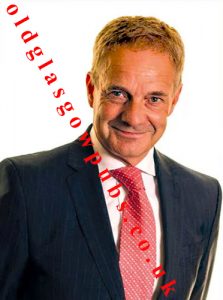
John Waterson’s son Paul who was, until recently, the chief executive of the Scottish Licensed Trade Association (SLTA), a post he held for 16 years.

In the NEWS…1970.

Pubs Where You Queue To Get In

If I had not seen it with my own eyes, I would not have believed it. Even having seen it, I could hardly credit it.

I had heard of queues at bingo halls, dance halls and cinemas, but until last Saturday I had never seen a queue of over 200 people waiting for an hour to get into a pub. Yes, queueing for an hour on Saturday mornings.

The place? The Burns Howff., in the centre of Glasgow. I knew the beer there was good – but this was ridiculous! The bar opened at 11a.m. sharp, and by two minutes past every seat in the 200 – odd capacity lounge was occupied. John Waterson – who owns the Howff and a couple of other places, was smiling broadly, which is hardly surprising. “It’s been like this for weeks. I could fill the lounge five times over. Last week I turned away about a hundred good customers by half-past eleven – then I stopped counting.” he said.

The reason. John admits, that the place has become so popular is not the good grog but the group who are on the stage – Beggar’s Opera, a poperatic group with a fantastic musical range. They mix pop with high opera and do all their own intricate arrangements. John, one of the men who first started music in pubs, say – “They are the most brilliant musicians I have heard in all my years in this business. They must go to the very top. It is inevitable.

“The audience sit almost hypnotised and hardly a soal leaves the lounge until we close at 2.30 p.m.” Beggars’ Opera, incidentally, will not be on the stage in the Howff to-morrow, just in case you are thinking of joining the queue. John has only one disappointment – he cannot afford to have them in every night in the week. The reason – the boys are making such good money. Says John – “I feel that the magistrates should unbend just a little and allow us to charge an admission fee at the door. This, as far as I can see, is the only way that publicans are going to be able to raise standards of entertainment.”

Do you remember Burn Howff? If so please leave a comment and we will post your views.

END.
Filed Under: B, West Regent Street, WestRegentStreet Tagged With: Burns Howff, John Waterson, Paul Waterson, West Regent Street

Miller, James

November 11, 2016 by John Gorevan Leave a Comment


66-68 Norfolk Street, Gorbals

Mr James Miller

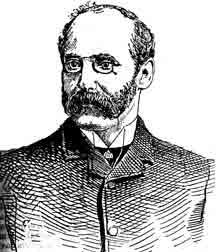
Mr James Miller. 1888.

James Miller was born at Eastfield in the Parish of Shotts in 1843. His father was a farmer on the Duke of Hamilton’s estate. James was the oldest of a family of ten, and was brought up under the strictest discipline. He went through the usual routine of farm work, taking his full share of the work, and like his father followed the plough. Young James was getting tired of his strict up-bringing, he was intending to go to a fair one day in a neighbouring town in opposition to his father’s will, “he said if you go to the fair, you will not be welcome in this home.” Daring James went to the fair that day, and rather than face the results of his disobedience he bade farewell to the Eastfield Farm.

On arriving Glasgow at the age of nineteen he started work in the North British Railway. He was always keen to educate himself, gaining good results in his exams when he was a boy, in Glasgow too, he attended for years classes in the Mechanics Institute. The railway work, however, did not suit him, and after a short period work for Charles Watson, Argyle Street, Glasgow, where he remained for some time. This may be said to have been the beginning of his career. On quitting with the firm of Charles Watson he was entertained to supper and presented with a valuable presentation in the Black Bull Hotel, Maryhill, in recognition of his ability as well as his good fellowship.

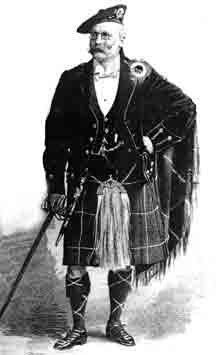
Mr James Miller in Kilt attire

Mr Miller in full Highland dress. 1893.

James then went into the employment of Messrs. Bennett & Co. which he was in receipt of a substantial salary and saved all his money. After a few years he went into partnership with James Gordon and jointly they became the owners of a public house at 68 Norfolk Street, Mr Miller prospered in the business and at this stage both men dissolved partnership, although they remained best friends. His relatives were much so aggrieved that he would not speak to him for years.

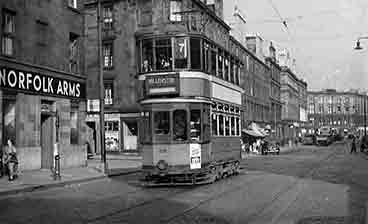
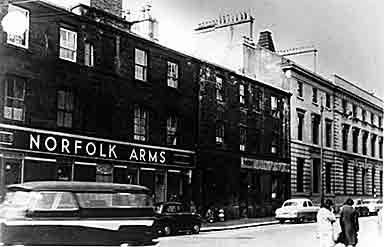
This first purchase of licensed premises fired him with a desire to press on, as a result of his perseverance he was fully rewarded and soon had five public houses to run. Mr Miller’s pubs were good establishments, with good quality liquor, always with the best bartenders, well-dressed in white shirts black tie and trousers with well pressed white aprons. Miller’s public houses each had a distinctive name, sometimes political, sometimes poetical, as in the case of the “Gladstone” in Norfolk Street, the “O’Connell” in Nicholson Street, “Burns” in Eglinton Street, “Burns” in Houston Street. His residence had a royal title at 28 Queen’s Square, Regent Park. Many will remember the pub on Norfolk Street as the Norfolk Arms.

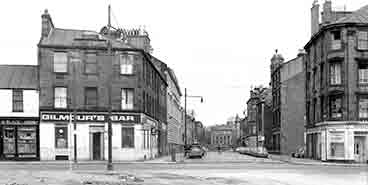
Image of Gilmour's Bar 1960s

Gilmour’s Bar 1960s. Thanks to Norrie Mcnemee for the image.

Over the years he had pubs in Nithsdale Road, Main Street, Pollokshaws, Surrey Lane, Eglinton Street and a wholesale business at Cavendish Street. Each of his pubs had a popular and special blend of old Scotch Whisky called “Glendhu.”

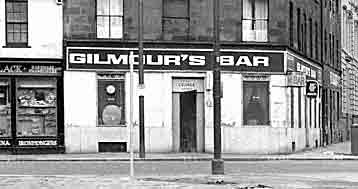
Image of Gilmour's Bar 1960s

Closeup of Gilmour’s Bar. Thanks to Norrie McNemee for the image.

James Miller’s hobby was horses, he was in possession of several stud horses and was proud of his pair of Arabian horses. James was also the owner of the famous roadster “Cock Robin,” which carried everything before it at the various horse shows throughout Scotland, including the twenty-guinea cup at Helensburgh. He was also an enthusiastic Highlander, and was admitted to be the finest amateur Highland dancer in Glasgow. He also liked to travel and frequently visited France and Germany.

James took a prominent part in Trade matters and was a member of the various Trade organisations. In a few he acted as a Parliamentary delegate and was for twelve years one of the directors of the Wine and Spirit Trade Defence Association and did yeoman work. Like his brother, the parish minister of Jamestown, in Dumbartonshire, Mr Miller belonged to the Auld Kirk, and was a member of Queen’s Park Church.

After Mr Miller’s death his wife Mary took over some of the pubs others were sold off and after the First World War Mary only had the Norfolk Street premises and Houston Street.

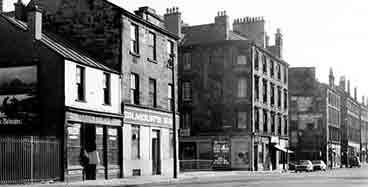
Image of Gilmour's Bar 1960s.

Another image of Gilmour’s Bar. Thank to Norrie McNemee for the image.

Image of the Norfolk Arms 1959

The Norfolk Arms, 66-68 Norfolk Street, Gorbals. c1959.

Image of the Norfolk Arms from Nicholson Street

The Norfolk Arms from Nicholson Street.

In 1971 a life size mural painting of World Chanmion Benny Lynch was discovered beneath 6 layers of wallpaper when owner Dick Gilmour was refurbishing the bar.

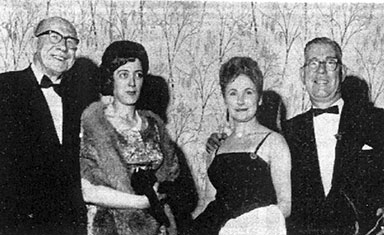
group image of James Culligan, Miss P McGuire, Mrs Bertha Sendall and J K Webster 1963.

Left to right Mr J Culligan; Miss P McGuire; Mrs Bertha Sendall (Royal Restaurant); and J K Webster (Webster’s Bar). 1963. This image was taken at the annual Gorbals Ward outing.

Mr James Culligan owned the Norfolk Arms in the 1960s.

Facts…

Do you know anything about this pub or any other pub in the city?
If so please contact us and we will review your comments.

Licensee’s for this premises…

1971 Dick Gilmour.

1960 James Culligan.

1950 James Sweeney.

1920 Mary Miller.

1900 James Miller.

1880 John Anderson.

1870 William Stark.

1864 James Lochhead.

1787 post office directory…

179 Eglinton Street. Bowling Green Inn, Mrs J Wilson.

Filed Under: Publican M

The Fairway

November 11, 2016 by John Gorevan 2 Comments

18 Chapel Street, Rutherglen, Glasgow. G73 1JE. Tel: 0141 647 4008.

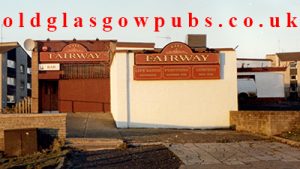
The Fairway Bar. 1991.

The Fairway was built in 1961 for the Murray family. Rutherglen Town Council had the Murray’s old premises demolished which sat 50 yards from the new building and dated back to the 17th century. Ye Olde Inn  had an established date of 1650, John and Mary Murray took this old pub over in the 1920s from their family who had it for over twenty years.

Exterior view of the Fairway. 1961.

The Fairway bar was named as there was an old golf course on the site many years ago. A feature of the new premises both in the lounge and the public bar was the various types of timber used. Canadian Birch was chosen for the lounge bar, the bar counter front being rio rosewood, the public bar was panelled in American black cherry with mahore for the counter front and figured willow for the gantry.

Moquette wall seating in a violet shade in the lounge and the seats were upholstered in the same colour. The whole of the establishment had underfloor heating.

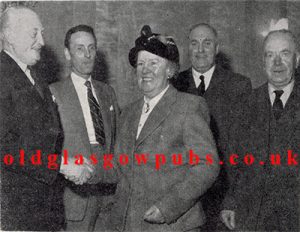
Opening ceremony group at Rutherglen’s Fairway. Left to right Mr J A MacDonald, Glasgow and West of Scotland manager, Scottish Brewers Ltd.; Mr John Murray jun.; Mrs Mary Murray; Mr D M Ferguson and Mr John Murray sen. 1961.

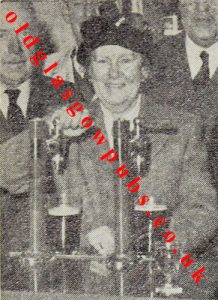
Mrs Murray, pulling the first pint at the new Fairway Bar. 1961.

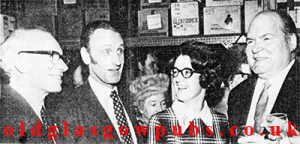
Left to right Mr A V Hanlon, director of Kilglas, Mr J Murray, Mrs McDeveney, Mr John A Murray, Murray’s Bar’s Gallowgate and Dalmarnock Road.

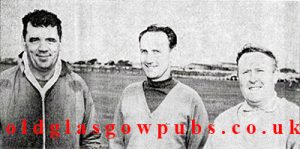
A day’s outing at the golf course, left to right W Jenkins, Govan Arms, J J Murray, Fairway, A Ford of Usher’s. 1967.

Update… November 2009.

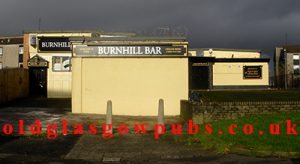
Burnhill Bar. November 2009.

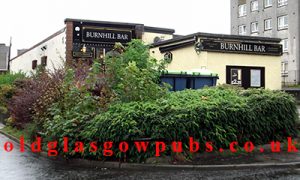
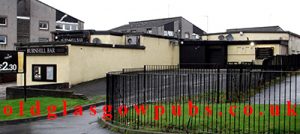
The Fairways is now called The Burnhill. Thanks to Norrie McNamee.

Burnhill Bar. 2012.

Burnhill Bar. 2012.

Do you remember this old pub? If so please leave a comment and we will post your views.

In the NEWS… 2018.

Still Game fans are delighted that the hit TV show is coming back – and a Rutherglen pub will be the new boozer for Jack, Victor and pals. Last year the Reformer revealed how the Fairways Bar on Chapel Street had been filmed for scenes in the new series of the smash hit TV programme.

And the popular watering hole will take centre stage in the first episode of the programme’s latest series, that returns to TV screens in a fortnight. The plot sees Jack and Victor head to The Clansman – where they encounter a flustered Tam.

To their dismay, they discover barman Boaby now has trendy ambitions for the pub which means their sort aren’t welcome anymore. Meanwhile Winston is looking for new digs – after asbestos forces him out of his flat.

The quartet then try out a new boozer, the Coral, which in reality is the Fairways. And with The Clansman regulars turfed out and Winston in need of a roof over his head, a new hangout is soon discover – with perks for all the pensioner pals.

Colette McAllister, landlady at the Fairways, previously told the Reformer how much she’d enjoyed the experience.

She said: “I was in a tent watching it being filmed. They treated me like royalty. “The cast were gentlemen, they were asking all about the pub — they were lovely. “Once people realised it was happening, people were hanging out of their windows getting pictures. The cast stayed and got photos with everyone.”

Colette added that the experience could be a big boost for the area as a whole. She said: “Watching it was amazing, I was on a pure high. “It’s the biggest show in Scotland and it came to Rutherglen and my pub.

Update…2019.

The Rutherglen Local is still called The Fairway. If the locals in Rutherglen are like the locals in Glasgow then if the pub was changed to the Burnhill the locals will still call it “The Fairway.”

END.

Filed Under: Rutherglen Tagged With: Chapel Street, John Murray, Rutherglen, The Fairway Bar

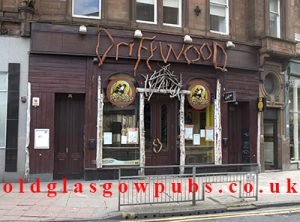
Speakers Corner. Driftwood.

November 11, 2016 by John Gorevan 3 Comments

2-4 St. George’s Road, Charing Cross, Glasgow. G3 6UJ. Tel: 0141 332 7000.

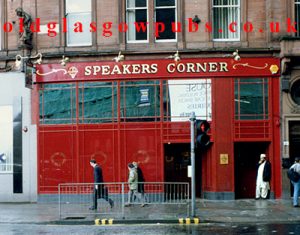
Speakers Corner. 1991.

In recent years this old pub has had many name changes including Driftwood, The Corner, The Gate, Burlin Jack’s it is now called Los Borrachos and has a Mexican theme.

Update 2014…

The pub is now back to the Driftwood.

Situated in Charing Cross Mansions designed by John James Burnet in 1891 in a French Renaissance style.

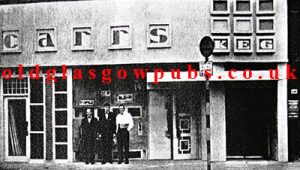
This pub was opened in 1963, it was formerly a retail store. The pub was then called Carrs Barr named after licensee Partick Joseph Carr. Mr Carr commissioned architect John P Coia to carryout the work involved. Various decorative effects combined to give the frontage an unusual appearance. Among the effects on the grey faced exterior interesting island patterns of mosaic.

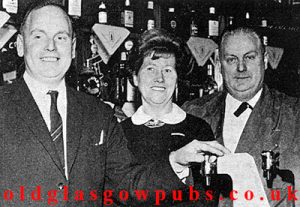
Left to right Mr Patrick Carr, Mrs McGee and Mr McGee, manager of the Lampost, Duke Street.

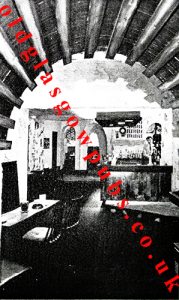
The main feature of the premises was the El Moro Lounge, situated downstairs and approached through a short tunnel. The design contours of this arched patio lounge had been broken up to create small islands of comparative privacy. Textured plaster work had been used for the arches and alcoves as well as for the ceiling.

Exterior view of Carrs Keg, 2-4 St. George’s Road, with Mr Carr and two members of staff standing outside. 1963.

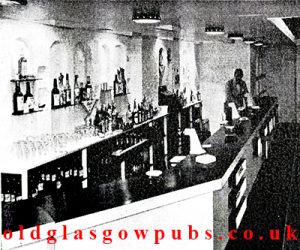
On the ground floor, at the front was the public bar and at the rear was the cocktail lounge and sandwich bar. The skilful use of paint, sheet copper and decorative plaster on this floor presented an effect that was both pleasing and impressive. Surmounting the rear part of the premises was a cupola dome, which was part of the original building and was incorporated into the transformation scene.

Interior view of the public bar. 1963.

What had been achieved at these new premises reflected considerable credit to the proprietor Mr Carr and architect Mr Coia and the contractors. The opening ceremony was performed by Bailie D J Docherty who congratulated Mr Carr and Mr Coia on the unique design and decor.

Interior view of El Moro Lounge. 1963.

Mr Carr also own the old Uneeda Bar, Duke Street now called the Lampost, and Patrick O’Kanes old pub on Pitt Street at the corner of Holm Street.

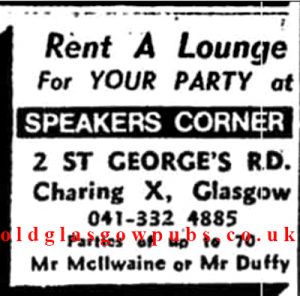
Rent a lounge, Speakers Corner, 2 St George’s Road. advert 1975.

Update…2005.

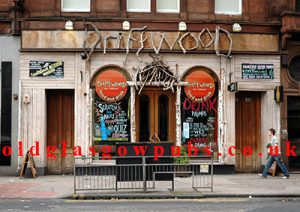
Driftwood. 2005.

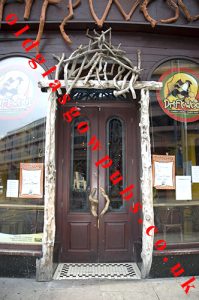
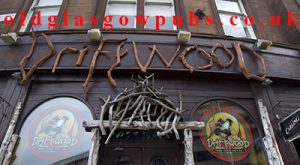
The Driftwood Bar. 2008.

The Driftwood Bar. 2008.

The Driftwood Bar. 2008.

Facts…
Licence Holders.
1991 John McIIwaine.
1973-1970 Bernard McDonald.
1963 Patrick Joseph Carr.

Do you have any memories of this old Bar? If so please leave a comment.

END.

Filed Under: S, St Georges Road, StGeorgesRoad Tagged With: Burlin Jack's, Carrs Barr, Carrs Keg, Charing Cross, Driftwood, Los Borrachos, Mr McGee, Patrick Carr, Speakers Corner, St Georges Road, The Corner, The Gate

Bunker Bar.

November 11, 2016 by John Gorevan Leave a Comment

193-99 Bath Street, Glasgow. G2 2HU. Tel: 0141 229 1429.

Bunker Bar. 2017.

Bunker Bar. 2018.

Do you know anything about this pub? If so please leave a comment.

END.

Filed Under: B, Bath Street, BathStreet Tagged With: Bath Street, Bunker, Bunker Bar

Bar Budda.

November 11, 2016 by John Gorevan 3 Comments

142a-b St Vincent Street, Glasgow G2 5LQ. Tel: 0141 248 9771.

Bar Budda. 2007.

also see Bar Budda Langside.

Bar Budda Sauchiehall Street.

Bar Budda, West End.

Update 2019…

Now called Martha’s.

Do you know anything about Bar Budda or Martha’s? If so please get in touch.

END.

Filed Under: B, St Vincent Street, StVincentStreet Tagged With: Bar Budda, Martha's, St Vincent Street

  • « Go to Previous Page
  • Page 1
  • Interim pages omitted …
  • Page 401
  • Page 402
  • Page 403
  • Page 404
  • Page 405
  • Interim pages omitted …
  • Page 437
  • Go to Next Page »

Primary Sidebar

Become a Member of Old Glasgow Pubs

We are very excited to announce that we have created a new membership! In return for supporting the site, you will gain fantastic perks! Click below to find out how you can support the site!

💖 Donate via PayPal

All content on this site is Copyright Old Glasgow Pubs (OGP). To use any history or images, please make sure you link back to our site.

This website uses cookies to improve your experience. We'll assume you're ok with this, but you can opt-out if you wish. Cookie settingsACCEPT
Privacy & Cookies Policy

Privacy Overview

This website uses cookies to improve your experience while you navigate through the website. Out of these cookies, the cookies that are categorized as necessary are stored on your browser as they are essential for the working of basic functionalities of the website. We also use third-party cookies that help us analyze and understand how you use this website. These cookies will be stored in your browser only with your consent. You also have the option to opt-out of these cookies. But opting out of some of these cookies may have an effect on your browsing experience.
Necessary
Always Enabled
Necessary cookies are absolutely essential for the website to function properly. This category only includes cookies that ensures basic functionalities and security features of the website. These cookies do not store any personal information.
Non-necessary
Any cookies that may not be particularly necessary for the website to function and is used specifically to collect user personal data via analytics, ads, other embedded contents are termed as non-necessary cookies. It is mandatory to procure user consent prior to running these cookies on your website.
SAVE & ACCEPT