• Skip to primary navigation
  • Skip to main content
  • Skip to primary sidebar
Old Glasgow Pubs

Old Glasgow Pubs

  • Home
  • About Us
  • Find A Pub
  • Find Address
  • Find A Publican
  • Further Reading
  • Shop
  • Contact Us
  • Members Area
  •  
  • Click Here to Search the Site
You are here: Home / Archives for Address B

Address B

The Kimberley Bar

February 24, 2017 by John Gorevan Leave a Comment


44 Bath Street, Glasgow.

The Kimberley Bar

The Kimberley Bar. 1889.

The Kimberley Bar was formerly known as the Tivoli Bar. The owner Mr James McMillan ran a strict business selling good quality wines, spirits and beer. The oblong saloon which formed the interior was spotless, the bar counter ran all the way to one side with a curve at each end. The gantry was stocked full with wines, brandies and numerous rare liquors well displayed. A small keg was at hand selling “McMillan’s Special” blend of old Scotch whisky. Outside and immediately in front of the bar, was an immense floor space, with grand looking tables and veneer seated stools, facing the bar and extending the whole length of the saloon were long cushioned seats with neat iron tables in front. Heading down the two comfortable sitting rooms at the extreme end of the premises. The lavatory was conveniently mirrored with grand tiles on the walls and floor.

The interior was decorated with pictures and engravings, prominent amongst them was the Kimberley and others of the famous diamond fields bearing the name. Mr McMillan spent many years of his life digging for diamonds, he spent a great time telling stories of his experiences mining in the camps at Kimberley. He left Cape-town in 1879 on a bullock wagon with his face towards the diamond fields and travelled 900 miles roughing it to come home to Scotland. The small party in which he belonged to jogged along with their train of 18 bullocks, they pitched tents under the wagons.

Mr McMillan was one of the fortunate ones of having some money in his pocket as thousands of men, women and children mined for diamonds and never made any money. When he returned to Glasgow he took over the old Tivoli Bar and had interests in the Victoria Hotel in Gourock, a hostelry well looked after by his brother William.

Filed Under: Bath Street, BathStreet, K

The Inn

January 25, 2017 by John Gorevan 1 Comment

735 Balmore Road, Lambhill, Glasgow. G20.

The Inn

The Inn. 1991.

This was once owned by Raymond McCrudden well known and respected member of the Scottish Licensed Trade. It was opened by publican James Deery in the 60s.

James Deery Group

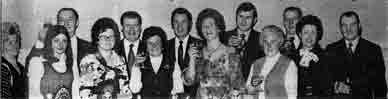
The photograph above was taken at the Glasgow Vintners function in the Bellahouston Hotel 1974. Left to right Mr & Mrs Harry Dougan, the Glen Bar, Mrs & Mr James Deery, the Inn, Lambhill, Mrs Byrne, the New Hawthorn Bar, Mr W Lochead, United Rum Merchants.

Ben outing 1973

Seated here are Mr. James Deery (The Inn, Lambhill); Mr. Michael Deery (Double 4); Mr. J. Boyle (Drybrough’s); Mr. Daniel Boyle (The Glenabber). 1973.

Licence Holders.
1973-1965 James Deery

Filed Under: Balmore Road, BalmoreRoad, I

Ibrox House

January 25, 2017 by John Gorevan 1 Comment

588 Broomloan Road, Ibrox,Glasgow.

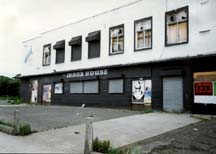
Ibrox House

Ibrox House. 1991.

The Ibrox House sat at the corner of Broomloan Road and Paisley Road West.

The upstairs lounge / night club was known as the Mucky Duck, Satellite City and Maddison’s. When it became known as Maddison’s it was so rough it was known locally as Mad Dogs. With all these name changes the trouble makers still flocked and became known as a cutthroats joint a stab inn. Ibrox football stadium was close by this attracted many Rangers football fans. The place was finally closed down, the local Police were overjoyed at the result and was bulldozed around 1992 shortly after the photograph was taken above.

A petrol station was built on the site.

However the Ibrox House was not always that bad. When the McGinn family started out in Ibrox House it was a thriving family business.

Bonfire made from Gorbals Pub.

On V. J. night a celebrating crowd broke into Thomas McGinn’s pub at number 251 Rutherglen Road, Gorbals, and made a victory bonfire. The frenzied crowd tore up the floor boards, the shelves and the gantries, stripped the walls the seats everything to make a bonfire on Rutherglen Road, even the large barrel of McGinn’s special blend of old Scotch whisky “Ye Olde Judge” was set ablaze.
But Mr McGinn celebrated his own victory with the opening of a magnificent new road house situated just off Paisley Road West in Broomloan Road. A short distance down the Broomloan Road was Ibrox Stadium home of Rangers F.C. Appropriately Mr McGinn named his new premises Ibrox House.

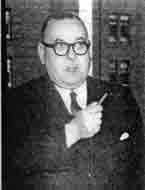
Mr Thomas McGinn

Mr Thomas McGinn.

He could scarcely have chosen a more ideal spot. In addition to the football stadium there was also the Albion and White City greyhound racing tracks close by as well as Ibrox Station. Mr McGinn was invalided out of the R.A.F. two or three weeks before the celebrating crowd destroyed his Rutherglen Road premises. For the next 12 months he was in Hospital and for six months he was convalescent. He was unable to restore his premises because it was not then possible to obtain a timber permit. Then came the next blow. His premises were compulsorily acquired by the City Council for demolition to make way for the new improvements to the Gorbals. Although he also held the licence for premises at 246 Paisley Road Mr McGinn began to look around for premises to replace the Rutherglen Road pub. His idea was to have large new premises that would be a credit to the city. At the corner of Broomloan Road and Paisley Road West he found the idea site. His application to the Licensing Court proved successful, but he had to surrender the Paisley Road licence.
Mr McGinn was assisted in his premises by his two sons and daughter, Paul manager, Thomas jun and Patricia (Mrs. R G Watt.) And traded under the title of Thomas McGinn & Sons. Ibrox House had its motto: Semper Idem (Always the Same.) On the crest was a crown the road house was built on crown property. In the center was the letters I. B., which stood for Ib Broch, which means the home of the badger. Underneath between the works Semper and Idem was a badger’s head.
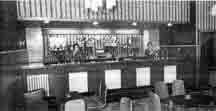
On the ground floor of the premises was a spacious well appointed public bar, the bar itself extended the full length of the room. It was estimated that 1800 pints can be served in an hour. There was plenty of comfortable seating accommodation. Upstairs was a bright lounge bar and restaurant with seating accommodation for 120 people. Ample car parking space was also provided.

Interior of Ibrox House

Interior of Ibrox House. 1958.

Mr McGinn himself declared the premises open in 1958 when he invited a large company of Trade personalities, in which wholesale houses were well represented and friends to the opening ceremony. Among those at the top table were Mr Balfour, director of William McEwan & Co Ltd., Mr MacDonald manager of McEwan’s and Mr A Don manager of G & C Moore Ltd. Mr Balfour’; speaking after the luncheon, said that the Ibrox House marked the fulfillment of a dream the McGinn’s have had for many years. That day the dream had become a reality. They had to congratulate Mr McGinn on three points. The site chosen could not have been a better one; the building represented the idea of what a public house should be. The business was a family concern. Mr Balfour then proposed a toast to Ibrox House and to the McGinn family.

Paul McGinn took over the licence on 13th May 1973.

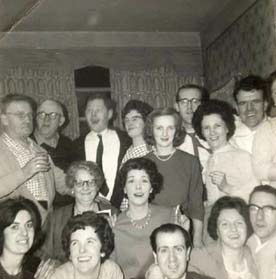
McGinn family

The McGinn family 1960s.

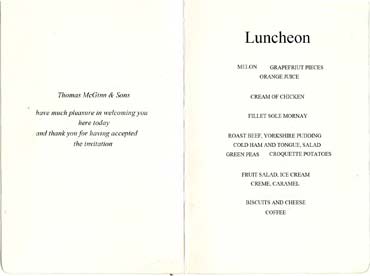
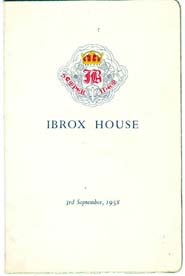
Ibrox House Menu

A copy of the original invitation menu…

Ibrox House Menu and Invitation 1958

Ibrox House Invitation and Menu 3rd September 1958.

In the News 1971…

Along at Ibrox House the specialties are Steak Provincal and Scampi Provincal. Martin, the young chef there, has created a sauce which gives his dishes a flavour all of their own. He claims you can get the sauce nowhere else in the world and hopes to call his dish Steak Martine. It sounds good and, more important, tastes excellent.

Next door to the restaurant is the lounge, where our old friends Abie and Skip are on stage on Thursdays, Fridays and Saturdays. Although there are only two of them the boys give a big fat sound and work a lot of comedy through their routine. They try to make it a party night rather than just a night out in a musical lounge. In these days where it is difficult to get good food consistently this restaurant come with my recommendations.

Other Broomloan Road Pubs…

Albion Way.

Filed Under: Broomloan Road, BroomloanRoad, I

Old Hampden Cafe

January 25, 2017 by John Gorevan Leave a Comment


9 Bridge Street, Glasgow.

There has been a pub at this site since at least 1875, Mrs Margaret Reid occupied the premises then, she also ran the Union Railway Station, licensed premises in Dunlop Street. In 1887 John G Crichton took over the premises which was then called the Old Hampden Cafe. Since he took over the establishment it gained a reputation and was a popular athletic rendezvous in Glasgow. Mr Crichton himself was an enthusiastic out-door sportsman, he had nearly fifty medals for achievements in the athletic world, he was a very unassuming man, and didn’t believe in unnecessary publicity. The following from “Bell’s Life,” a journal whose reputation was well known in those days, gave Mr Crichton a well earned credential:- “Farewell to the sack.” Such was the soliloquy that fell from J G Crichton’s lips when he had won the sack race. Crichton, many will be sorry to hear, has resolved to run no more. His career has been a very brilliant one. Out of thirty six starts he has thirty five wins, and the record would not have been broken but for an accident over which he had no control. J G Crichton is the cleverest sackist I ever saw, and in my day I have seen several very clever performers, and, above all, he is every inch of him a gentleman. Crichton always had a word of encouragement for every youthful competitor, and by many his resolution to leave the track will be received with profound regret.” Such is the testimony of the most accredited sporting paper in the country of his record in this particular line of athletics. Mr Crichton was a member of the celebrated Queen’s Park Football Club, which he joined in 1874.

John G Crichton was born in Glasgow in 1855, and between 1870 and 1874 was overseas on a sugar estate in the West Indies. On returning to Glasgow he for some time managed the Roseneath Cottage, Paisley Road and there acquired a thorough knowledge of the Licensed Trade. In 1887 he became the landlord of the Old Hampden Cafe, Bridge Street. Mr Crichton believed that the man who drinks should also have the opportunity of eating, the Old Hampden Cafe had very cheap snacks. It was also patronised by the theatrical profession. The interior arrangements were very clean and well furnished, the rooms were decorated with paintings and engravings, there was an original painting by Frith with the title of “Epsom Racecourse, 1848.” Mr Crichton was offered eight pounds for the painting but reclined the offer. There was also on the walls a photograph of Scotland’s First International Football Team, with the names of the players. The rooms were literally covered with portraits of theatrical, political and athletic celebrities and what is known as the snuggery of the Cafe contained more portraits and illustrations of sporting and field incidents.

John G Crichton continued as landlord of the Old Hampden Cafe until the end of the First World War, he sold the business to William R Duthie in 1920, the premises were closed for good a short time later.

Filed Under: Bridge Street, BridgeStreet, O

Old Hampden Bar

January 25, 2017 by John Gorevan 1 Comment

18 Ballater Street formerly 18 Govan Street.

Exterior view of the Old Hampden Bar 18 Ballater Street

The Old Hampden Bar early 1970s.

There has been licensed premises here since 1877. The first licensee was well-known and respected wine and spirit merchant Peter Buchanan. Mr Buchanan set up some of the best bars in the city, including, 9 Dundas Street, 76 Glassford Street, 122-24 Canning Street, 148 Dumbarton Road and his offices were around the corner from his Glassford Street premises in Garthland Street.

image of Peter Buchanan of Buchanan Scott & Co.

Mr Peter Buchanan.

Buchanan Scott & Co., were also wholesale and retail wine and spirit merchants, importers and exporters. The company traded in Glasgow for many years but gave up these premises in 1887.

Robert Wilson then became licensee in that same year. He paid an annual rent of £99 and had other pubs at 164 Rutherglen Road at the corner of Rose Street (the Boundary Bar) and 13 Stirling Road. Robert continued to serve the locals here until 1910.

Another well known wine and spirit merchant Peter Kieran acquire the licence in 1910. Mr Kieran also had a public house at 114 Main Street, Maryhill called Peter Kieran and Hectors Bar. Peter lived with his family at 6 Garrioch Drive. Mr Kieran continued as licensee until after WW1.

The licence was then taken over by Mr A Cronin in 1921 till 1926.

James Procter took over in 1927-1933.

William Leo R. Duthie from 1934 until 1950s, when he passed away his wife took over the business from the 50s and 60s.

Another licensee was Eamon P O’Doherty from the 1960s to the pub was finally demolished in the mid 1970s.

group photograph of the Gorbals Ward including Mr & Mrs O'Doherty 1974

The Gorbals group includes Mrs. M. Malarkey; C. Sweeney; M. J. Heraghty, convener, and Mrs. Heraghty; G. Watt (Bell’s); Eamon O’Doherty, and Mrs O’Doherty; H. Gallagher, and Mrs. Gallagher; and J. Donaghey and Mrs. Donaghey. 1974.

Filed Under: Ballater Street, BallaterStreet, O

Hugh McGrail

January 25, 2017 by John Gorevan Leave a Comment

124 Bridgegate, Glasgow.

Hugh McGrail

The pub on the right hand side was Hugh McGrail’s bar, it sat at the corner of Aird’s Lane which was on the other side of the road from Hurrell’s old pub which is now the Westering Winds.

Archibald Donely a publican from the High Street occupied these premises in the 1870s.

In 1894 Hugh McGrail took over the old pub, he got his training in the spirit trade from his father Patrick, a wine & spirit merchant who traded from a small pub at 76-78 Eglinton Street. Patrick came from Ireland in the 1870s to set up as a publican in Glasgow, he lived with his wife Bridget and a large family of six children in Stockwell Street just around the corner from the Bridgegate. Hugh was the eldest son and worked in his father pub in Eglinton street as a waiter, his brothers William and Andrew also worked in the trade during summer holidays.

When Patrick passed away Hugh took control of his fathers pub and his own business in the Bridgegate. However when his sister Bridget became old enough to hold a licence she took over as licensee for her fathers pub on Eglinton Street.

Hugh McGrail’s bar in the Bridgegate was demolished in the 1920s.

Other Bridgegate Pubs…

Victorias. (Vicky’s)
Westering Winds.

Filed Under: Bridgegate, Bridgegate street, H

  • « Go to Previous Page
  • Page 1
  • Interim pages omitted …
  • Page 7
  • Page 8
  • Page 9
  • Page 10
  • Page 11
  • Interim pages omitted …
  • Page 20
  • Go to Next Page »

Primary Sidebar

Become a Member of Old Glasgow Pubs

We are very excited to announce that we have created a new membership! In return for supporting the site, you will gain fantastic perks! Click below to find out how you can support the site!

💖 Donate via PayPal

All content on this site is Copyright Old Glasgow Pubs (OGP). To use any history or images, please make sure you link back to our site.

This website uses cookies to improve your experience. We'll assume you're ok with this, but you can opt-out if you wish. Cookie settingsACCEPT
Privacy & Cookies Policy

Privacy Overview

This website uses cookies to improve your experience while you navigate through the website. Out of these cookies, the cookies that are categorized as necessary are stored on your browser as they are essential for the working of basic functionalities of the website. We also use third-party cookies that help us analyze and understand how you use this website. These cookies will be stored in your browser only with your consent. You also have the option to opt-out of these cookies. But opting out of some of these cookies may have an effect on your browsing experience.
Necessary
Always Enabled
Necessary cookies are absolutely essential for the website to function properly. This category only includes cookies that ensures basic functionalities and security features of the website. These cookies do not store any personal information.
Non-necessary
Any cookies that may not be particularly necessary for the website to function and is used specifically to collect user personal data via analytics, ads, other embedded contents are termed as non-necessary cookies. It is mandatory to procure user consent prior to running these cookies on your website.
SAVE & ACCEPT