• Skip to primary navigation
  • Skip to main content
  • Skip to primary sidebar
Old Glasgow Pubs

Old Glasgow Pubs

  • Home
  • About Us
  • Find A Pub
  • Find Address
  • Find A Publican
  • Further Reading
  • Shop
  • Contact Us
  • Members Area
  •  
  • Click Here to Search the Site
You are here: Home / Latest Posts

Latest Posts

The Clutha Vaults.

December 29, 2016 by John Gorevan Leave a Comment

169 Stockwell Street, Glasgow. G1 4SP. Tel: 0141 552 7400.
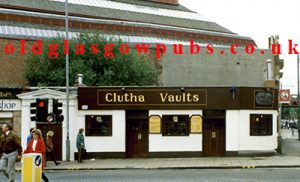
The Clutha Vaults. 1992.

The History of this popular Bar…

In 1814 a year before the Battle of Waterloo a gentleman called, Matthew Park built a handsome tenement at the foot of Stockwell Street this land was known as Park’s land. It wasn’t until the year 1819 four years after the Battle of Waterloo when a licence was first granted to a gentleman called John McSymon to sell porter and spirits, the address of these premises were 9-11 Park place named after Matthew Park.
In the early years, there were many licence holders for these premises and in 1844, the licence was transferred to a gentleman called Patrick Conway. Mr Conway was born and bred in Glasgow and resided at 7 Park Place only a few yards from the pub, this successful business stayed in the Conway family for over thirty years.
In 1888 the licence holder was a Mr Thomas Brown who was born in Blantyre, he was a very successful businessman and owned two other public houses in the city, one at 16 South Wellington Street, and the other at 278 Parliamentary Road. Mr Brown started his trade as bar boy in a pub at Bridgeton Cross called “The Green Rest.”

In 1892 a gentleman called George Johnson took over this old established shop, he was born in Hope Cottage, Shawlands and was educated at Millar’s school, Crossmyloof, after his education here he passed a civil service (inland revenue) examination, but never entered this trade, instead he turned his attention to market gardening at Riddrie, near Hogganfield.
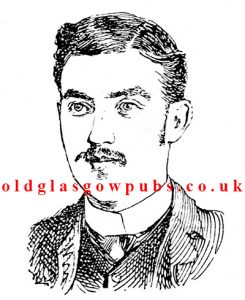
George Johnston. 1892.

Mr George Johnston was just one of the proprietors of the Clutha Vaults.

He did not stick to this job for long and moved to Cambuslang where he learned the trade of Wines and spirits. Mr Johnson was a very popular man in Cambuslang, he was a member of the school board, a member of the Burnbank Swifts, his home was in Cambuslang, he had a public house here, and was secretary of the Cambuslang Football club, the Cambuslang Brass Band was grateful to him as he advanced them the sum of £250 for new instruments, the people of Cambuslang were also grateful as he was responsible for the erection of the Johnsons Hall. He was also very popular in the city of Glasgow and was well known for his own blends of Highland malts called “Real Duke” and “Clutha.”

The name Clutha is an ancient Gaelic word meaning the Clyde, there were also small steam passenger boats on the Clyde called Clutha’s these boats were numbered 1 to 12 and the fare would have cost a penny to cross the river.
The cellars were always stocked with the very best of liquor and one could always purchase: Moet & Chandon’s Champagne, Roussillon’s & co.’s Epernay, Dubois, Freres & Cagnion’s Cognac of 1858, La Rosa 60 year old, Burgundies of 1863, Kirker Greer & co.’s old Irish, Talisker 10 year old, Guinness, Bass in bottles, Pentland 90s ale on draught, Schweppes mineral water, Ross’s dry ginger, Allsopp’s lager and speciality “Real Duke” and “Clutha” blends of Scotch whisky retailing at 3s 6d per bottle.
The interior of the bar consisted of a Mahogany horse shoe bar with a gantry containing six large barrels, and six little snugs each containing its own table and six chairs.
In 1899, the licence was yet again transferred to a Mrs Margaret O’Kane McLaughlin she resided at 92 Queens Drive, Crosshill. Mrs McLaughlin changed the name above the door of this old howff to “McLaughlins,” she also owned the Old Eagle Inn, Howard Street.
The name above the doorway of this old establishment has changed with the times… “Clutha Vaults”  “McLaughlin’s”  “Popinjay Bar”  “The Weemann’s”  “The Merchant.”
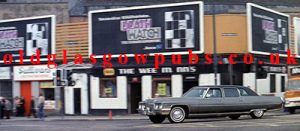
Image of the Wee Mann’s now the Clutha. The image was taken from a movie called Death Watch. Thank’s to Richard Rinn for the image.
The rent for the premises in 1899 was £180.00 per annum and a gill of 10 year old Scotch whisky was 10d, 1920 a gill of whisky was 1/8 and rum 2/1, 1929 a pint of draught beer was 6d, 1976 a pint of lager was 30p, heavy 28p and a quarter gill of whisky was 33p.
Wages in 1932… Charge hand, £3.00 per week, Bar boy, 14/-   per week and Friday & Saturday man 16/-   per 2 days.
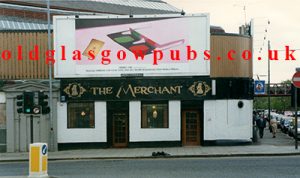
The Merchant. 1990.

When the pub was called the Merchant, the last licensee before it closed down was Patrick (Pat) Hughes, Patrick was only 5 foot 2 inches tall and was nicknamed the weeman. Mr Hughes called this public house the Weemann’s, as there was already a Weeman’s on the Gallowgate so he added the extra “N” so there was no confusion. The pub lay empty for a couple of years before Brendan McLaughlin took it over.
In 1992 a well-known publican Mr Brendan McLaughlin took over the premises completely refurbishing the interior and exterior, and it was myself that was responsible for giving this old pub its original name “The Clutha Vaults”.

It was advertised in the Glasgow Evening Times that Mr McLaughlin was looking for a name for his new pub. It stated the the name must be related to Glasgow. I thought “The Clutha Vaults” had a good ring to it, and being so near the River Clyde was a great name for the pub. In Gaelic Clutha means Clyde. After many months of research I discovered that the pub was already named the Clutha Vaults in the 1880s. What a coincidence.
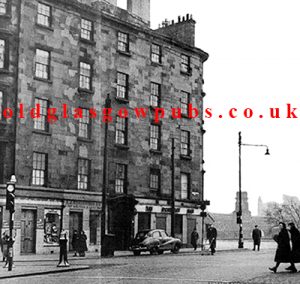
This image shows the tenement building above the Popinjay Bar in the 1960s now the Clutha Bar.
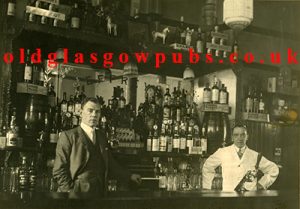
One of the owners of the Popinjay Mr James Omand on the left with head barman on the right. Before Mr Omand took over the pub from Mrs McLaughlin, the pub name then was McLaughlin’s Bar. James Omand renamed the pub to the Popinjay. Omand wasn’t new to the trade as he was licensee of licensed premises at 40 Port Dundas Road. The picture above was taken in 1938 in the Port Dundas premises, the interior of this pub was exactly the same as the Popinjay. Thanks to Ronnie for the image.

Mr Omand kicked out a well known gangster in his pub many years ago. After he pushed the gangster out in the street there was a scuffle, Mr Omand then returned to serve his locals and one of the customers said ” James you a bleeding” Mr Omand put his hands on his throat and seen all the blood. The gangster had pulled out a razor and slashed James while he had a scuffle outside, the blade was that sharp he never felt a thing.
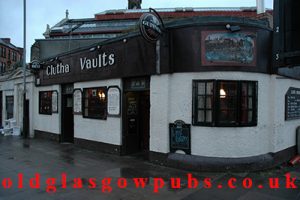
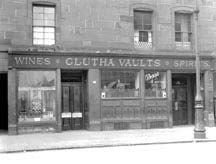
The Clutha Vaults.

This is one of Glasgow’s oldest pubs, in the past it has been known as the Merchant, the Weemann’s, The Popinjay. To read the full history of this very old establishment click here.

The image above was taken before the tragic helicopter crash.

Below are some images around Stockwell Street and the Bridgegate…
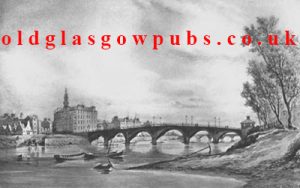
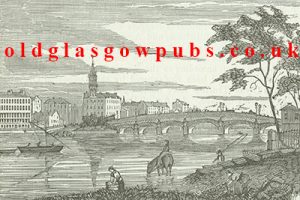
Stockwell bridge with the tenement building where the old pub was situated.
This is another view of the same scene.
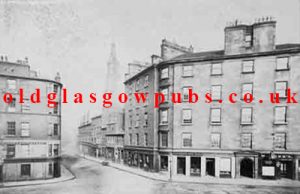
This view of the Bridgegate and Stockwell Street shows how the tenement used to look like.
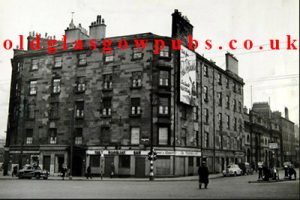
The Popinjay Bar 1950s. Note the Red Hackle advert on the side of the building.

Up To date News…

Today 29th November 2013 a tragic Helicopter crashed onto the roof of the Clutha…
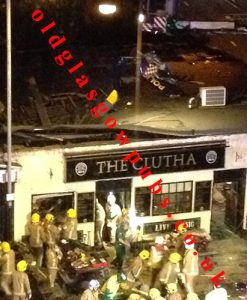
The Clutha Helicopter Crash. 2013.
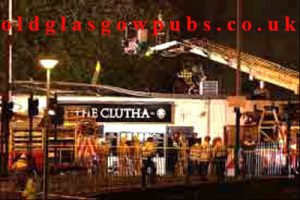
The Clutha Helicopter Crash. 2013.

A police helicopter crashed into the roof of one of Glasgow’s oldest Pubs the Clutha, Stockwell Street. It is now known that 8 people are now dead, 3 of the Helicopter crew died along with 5 customers of the Clutha. A further 14 people are being treated for “very serious injuries” in hospitals across the city.

A major investigation is under way and the Air Accidents Investigations Branch will conduct an inquiry into the crash.

It is thought that about 120 people were in the pub at the time of the crash.

Many were rescued or escaped but others were trapped by a collapse on the left-hand side of the building.

The three occupants of the helicopter who died were two police officers and a civilian pilot.

A significant number of personnel from Police Scotland, The Scottish Fire and Rescue Service and Scottish Ambulance Service are still at the scene.

Police Scotland Chief Constable Sir Stephen House told a news conference on Saturday afternoon that they would remain there for some time.

He said: “This is a complex and ongoing rescue operation. It will not be a quick operation. It is a very complicated and indeed dangerous scene.”

Chief Constable House said the operation would go on “for many days yet”.

He paid tribute to the emergency service personnel who were working at the scene and the people of Glasgow who disregarded their own personal safety to help survivors in the aftermath of the crash.

Deputy First Minister Nicola Sturgeon told the same news conference that the increased death toll from the crash was “news that everybody today has been both dreading and expecting”.

“Our hearts go out to everyone who has been bereaved. It is impossible to imagine the grief and loss that they are experiencing,” she said.

“They should know that the thoughts and prayers of everyone across the city, and indeed across Scotland, are with them at this unimaginably difficult time.

Ms Sturgeon also praised the courage and fortitude of the emergency services and people of Glasgow in the aftermath of the crash.

She added: “I think we were all moved last night by the way in which those who were in and around the scene did everything possible to help and the outpouring of concern and kindness today, I’m sure, will be a comfort to those affected.”

  • A large area of the city centre has been cordoned off
  • Mass held at St Andrew’s Cathedral in city for those involved in crash and emergency services involved in response
  • Council has cancelled St Andrew’s Day celebrations in George Square as a mark of respect
  • A minute’s silence was held ahead of the Falkirk v Rangers match
  • Flags are flying at half-mast on Scottish government buildings
  • Injured were taken to Glasgow Royal Infirmary, Western Infirmary and the Victoria Infirmary
  • Police Scotland Casualty Bureau number is 0800 092 0410 – for those concerned about relatives
  • Glasgow City Council has opened a family reception centre at 40 John Street

Scotland’s First Minister Alex Salmond earlier described it as a “black day for Scotland.”

Prime Minister David Cameron paid tribute to the bravery of the “ordinary Glaswegians” who rushed to help.

The Queen has said her thoughts and prayers are with the victims of crash.

William Byrne, 45, from Coatbridge, who was in the pub when the helicopter came down, returned to the scene this morning.

“There was a loud bang. Then there was dust and the lights went out. It was surreal,” he told BBC Scotland.

“We didn’t know what had happened. At our side of the pub at least two people were trapped under the gantry. Myself and others lifted it up and managed to get them out. I spent some time with one injured man.”

He added: “At our side of the pub I would say there were less than 10 people injured, mainly walking wounded, not seriously injured. One girl had clearly been hit on the head – she had a big bump.

“The other side of the pub took the brunt. Myself and my friends managed to get out without a scratch. Everyone helped everyone else to get out.”

Helicopter operator Bond Air Services said it was working with the police and emergency services.

A statement added: “Our thoughts are with those who have been affected by this tragic incident.”

About 250 people attended a special service at St Andrew’s Cathedral on Saturday afternoon.

Archbishop Philip Tartaglia told worshippers: “We pray for those who have lost their lives, who are injured, the bereaved, and the emergency services and members of the public.

“We pray for our city of Glasgow, which is in mourning today.”

The band who were playing in the pub at the time of the crash, Esperanza, released a statement on their Facebook page.

Bassist Jess wrote: “Waking up and realising that it is all definitely horribly real. Despite the situation everyone was so helpful and caring of each other.

“The police, ambulances, firefighters all did a stellar job and continue to do so today in extremely difficult conditions.”

Eddie Waltham, a former firefighter who had a friend inside the pub, told the BBC: “A roof joist came down and hit him and pushed him towards the window which is at the left side of the left door.”

He added later: “My own reaction was to run straight up to the pub.

“It was amazing to watch just how people were trying so hard to get into this building.”

Gordon Matheson, the leader of Glasgow City Council, said his heart went out to the families affected.

He also praised the response of ordinary people in the area before the emergency services arrived.

Mr Matheson said: “People who were in the pub, the people who were in the streets and who just helped out their fellow human beings who were out having a good time.

“It’s Glasgow at its best you know, if people are in need the spontaneous response is to go to their help. And I want to pay great tribute to that and I’m very proud as leader of the city that that was the reaction. It doesn’t surprise me.”

First Minister Alex Salmond said: “This is a black day for Glasgow and Scotland but it is also St Andrew’s Day and we can take pride in how we respond to adversity.

“The response from our emergency services and citizens has been exemplary.”

Prime Minister David Cameron said: “This is a tragic event and our deepest sympathies are with the families and friends who lost a loved one last night.

“I want to thank the emergency services who worked tirelessly throughout the night and I also want pay tribute to the bravery of the ordinary Glaswegians who rushed to help.

“We have offered the Scottish government our support in any way we can and we are all wishing a speedy recovery to those who are injured.”

Labour leader Ed Miliband described the crash as an “unimaginable horror”.

He added: “My thoughts are with… the people of Glasgow who are an incredibly strong people, who showed, I think last night, in their reaction when the helicopter hit, a great bravery, a great courage, great calm in the midst of all this.”

I feel for all the customers who have died in this tragic accident, and all the people who have been injured and hope they all make a speedy recovery. My thought also go out to the owners of the Clutha. John Gorevan.

I would like to thank everyone who has left donations for the Victims of the Clutha Helicopter Crash in 2013.

The 10 Victims of the Clutha Helicopter Crash…

Pilot David Traill, 51; Constables Tony Collins, 43 and Kirsty Nelis, 36; and customers John McGarrigle, 57; Mark O’Prey, 44; Gary Arthur, 48; Colin Gibson, 33; Robert Jenkins, 61; Samuel McGhee, 56; and Joe Cusker, 59. R.I.P.

I would like to thank everyone who has donated their precious money to the VICTIMS of the CLUTHA HELICOPTER CRASH.

During the 1920s the area around the pub was rife for illegal stills and many
men and women’s houses were raided by the police and customs and excise for distilling illegal drink. On average the culprits were fined around £2  and if caught again could be fined £10 or 6 months hard labour.

Shebeening (illegal drinking dens) was another crime which dates back to the early 1800s. In the early 1900s a lady by the name of Susan Murray was caught in her shebeen in the early hours of the morning with her drinking customers just around the corner from the Clutha Vaults, she was fined £3 or 6 months hard labour if she did not pay. She paid her fine right away, however when she returned to her house she had a box to collect money to pay for her fine, the customers had to put money into the box before leaving the premises. They were
faced by a large scruffy doorman who said “Madam was turned over the other night and had to pay a large fine to keep you’s supplied with booze. So you have to pay up. No-one was brave enough to refuse the large man.

Do you have any memories of this old Pub? If so please leave a comment.

END.

Filed Under: C, Stockwell Street, StockwellStreet Tagged With: Clutha, Clutha Vaults, George Johnson, Helicopter crash, James Omand, Matthew Park, McLaugghlins, Popinjay Bar, Stockwell Street, The Merchant, Thomas Brown, Wee Mann's

Clutha Vaults

December 29, 2016 by John Gorevan Leave a Comment

Clutha Vaults.

88 Cornwall Street, Glasgow.

Clutha Vaults

In 1899 Ernest Tough was landlord here, the family ran this popular Kinning Park public house until WW2.

After the war Robert S Fulton was licensee.

The last licence holder was Simon S Schuster, when this old pub was demolished in the 1960s he removed to the old Subway Bar, 49 Cornwall Street and old pub formerly owned by the Cavana brother’s.

In 1919 there were four pubs sitting on Cornwall Street, they were the Doctors Arms, The Subway Bar, Reid’s and the Clutha Vaults.

Filed Under: C, Cornwall Street, CornwallStreet

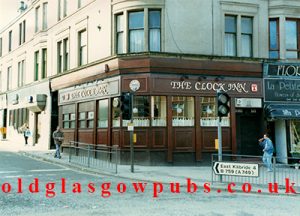
The Clock Inn.

December 29, 2016 by John Gorevan 2 Comments

92 Main Street, Cambuslang, Glasgow. G72 7EJ. Tel: 0141 642 0598.

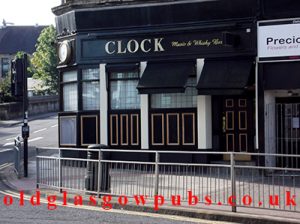
The Clock Inn. 1991.

Update…2005.

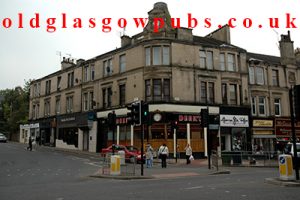
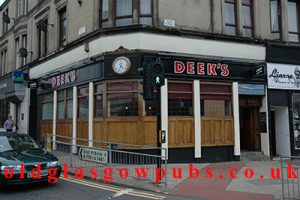
Passing the Main Street of Cambuslang I noticed that the Clock Bar had a new name “Deek’s.”

Deek’s. 2005.

This popular pub in Cambuslang is now called Deek’s, an unusual name as it reminds you of a Geek.

Deek’s. 2007.

Update…2012.

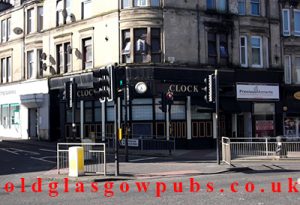
A short lived name “Deek’s” I am glad to say that the old pub has now got it’s old name back. The Clock.

The Clock. 2012.

Exterior view of the Clock Main Street Cambuslang 2012
The Clock, 2012.

Do you have any memories of this old pub? If so please leave a comment.

END.

Filed Under: Cambuslang Tagged With: Cambuslang Pubs, Clock, Deeks, Main Street Cambuslang, Pubs in Cambuslang, The Clock Inn

The Clelland.

December 29, 2016 by John Gorevan 2 Comments

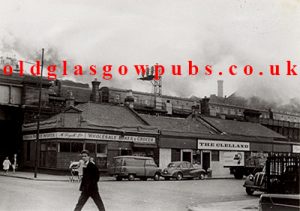
42 Hospital Street, Gorbals, Glasgow. G5. Demolished.

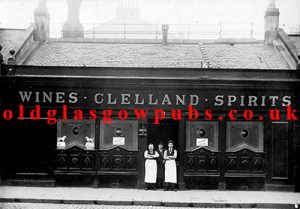
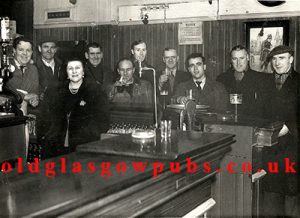
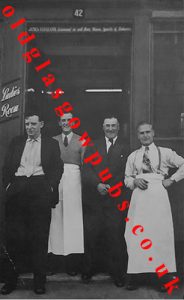
The Clelland Bar, with James Clelland in the centre with two barmen. 1930s.

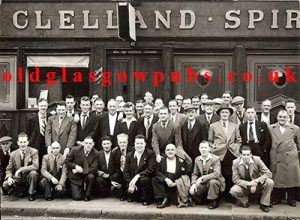
This image was taken on a Sunday when the pubs were closed. The group of the Clelland Bar customers, Staff and friend on their way to the coast for their annual holiday. 1954.

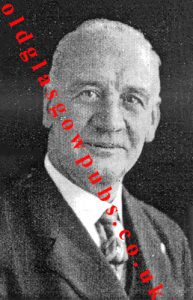
The Clelland’s bar was established by James Clelland in 1919. James was born in Glasgow of which he was the eldest of a large family. His father also James ran a public house at 29 Hydepark Street. James worked with his father at the age of 13, but within a few years left to serve his apprenticeship as an engineer with Napiers, at the same time he would work evenings and Saturday afternoons serving behind his fathers bar. On completion of his apprenticeship, he had little experience of engineering in Edinburgh and returned to Glasgow. He went back to the licensed trade as charge hand for Archibald Wilson in his Stobcross Street establishment.

James Clelland. 1950.

He then went into training in an accountant’s office followed by charge hand of Mrs Cringle’s pub, The Taylor’s Clipping’s, an old established pub situated in Sydney Court, Argyle Street.

On the outbreak of the war, Mr Clelland served as an engineer in Harland and Wolfe’s engineering works and was never marched abroad, his talent and abilities were considered more valuable here. He remained with the firm until 1919, at which time he was shop steward for the firm, he then bought premises at 42 Hospital Street, Gorbals and turn them into licensed premises, The Clelland Bar.

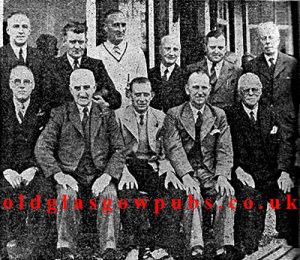
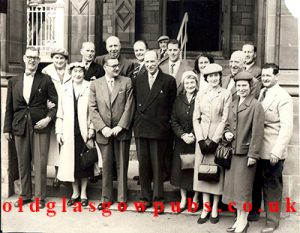
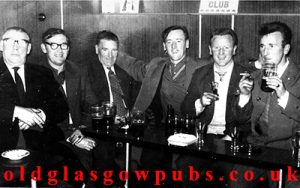
Mr James Clelland in the light suit with other Glasgow publicans in the 1940s. Do you know anyone in this image?

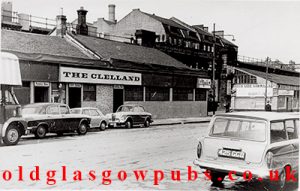
The Clelland. 1960s

Two and a half years later he acquired from Mr John Kennedy the public house at 22 Paisley Road West, the Viceroy Bar. In 1936 James became a director of the Glasgow Licensed Trade Defence Association. Mr Clelland’s three brother’s were also connected with the licensed trade and a fourth passed away in 1937.

On September 14th 1939, it was announced by the Licensing Court that all pubs and licensed premises in the city of Glasgow would close at 8pm until further notice. Hours of conducting business would be from 11.30am till 2.30pm and from 5pm till 8pm on Mondays to Fridays and on Saturday from 10am till 12 midday and from 4pm till 8pm. This was a short term arrangement and the pubs were soon back to the usual hours on trading.

In his spare time Mr Clelland was a supporter of Queen’s Park F.C.

His son James Clelland Jun. took over the licence for Hospital Street until 1959 and gave up the trade to settle in California with his wife and family. He was then secretary of the Gorbals Ward Association. The pub was then taken over by Jessie H McLintoch. The last licensee to hold the certificate was John Ross Rawley, the pub was finally demolished in the City Council’s redevelopment plans for the Gorbals in the 1970s.

Gorbals local Veto Defence Association trip to Largs. 1924.

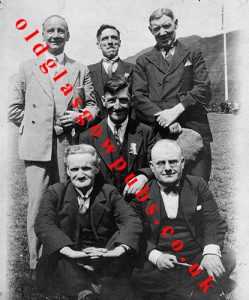
In the photograph above is Mr & Mrs John Holmes, 26 Bedford Street,Mr & Mrs William Keith, 62 Main Street, Gorbals and 62-64 Thistle Street, Mr Francis P McAvoy, 196 Rose Street, Mr Peter Kernan, Mr J J Gallagher, Mr James Clelland, Mr McDonald, assistant organiser and Mr McLeod, Treasurer.

Royalty Burns Bowling Club. 1944. Back row James Brown, Dan McCrudden, Alick Hall, James Clelland, Donald Kennedy and J W Thomson, Front row Alick Dickson, Duncan Menzies, Willie MacFarlane, Willie Anderson and John Holmes.

Mrs Margaret Clelland standing behind the bar with some of the customers. This photograph was taken just after World War 2.

Another view of the Clelland Bar. 1960s.

In the News 1972…

There are quite a lot of interesting things happening in the Clelland Bar in the Gorbals these days.

For many years owner John Rawley concentrated on the group scene. Which was fine, if you could stand the noise. Now he has an 11 o’clock licence and has installed a dancer floor.

Tonight and tomorrow they are having a dinner-dance type of entertainment with singer Matt McGowan on stage. Backing is by the Pete Fardy Trio, which should keep things nice and relaxed.

Entertainment is featured most nights in the week, with the emphasis on variety. The menu is fairly basic – steak, chicken, fish, etc. As John says – “We just don’t have the facilities to put on an extensive a la carte menu, but what we have is of the best.”

In the News 1972…

The Clelland Bar in Gorbals has been turning into a licensed restaurant, owner John Rawley tells me that he intends featuring cabaret most evenings. He is also about to start a talent contest on Saturdays at lunchtime with a total prize money of £100. Those interested should contact him.

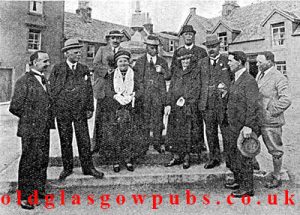
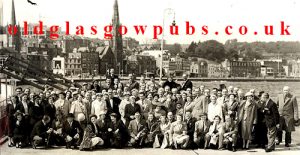
This image was taken at Rothesay in the 1950s. The occasion was with the Glasgow Licensed Trade Association outing and was greeted with Rothesay Provost Frank Munro.

This image was taken during the Gorbals Ward Licensed Trade day trip to Rothesay 1950s.

Outside the Clelland Bar. Do you know anyone in this image?

All the men in this image are from the same family “The Birrell’s.” Thanks to Steve Birrell.

In the NEWS 1978…

Thieves Get £1500 in Raid On Pub…

Raiders escaped with about £1500 and a large haul of spirits early today from the Clelland Bar, 42 Hospital Street, Gorbals, Glasgow.

The thieves got in by cutting a hole in the roof of the public house which, because of demolition of surrounding property, stands alone. Police foiled thieves who were escaping with a huge quantity of cigarettes and liquor from premises in the Dixon Blazes industrial estate.

They were spotted by a policeman who raised the alarm. In their bid to escape the thieves dropped the cartons of whisky they were carrying and almost all of the 100,000 cigarettes.

In the NEWS 1979…

Fears That Haunt A Pub…

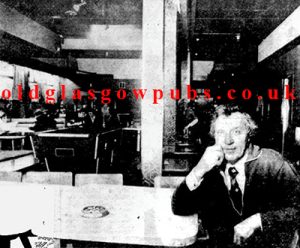
John Rowley sits in an empty lounge. 1979.

Fear of sectarian violence is turning customers away from a bomb-blasted pub on Glasgow’s South Side.

But the pub owner, John Rowley, said today: “The Clelland Bar is no sectarian pub.”

And he said there was no reason to worry about more trouble. “I wouldn’t have my wife and kids in here if I thought the place wasn’t safe.” he said.

CANCELLED

Mr Rowley was speaking six days after his public bar was wrecked by an explosion with seven people taken to hospital.

The pub’s lounge bar, on the corner of Ballater Street and Hospital Street, was unaffected by the explosion.

But the normally packed room is staying half empty for much of the day and cabaret nights, featuring acts like comedian Helen Randell, are being threatened by cancellations.

Speaking in the big lounge with only a handful of youths playing pool, Mr Rowley said: “Business is definitely suffering. But it’s not just a question of money.

“It’s the fact that the place is being talked about as a sectarian pub and people are phoning up to cancel nights out here because they think they’ll be drawn into a religious feud.

Following last weekend’s explosion at the pub, 15 men have been detained by police under the Prevention of Terrorism Act.

In the NEWS 1979…

Pub Blast after a Sherry Man Left…

A Glasgow barman told a terrorist trial today about the night a sherry drinking stranger with a bag over his shoulder left his pub minutes before it was ripped apart by an explosion.

There were two strangers in the Clelland Bar in Hospital Street, Gorbals, that night, and their drinking habits attracted attention.

The first drank sherry and pints of beer, The other quickly drank two pints of lager then left.

Shortly afterwards an explosion wrecked the pub and injured customers. Barman Patrick Defelice (32) told the jury at Glasgow High Court that the sherry drinking stranger was one of the accused, Angus McKenna.

McKenna is one of 11 men charged with plotting to further the cause of the outlawed Ulster Volunteer Force and with bombing three Glasgow pubs.

PAPER

The other 10 accused are Stewart Ross, William Campbell, George Martin, John Thomson, Colin Campbell, Peter Duffy, Robert Kane, Alastair Von, George Menzies, and John Pears.

Mr Defelice told Advocate-depute William Prouser., Q.C., that the Clelland Bar was not a sectarian pub.

“It has nothing to do with religion. It’s just a group of young boy’s” he said.

On Saturday night, February 17, this year the pub was quiet. Mr Defelice said he knew most customers by name or face for they were regulars. But two men were strangers. They did not talk to each other or drink together.

Mr McKenna, he said, came in after nine and asked for a paper. But Mr Defelice told him it was not that night’s Times. Mckenna had a sherry served in a whisky glass because it was an unusual order for the Clelland, He also had a pint of beer.

“He was carrying something over his shoulder. I noticed that it was a bag on a strap.” McKenna, he said, had three sherries and was in the bar for more than half an hour. He strolled across to watch the guys playing at the pool table and also had a look at the juke box.”

Speed

The witness said McKenna left about 9.45 p.m. and the explosion came 20 minutes later. Mr Defelice said he could not identify the second stranger in court because he did not get a good look at him in the bar.

But another barman had commented on the speed of his drinking. “He had a couple of pints of lager. I served him a pint and the other barman served him a pint.

Mr Defelice said he was standing talking to the bar owner, 48-year-old John Rawley when the explosion happened.

“I just remember a bang, everybody was running about I was thrown forward.”

In the NEWS 1979…

15 HELD in DAWN RAIDS AFTER PUB BLASTS…

Fifteen men were being held in custody by Strathclyde Police last night following two bomb blasts in public houses in Glasgow on Saturday night.

They were arrested by armed members of the Special Branch and Strathclyde serious crime squad yesterday in dawn swoops in various parts of Glasgow.

The men can be held for 48 hours under the Prevention of Terrorism Act and police can then apply to the Secretary of State for Scotland to hold them without charge for a further five days.

Police confirmed yesterday that explosive devices were used in the blasts, and they believed they were related and were the work of an extremist group.

WARNING

The incidents brought a warning to the public from Chief Constable Patrick Hamill of Strathclyde Police to “display the utmost vigilance in licensed premises for any suspicious package, parcels, hold-all or the like which is unattended.”

In this statement, Mr Hamill said: “Management and staff of Licensed premises, and in all instances where suspicious objects or articles are observed the police should be noticed immediately.”

Police inquiries into the blasts, at the Old Barns public house in London Road, Calton and the Clelland Bar, Hospital Street, Gorbals, were continuing last night, and a special mobile police station was set up outside the Clelland Bar.

Another pub that was nearly blown up was Treanor’s Bar in Cathcart Road.

The bomb in the Old Barns public house went off in a lounge bar, which is being redecorated. No one was injured. In the Clelland Bar, however, five people were treated in hospital for cuts caused by glass from the juke box, fruit machine, and windows, and a hole was blown in the floor.

APPEAL

The licensed trade last night backed up the chief constable’s appeal to the public. A spokesman said: “We want people to co-operate fully with the police. Anyone who sees anything remotely suspicious should tell the bar staff to contact the police, even if it does turn out to be innocent.”

Neither of the bars involved in the blast is sectarian, but those arrested are believed to have connections with the Ulster Defence Association.

Two week ago at Paisley 24 men, believed to be associated with the UDA, were charged under the Prevention of Terrorism Act. Police are believed to have taken possession of weapons and explosives during raids on houses in Ayrshire and Renfrewshire.

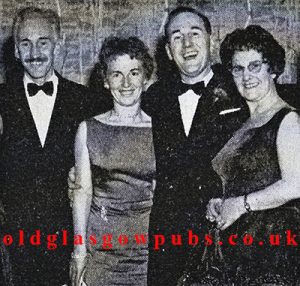
Left to right Mr Young of Usher’s, Mrs & Mr J Clelland Jun., and Mrs Young. Mr & Mrs J Clelland is leaving the Licensed Trade to settle in California. 1959.

Do you remember this old Pub? If so please leave a comment.

END.

Filed Under: C, Hospital Street, HospitalStreet Tagged With: Birrell family, clelland, Gorbals, Hospital Street, James Clelland, John Rowley, Margaret Clelland, The Clelland Bar

The Clarendon Bar.

December 29, 2016 by John Gorevan Leave a Comment

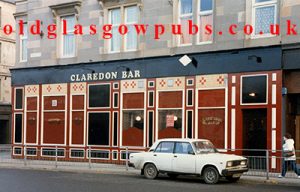
98 Maryhill Road, Glasgow. G20 7QB. Closed.

The Clarendon Bar. 1991.

It was sad to see this popular bar was destroyed by fire last year. To read the full history of this pub, check back soon for our second book.

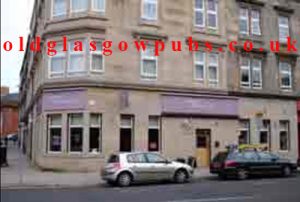
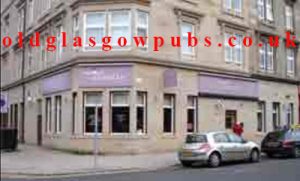
After a great fire that destroyed the building and caused the death of a young woman the pub was rebuilt and renamed the Thistle Bar.

The Thistle Bar. 2008.

The Thistle Bar. 2008.

In the NEWS 1961…

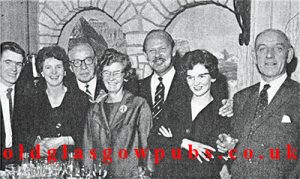
Mrs I T Cunningham is seen here with her son and two daughters and some of the company who attended the opening of her Clarendon Bar. Left to right Mr Tom Cunningham, Miss Elizabeth Cunningham, Mr Jack Radcliffe, Mrs I T Cunningham, Mr Matt Armstrong (development director, U C B,) Miss Helen Cunningham and Mr Hugh McCalman.

Ten-year story: “Pub Slums” to highest class.

Formerly an empty corner shop at Clarendon Street and Maryhill Road, Glasgow, new licensed premises have appeared under the name of “The Clarendon” which combine the highest claims in architecture and craftsmanship in the city.

Even from the outside the large corner premises are impressive, the outstanding feature being the large specially engraved stained windows carrying mountain scenery and Highlanders.

The public bar and the adjoining cocktail bar are both spacious, in contrast to the tiny off-sales department. Contemporary decor has been used with effect throughout and rough stonework adds a pleasing touch here and there.

The gantry of the cocktail bar is original. Behind the counter in a corner are double stone archways beyond which are illuminated country scene panels. The lounge is fully carpeted and bright without being glarish.

The Clarendon was officially opened by Scots comedian Jack Radcliffe, he came direct from a milk bar! -who wished Mrs Isabel Cunningham every success in her outstanding beautiful premises.

Mr Matt Armstrong, development director of United Caledonian Breweries Ltd., paid high tribute to Mr Hugh McCalman, Glasgow solicitor, for all he had done in the struggle to secure the licence for the Clarendon. In ten years, he said, Glasgow had risen from the depths of pub slums to the highest class of licensed premises in the country.

The cocktail Bar of the Clarendon. 1961.

In the News 1971…

Hot Scene going at the Clarendon.

As you thought the swing doors the air is blue with cigarette smoke, the place is alive with people, and then the rhythmic beat of the music hits you. Although the place is packed there is hardly a whisper, everybody is listening, and every musical phrase is appreciated, savoured, and applauded.

The musicians are intent, the sweat runs off them. As George Scott Henderson takes a piano solo they look knowingly at each other and smile. They have the look of musicians who are not playing for an audience but for themselves and a crowd of appreciative, discerning fellow musicians.

The scene is the Clarendon lounge in Maryhill Road, Glasgow; the time Saturday morning, and Saturday morning.

“Going Well”

American singer Dick Haymes whispers in my ears “I’ve listened in on jam sessions all over the world; this is as good as the best I’ve heard anywhere.” Frank Pantrini on alto sax takes up the cue. He blasts out a few hot phrases, then as the audience cheers takes a sip of beer.

“It’s going very well,” he say’s “the boys are really blowing well today.” The music fills the lounge and spills outside as more fans walk through the doors. The place is jam-packed, the atmosphere is almost electric, everybody is listening. This is no place for the pop maniac or the lover of Schmaltz; this is the scene of the jazz lover, the man of music.

Don’t ask for a request. You will be either ignored or worse laughed at. The musicians frustrated with the commercialised music they have to play all week,are having a ball. They are playing the kind of music they love… nobody tells them what to play.

On almost any Saturday lunch time in the Clarendon you will rub shoulders with people like Dick Haymes, George Chisholm, Peggy O’Keefe, Vince Hill, Iain McFadyen, or Ian Sutherland. They are welcome to sit in for a blow, and often do.

When I dropped in recently on stage were Frank Pantrini, who runs the show, George Scott Henderson on piano taking over from resident pianist Kenny Crawford, Billy Young on guitar, Ricky Fernandez on double bass, Rudi Salerio on bongos, Pat Gallagher on drums, George Chisholm on trombone and Ella Crawley on vocals.

Frank Pantrini, who has been drawing the crowds into the lounge for years and who plays regularly at the Albert Ballroom in Glasgow, tells me: “At one time or another we have had all the top session musicians sitting in with us, all the boys who come up from London to back entertainers in television shows. “No pressure is put on them, they just bring their instruments along and if the mood is on them they sit in and play. It’s fun, it is our way of relaxing and getting the poison out of our system.”

Happy scene.

Out at the Olde World Inn in Cumbernauld they have a happy scene going. They recently installed a portable dance floor in the steak house which is laid every Tuesday, Wednesday, Thursday and Friday. Music for dancing is by the Blue Angels (Tuesday), Cherish (Wednesday) and the Merry Macs (Thursday and Friday).

Why is the name of con-science are people outwith Glasgow able to have a dance in such eating houses when we in Glasgow are not allowed to, I suppose it must make some kind of sense to the Glasgow city fathers. I hope it does, because it certainly makes sense to no one else.

Update…March 2012.

The Thistle Bar has closed its doors for good.

Update…2019.

This once popular bar is now a Spar convenience store.

Do you remember this 1960s Local? If so please leave a comment.

END.

Filed Under: C, Maryhill Road, MaryhillRoad Tagged With: Clarendon Bar, Maryhill Road, The Thistle Bar

The Clachan.

December 29, 2016 by John Gorevan 2 Comments

345-347 Paisley Road West, Glasgow. G51 1LU. Closed.

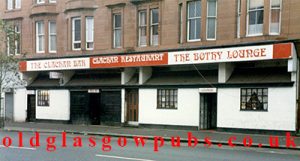
The Clachan and the Bothy Lounge. 1991.

The Clachan dates back to the end of the Second World War, part of the premises was formerly a hatter & hosier shop owned by Thomas Kay the other part of the premises was owned by the Kinning Park CO-OP Society.

When the war ended William Morrison a well known Gorbals publican took over the old hat shop. Mr Morrison formerly owned the Clachan Bar at the corner of Lawmoor Street and Ballater Street, Gorbals. The premises gradually enlarged over the years taking in the CO-OP building. When William Morrison retired his son Watson took over the running of the business.

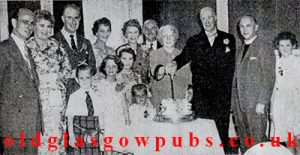
In 1959 Mr & Mrs Morrison celebrated their golden wedding at the Grand Hotel he also celebrated the fact that he had been a publican in the city for over 40 years.

Mr & Mrs Morrison celebrating their Golden Wedding at the Grand Hotel 1959.

left to right Mr & Mrs MacKenzie (son in-law and daughter) Mr & Mrs W A Morrison, Mr & Mrs Wilson (son in-law and daughter) Mr & Mrs Morrison cutting the cake and Rev. W. F. Wills and their many grandchildren.

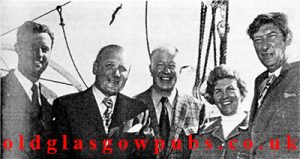
Mr. Eric Ewart (Johnnie Walker); Mr. J. Watson (Schweppes); Mr. Watson Morrison (The Clachan); Mrs. and Mr. Hugh Nicol (Royal Oak, Barrhead.) 1972.

In the News 1974…

A New Way To Step Into History…

Regulars at “The Clachan” in Paisley Road West have been watching with interest the work being carried on next door to their favourite howff for the past six months.

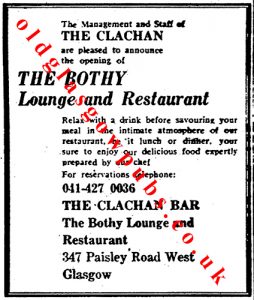
Well now all can be revealed. Just opened yesterday was the Bothy Restaurant, an extension to the existing premises at the Clachan. Mr. Watson Morrison, the man behind the popular Clachan, has been keen to extend his premises for some time now and he took over two empty shops next door six months ago.

The Bothy gives you the feeling of stepping back several hundred years in Scottish history. Heavy beams 21in x 12in, and loft windows help the old Scottish bothy influence. The walls are done in a rough plaster and the seating and carpeting in rustic browns and custard colours.

There are several old fantastic bar mirrors on the walls, and more unusually, stuffed animals in cages. And usually there will be a log fire in the lounge. In the bar area there is a natural stone floor. In the dining-room itself, at the far end of the Bothy, there is seating for more than 30 people.

The Bothy’s speciality will be grills with starters like prawn cocktail, or soup. There will also be a “Chef’s Special.” The main entrance to the Bothy is from Paisley Road West, but there is also an entrance to the dining-room from the Clachan Lounge.

Watson Morrison has been in the licensed Trade in Paisley Road West since 1943 and over the years The Clachan has become famous. As one of the waitresses at The Clachan said, “It’s just like a club. People will come in here and talk to their friends or they’ll maybe just sit in a corner with a newspaper. It’s really just like their home.”

Although the Clachan does bar snack’s the addition of the Bothy will undoubtedly mean a better service for regular customers and will also encourage others to leave the attractions of the city centre for Paisley Road West.

The Clachan, the Bothy Restaurant, advert 1974.

Jock has a smashing time for charity…

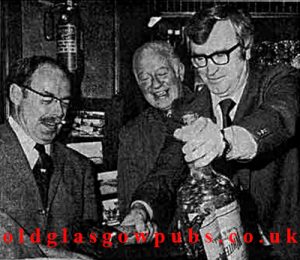
Rangers Manager Jock Wallace had a “smashing” time at Watson Morrison’s Clachan Bar in Paisley Road West, Glasgow, when he opened a gallon bottle in which more than £81 had been collected from customers by head barman Charlie Ruxton and barmaid Greta Palfrey.

This marked the latest fund-raising venture by the Scottish Taverners, a group of 40 hoteliers, restaurateurs and publicans who got together two years ago to support Scottish charities. Since then they have raised more than £20,000 mainly from sponsored golf outings and generous donations.

Of that amount, £12,500 has gone to many charities, helped to purchase two Variety Club Sunshine Coaches and paid for the installation of a kidney machine in Glasgow’s Stobhill Hospital.

After Jock Wallace had smashed the bottle, Watson Morrison (pictured with White Horse representative Douglas Wood) announced that a raffle among customers to guess the amount of cash inside had raised another £85.

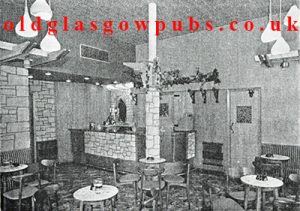
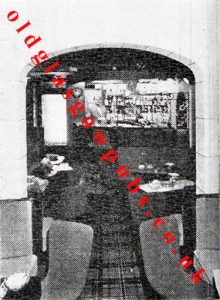
Interior view of the new lounge bar. 1963.

This old pub has been closed for some time

Do you remember this old pub? If so please leave a comment.

END.

Filed Under: C, Paisley Road West, PaisleyRoadWest Tagged With: Paisley Road West, The Clachan, Watson Morrison, William Morrison

  • « Go to Previous Page
  • Page 1
  • Interim pages omitted …
  • Page 389
  • Page 390
  • Page 391
  • Page 392
  • Page 393
  • Interim pages omitted …
  • Page 437
  • Go to Next Page »

Primary Sidebar

Become a Member of Old Glasgow Pubs

We are very excited to announce that we have created a new membership! In return for supporting the site, you will gain fantastic perks! Click below to find out how you can support the site!

💖 Donate via PayPal

All content on this site is Copyright Old Glasgow Pubs (OGP). To use any history or images, please make sure you link back to our site.

This website uses cookies to improve your experience. We'll assume you're ok with this, but you can opt-out if you wish. Cookie settingsACCEPT
Privacy & Cookies Policy

Privacy Overview

This website uses cookies to improve your experience while you navigate through the website. Out of these cookies, the cookies that are categorized as necessary are stored on your browser as they are essential for the working of basic functionalities of the website. We also use third-party cookies that help us analyze and understand how you use this website. These cookies will be stored in your browser only with your consent. You also have the option to opt-out of these cookies. But opting out of some of these cookies may have an effect on your browsing experience.
Necessary
Always Enabled
Necessary cookies are absolutely essential for the website to function properly. This category only includes cookies that ensures basic functionalities and security features of the website. These cookies do not store any personal information.
Non-necessary
Any cookies that may not be particularly necessary for the website to function and is used specifically to collect user personal data via analytics, ads, other embedded contents are termed as non-necessary cookies. It is mandatory to procure user consent prior to running these cookies on your website.
SAVE & ACCEPT